Home / Guides / Subcontracting plans
GuideSubcontracting plans,
and reporting against them
The plan is the easy part. Reporting participation accurately against it, period after period, is where the effort actually goes, and it depends entirely on what was captured when each award was placed.
A small business subcontracting plan sets out the goals a prime contractor commits to for subcontracting with small and other designated business categories, together with how it will pursue and report against them. Plans are generally required on contracts expected to exceed the threshold at FAR 19.702, raised to $900,000 in the October 2025 adjustment, where subcontracting opportunities exist.
Three conditions, checked together
Contractors sometimes assume the threshold alone decides it. Subcontracting opportunity and the nature of the contract both matter.
Three conditions, checked together
Contractors sometimes assume the threshold alone decides it. Subcontracting opportunity and the nature of the contract both matter.
- Value above the FAR 19.702 threshold
- Meaningful subcontracting opportunity
- Prime is not a small business
| Condition | What it means |
|---|---|
| The value threshold | Plans are generally required where the contract is expected to exceed the threshold at FAR 19.702, raised from $750,000 to $900,000 effective 1 October 2025 |
| Subcontracting opportunities exist | Where a contract offers no meaningful subcontracting opportunity, the requirement can fall away. That determination should be documented rather than assumed |
| The contractor is not a small business | Small business primes are generally not required to submit a plan, though they may still face expectations from their own customers |
| Confirm against your contract | Requirements can be specific to the acquisition, so the contract itself is the authority rather than general practice |
It is the reporting, not the plan
Writing goals takes an afternoon. Reporting against them accurately, every period, is the part that consumes teams.
It is the reporting, not the plan
Writing goals takes an afternoon. Reporting against them accurately, every period, is the part that consumes teams.
- Classify suppliers at award
- Watch goals mid-period
- Keep reported totals traceable
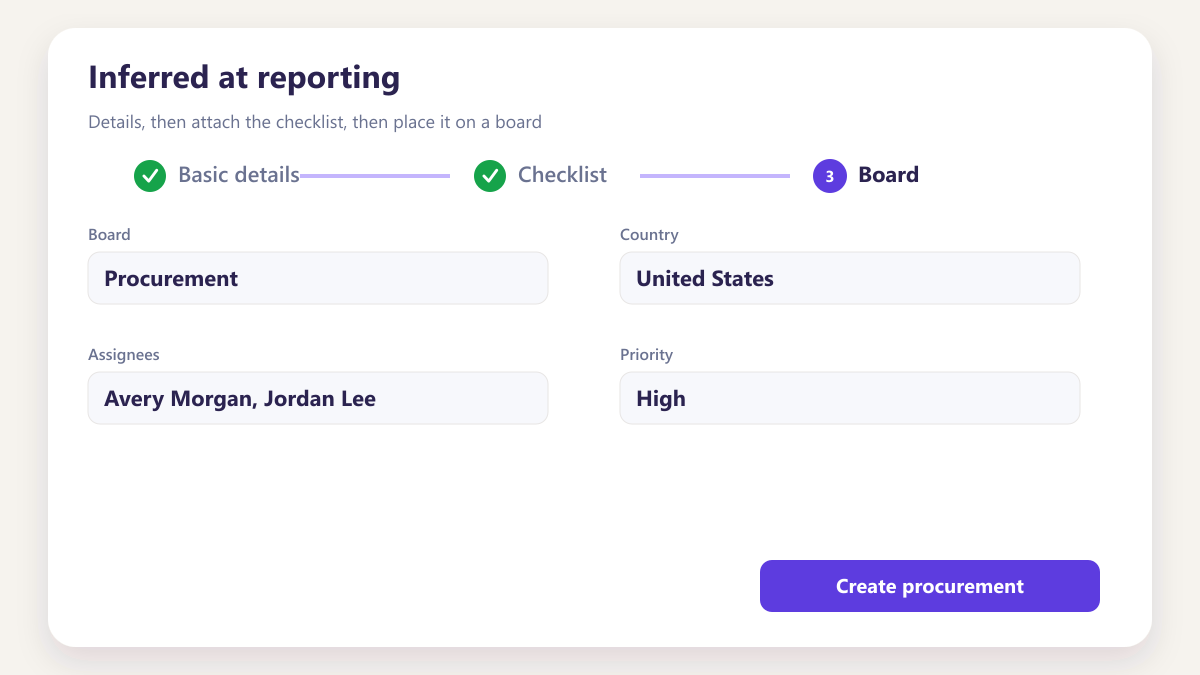
Inferred at reporting
Supplier categories are worked out at reporting time from names and invoices, which is slow, partly accurate and hard to verify.
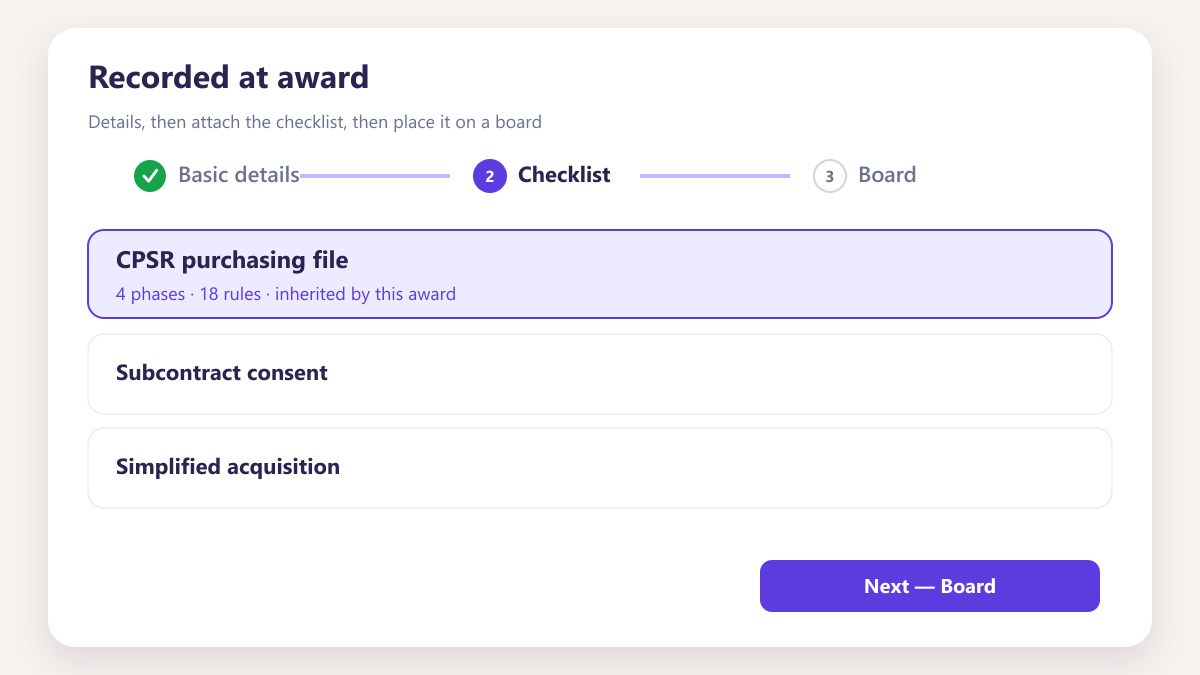
Recorded at award
The person placing the award records the classification when they select the supplier, which is when certainty is highest.
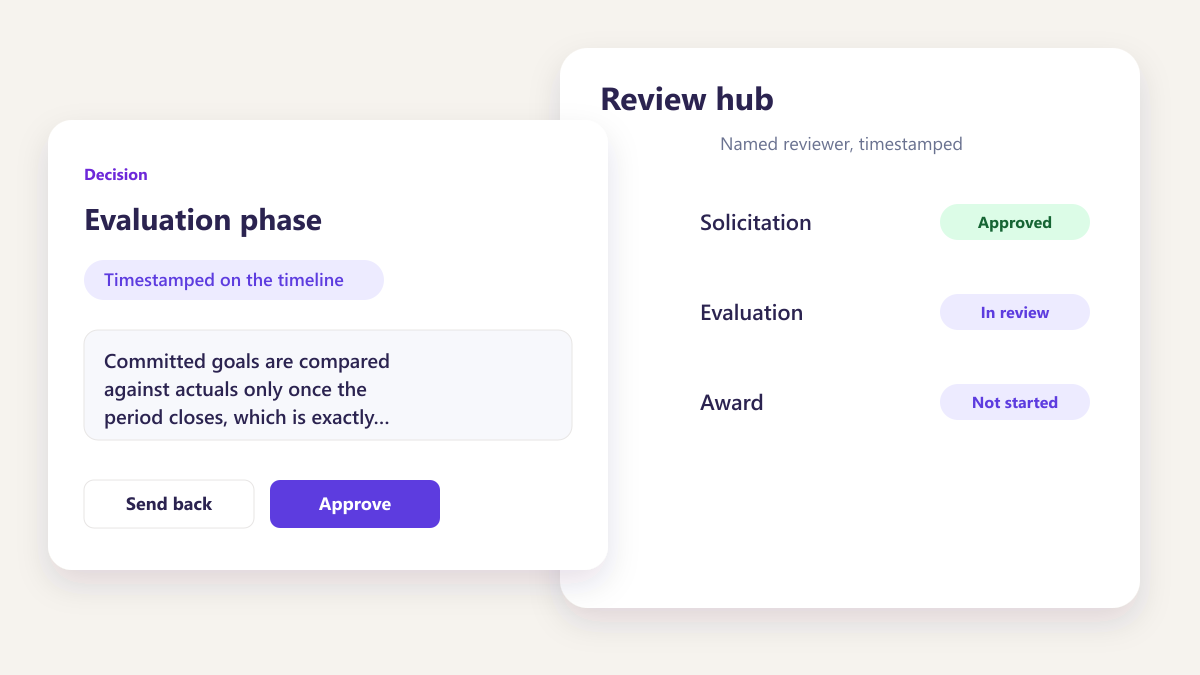
Compared at period end
Committed goals are compared against actuals only once the period closes, which is exactly when nothing can be done about a shortfall.
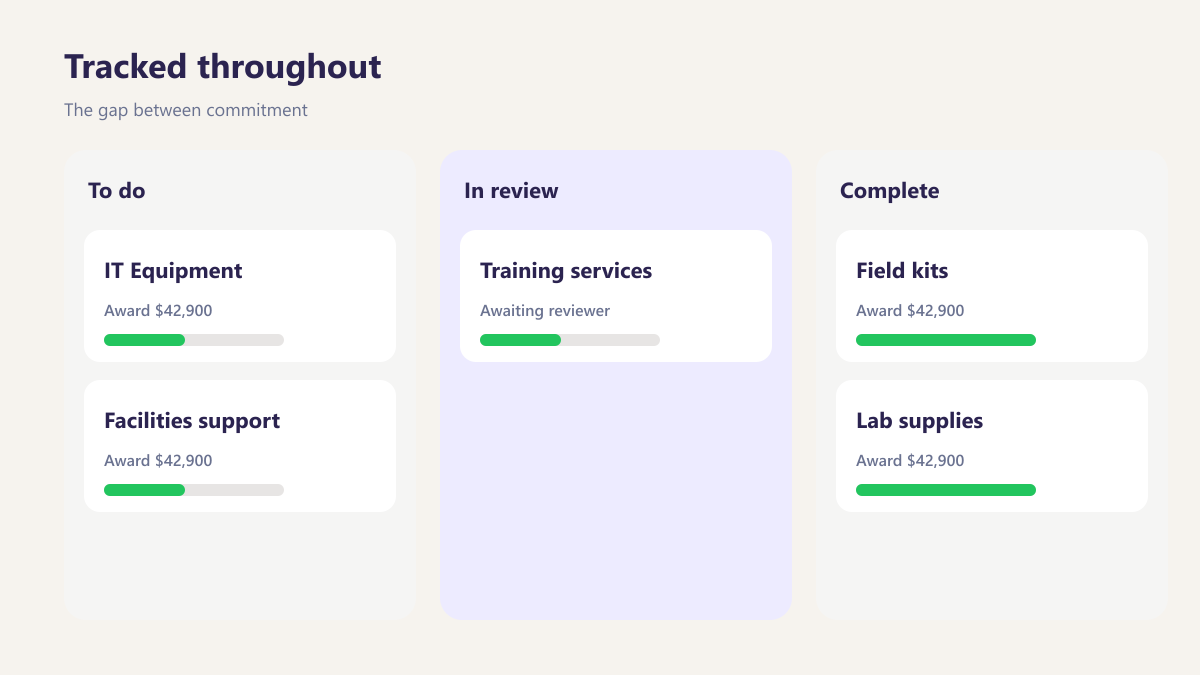
Tracked throughout
The gap between commitment and actual is visible at any point, so a shortfall in month two is still something you can address.
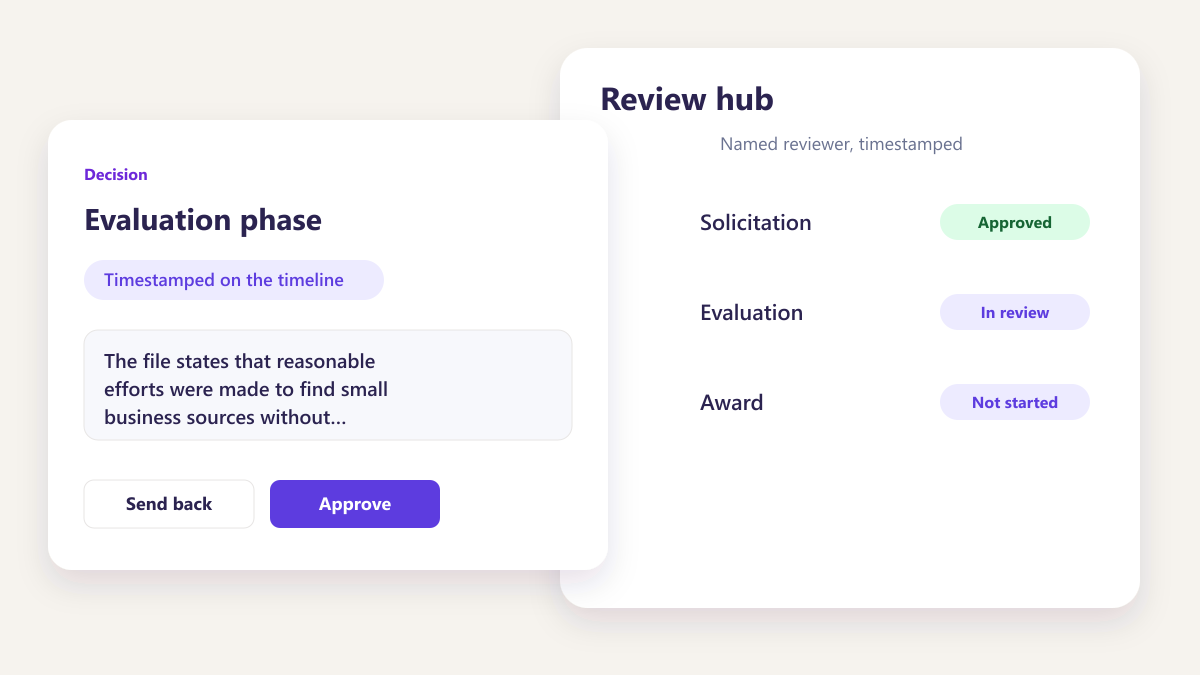
Asserted
The file states that reasonable efforts were made to find small business sources without showing what those efforts were.
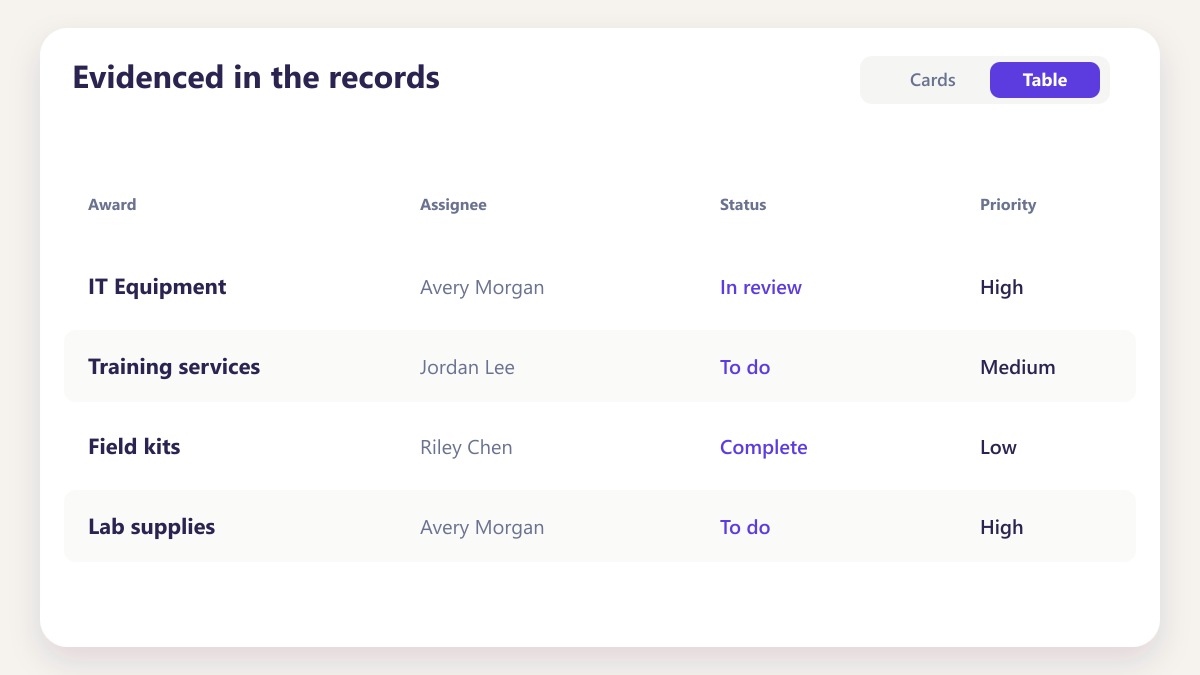
Evidenced in the records
Sources sought, outreach undertaken and the reasons awards went where they did are recorded on the awards themselves.
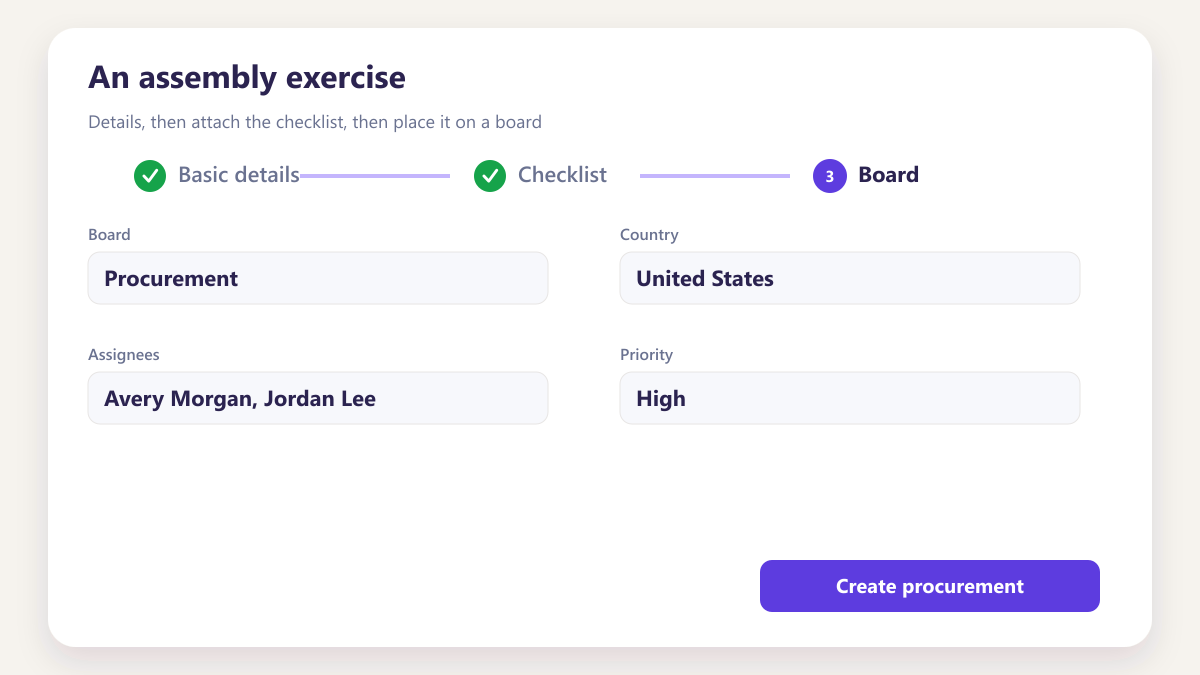
An assembly exercise
Pulling awards from several places, matching suppliers to categories and totalling, most of which is data work rather than reporting.
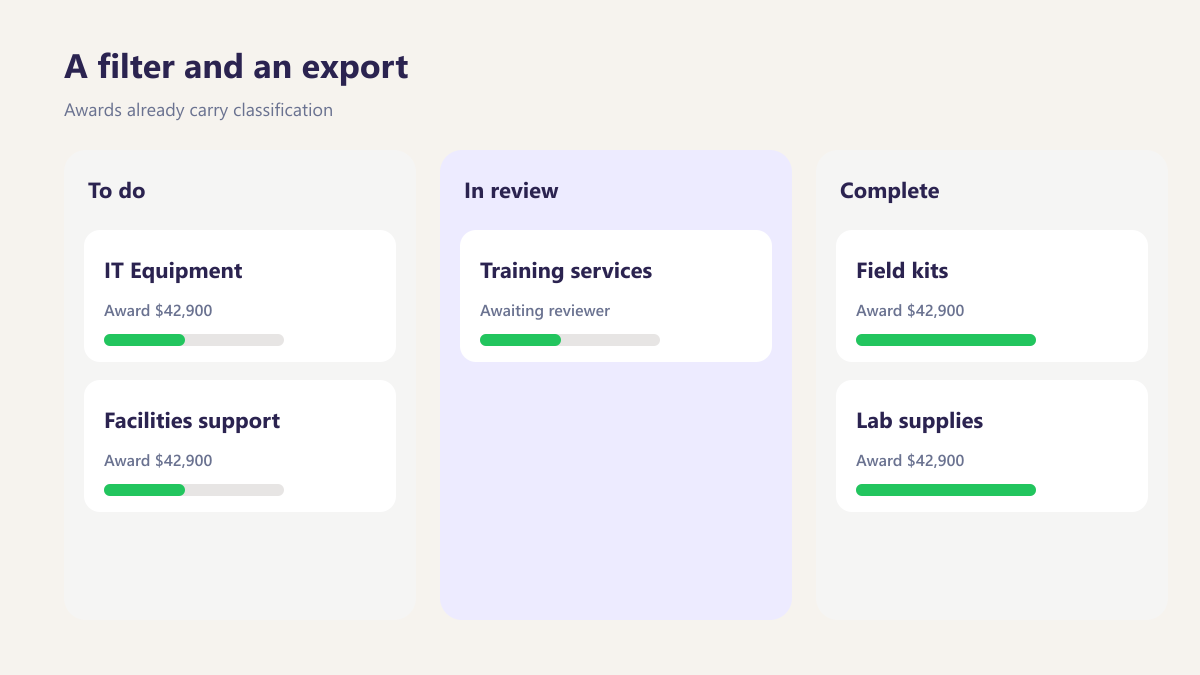
A filter and an export
Awards already carry classification, value and date, so the report derives from records rather than being constructed.
Five fields that make reporting a filter
| Field | Why it matters |
|---|---|
| Supplier classification | Recorded at award by the person who selected the supplier, rather than inferred from a name later |
| Award value | The figure participation is calculated against, held on the record rather than pulled from invoices |
| Award date | Which reporting period the award falls into, determined by the record rather than by a later judgement |
| Sourcing effort | What was done to find sources in the relevant categories, which is what evidences good faith effort |
| Supporting evidence | Attached to the award, so a reported total can be broken down to the individual awards behind it |
The plan floor and related figures are adjusted periodically. Confirm the current threshold at FAR 19.702 before relying on it.
Four practical steps
Capture classification at award
The single change that turns reporting from a research project into a filter, because certainty is highest at that moment.
Learn moreWatch goals mid period
A shortfall seen in month two can be acted on. The same shortfall seen at close can only be explained.
Learn moreEvidence the effort, not just the outcome
Goals are commitments to effort rather than guarantees of outcome, so what you did is as important as what you achieved.
Learn moreKeep totals traceable
A figure that breaks down to individual awards with evidence attached is defensible in a way an assembled total is not.
Learn moreCommon questions about subcontracting plans
When is a subcontracting plan required?
Did the threshold change recently?
Are the goals guarantees?
How do we evidence good faith effort?
Why does classification need to be captured at award?
What if we are going to miss a goal?
Do small business primes need a plan?
Other explainers and the pages they connect to
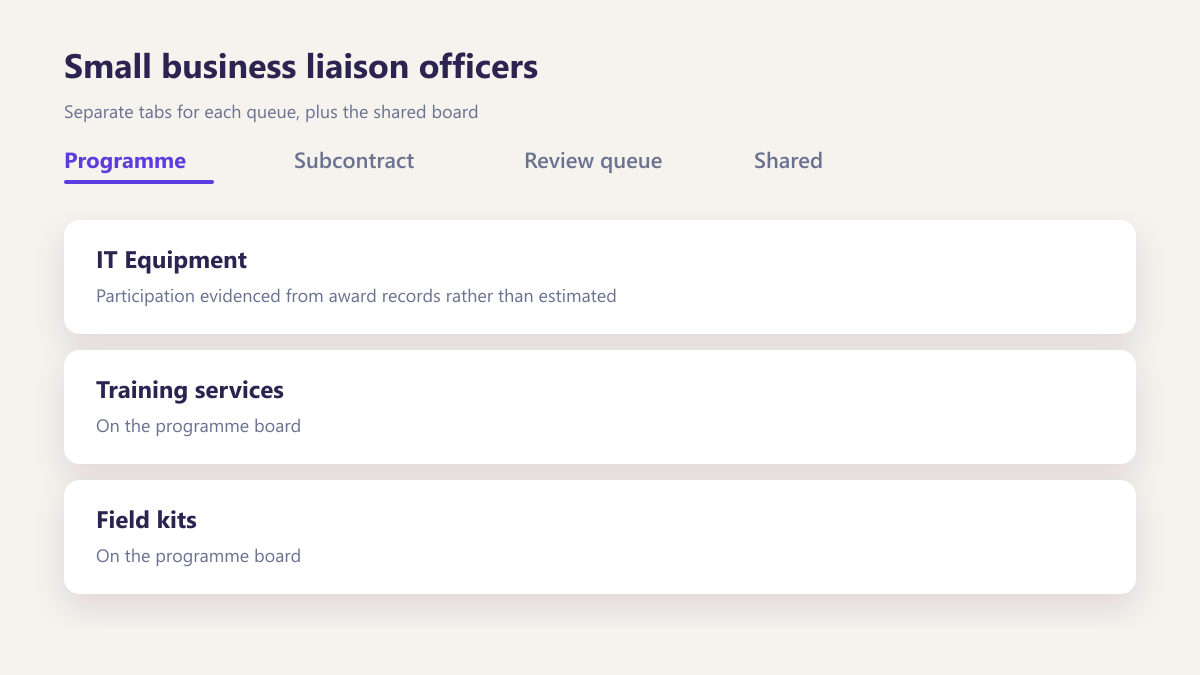
Small business liaison officers
Participation evidenced from award records rather than estimated.
Learn more
Bring your last participation report
We will show what producing it from award records would look like, and how much of it was reconstruction.
Book a demo