FAR Part 44,
and what it asks of you
Part 44 is where subcontracting policy, consent requirements and purchasing system reviews all live. Reading it once explains why so many purchasing obligations connect back to the same place.
FAR Part 44 governs contractors' subcontracting policies and procedures under government prime contracts. It covers when a contracting officer must review or consent to subcontracts, the criteria for evaluating a contractor's purchasing system, and the process by which that system is approved, withheld or withdrawn following a purchasing system review.
Three connected obligations
These are usually encountered separately, which obscures the fact that they are one framework with a single underlying purpose.
Three connected obligations
Part 44 links three things: consent to subcontract, the review of your purchasing system, and the approval that review produces.
- Consent to subcontract
- Review of the contractor purchasing system
- Approval granted, withheld or withdrawn
| Area | What it deals with |
|---|---|
| Consent to subcontracts | When a contractor must notify the contracting officer or obtain consent before placing particular subcontracts, and how an approved purchasing system changes that position |
| Purchasing system reviews | The criteria for evaluating how a contractor purchases, the factors considered, and the areas given special attention during a review |
| System approval | The process by which approval of a purchasing system is granted, withheld or withdrawn, and what follows from each outcome |
| Why they connect | Approval status determines consent scope, and the review determines approval status. Each obligation depends on the one before it |
Four things contractors take from Part 44
The regulation is short. What it implies for how you run purchasing is considerably longer.
Read as an inbound rule
Teams read acquisition regulation as describing how the government buys from them and miss that Part 44 governs how they buy from others.
Read as an outbound rule
Part 44 concerns the subcontracts you place, which means your own purchase files are the material that gets examined.
Individual diligence
Documentation quality depends on which buyer placed the award and how busy that quarter was, which is visible as variation across the sample.
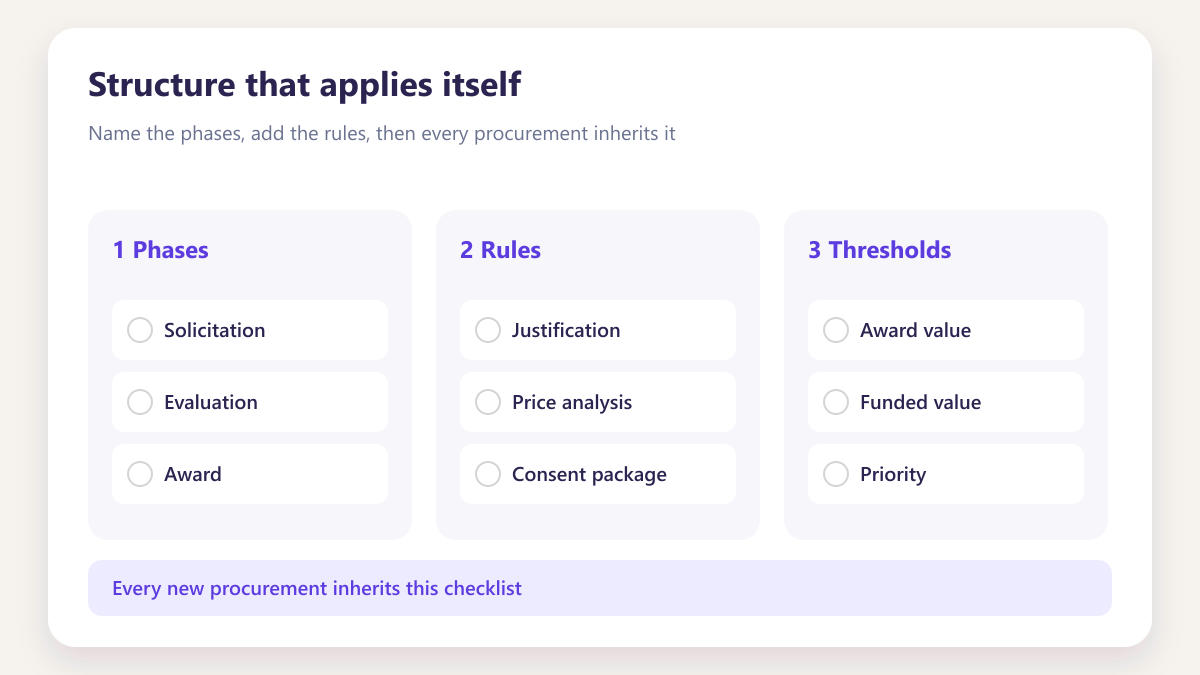
Structure that applies itself
Phases, rules and reviewers attach to award types so files behave the same way regardless of who placed them or when.
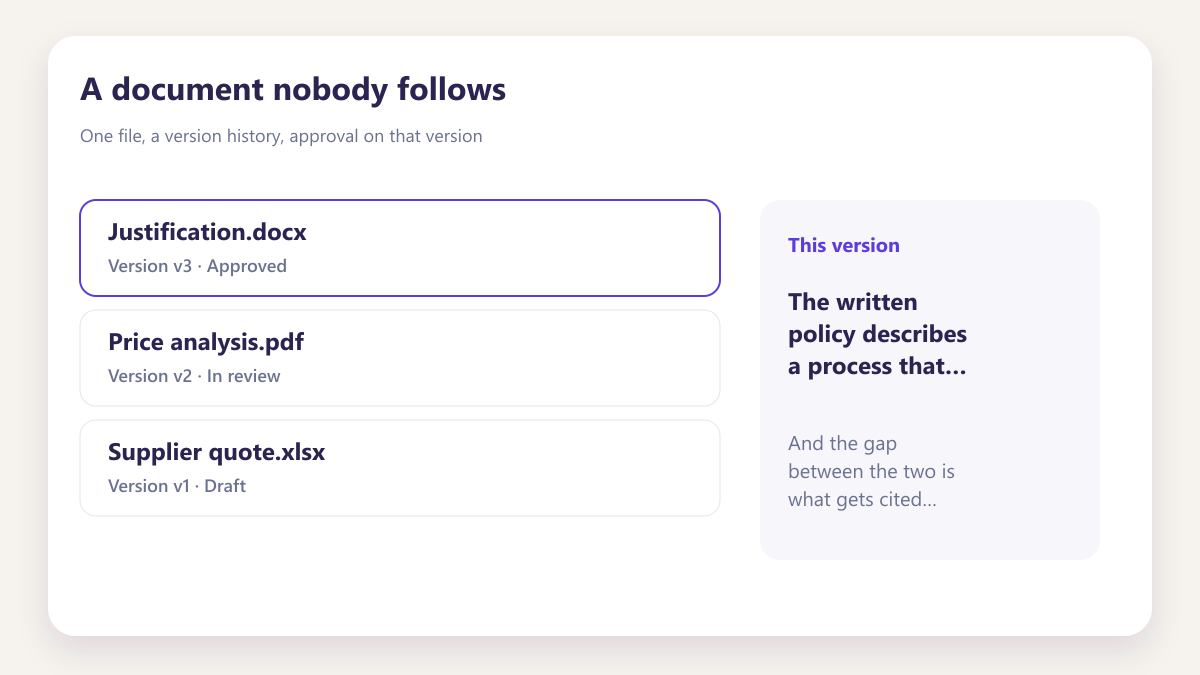
A document nobody follows
The written policy describes a process that has drifted, and the gap between the two is what gets cited rather than either on its own.
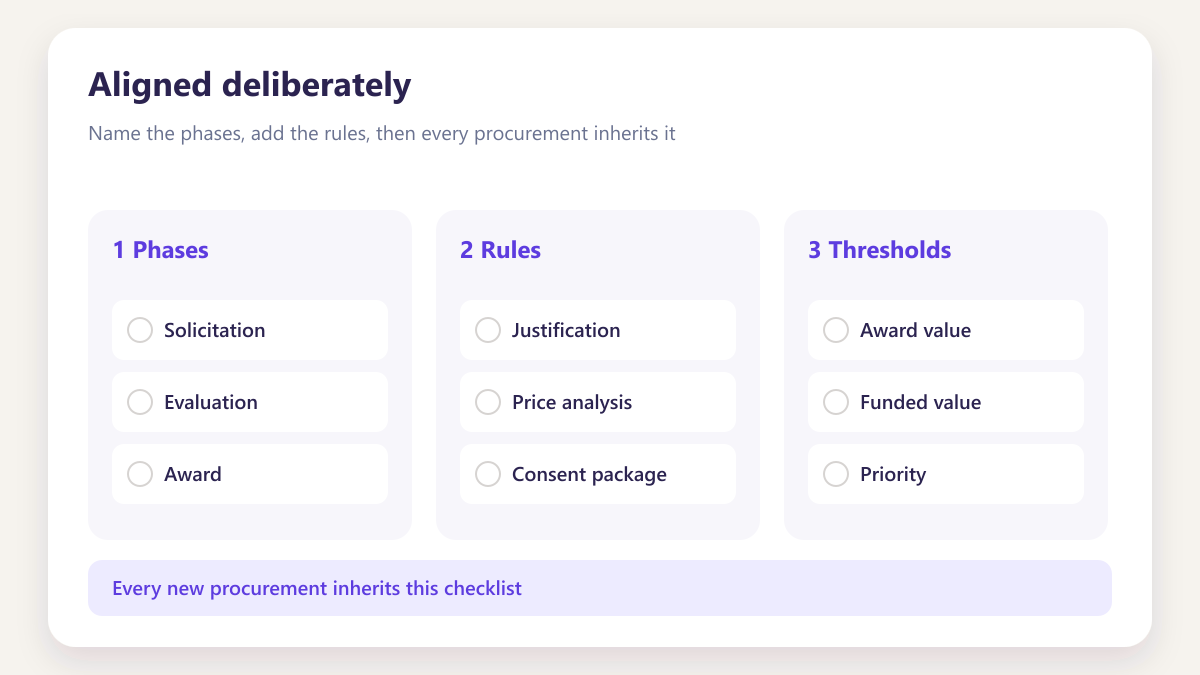
Aligned deliberately
The policy describes what actually happens, and where the practice should change it is the practice that changes rather than the wording.
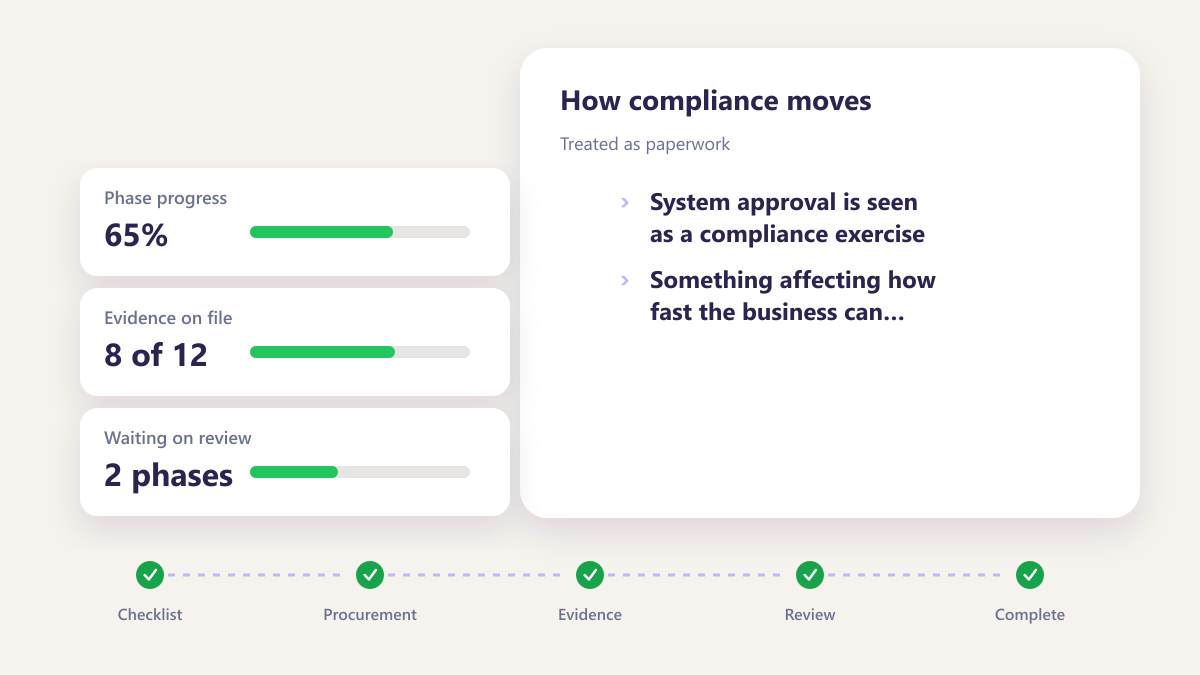
Treated as paperwork
System approval is seen as a compliance exercise rather than something affecting how fast the business can commit to subcontractors.
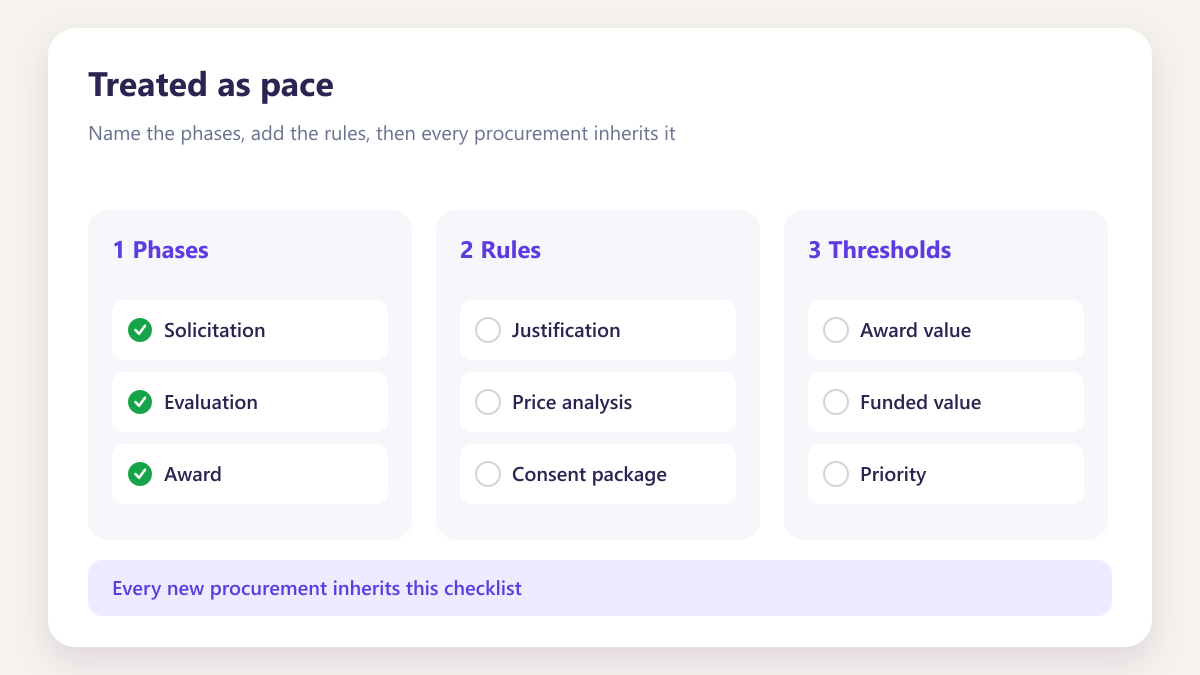
Treated as pace
Approval status determines how much consent is needed, which determines how quickly awards can be placed on a live programme.
Five practical connections
Five practical connections
Part 44 reaches into ordinary purchasing in five places, which is why it shows up in files that never mention it.
- Consent timing on subcontract awards
- Flow-down clauses in subcontract terms
- Review findings that change approval status
| In the file | The Part 44 connection |
|---|---|
| Consent evidence | Whether consent was required for this subcontract, and if so that it was obtained before placement |
| Award reasoning | The written basis for selecting the supplier, which is what a review tests against your own policy |
| Price or cost analysis | Evidence that the price was evaluated, which is among the areas given attention during a review |
| Flow-down evidence | What was passed to the subcontractor, evidenced on the award rather than in correspondence |
| Consistency across files | Whether files behave the same way across buyers and periods, which is read as evidence of a system |
Subpart numbering and specific criteria differ between defense and civilian reviews. Confirm which framework applies to your contracts.
Four things worth doing
Read it as a rule about your buying
The most common misreading is treating acquisition regulation as describing only how the government purchases from you.
Learn moreAlign policy with practice
The gap between the two is cited more often than either a thin policy or an imperfect practice on its own.
Learn moreMake consistency structural
Variation across buyers reads as an absence of system, which is precisely what a review is assessing.
Learn moreTreat approval as pace
Approval status determines consent scope, which determines how fast you can place subcontracts on a live programme.
Learn moreCommon questions about FAR Part 44
What does FAR Part 44 cover?
Does Part 44 apply to us or to the government?
How does Part 44 relate to purchasing system reviews?
What changes once our system is approved?
What does a review actually test?
Do defense and civilian reviews use the same criteria?
Where should we start?
Other explainers and the pages they connect to
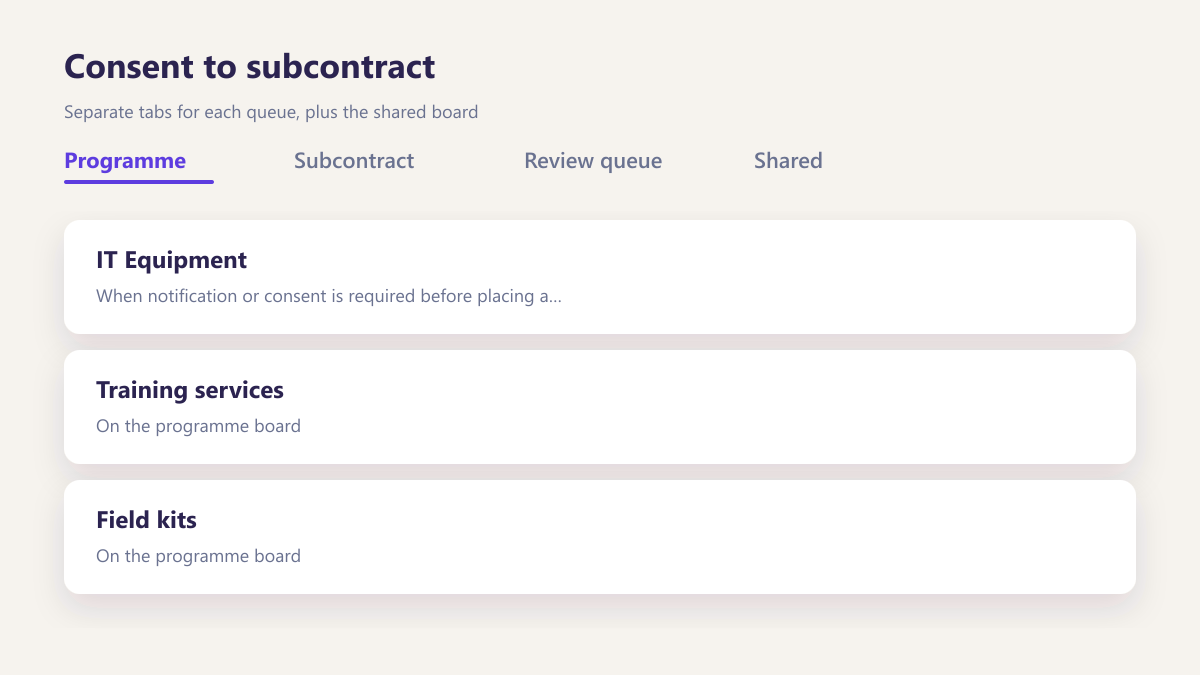
Consent to subcontract
When notification or consent is required before placing a subcontract.
Learn more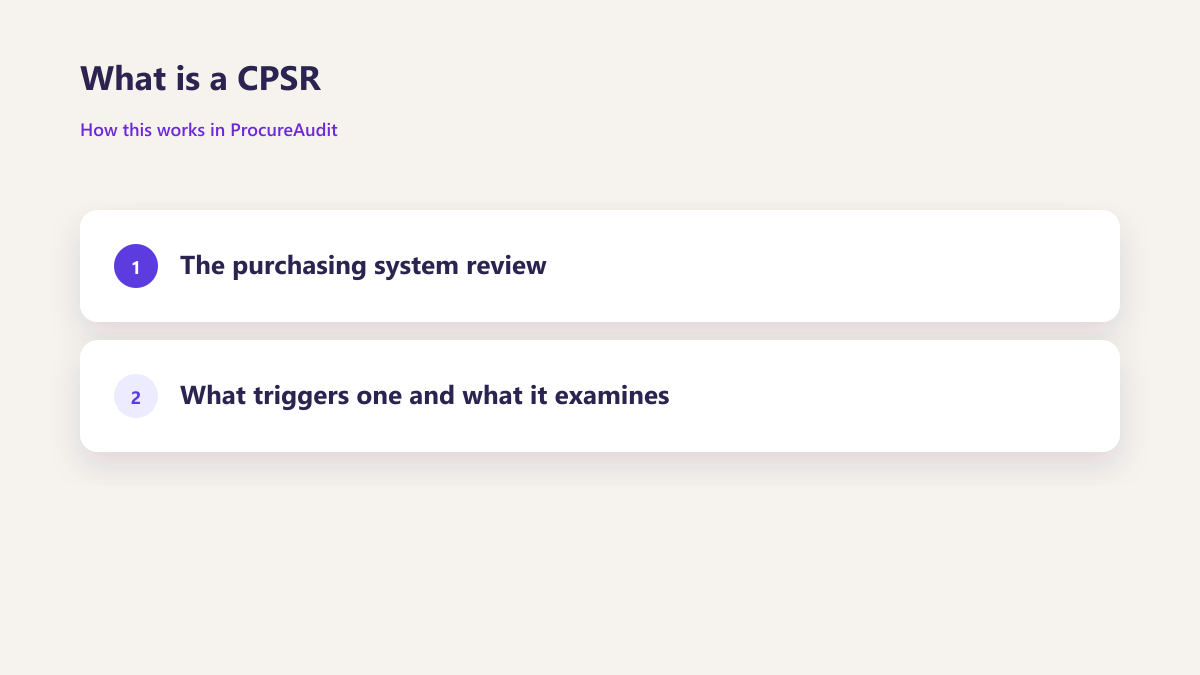
What is a CPSR
The purchasing system review, what triggers one and what it examines.
Learn more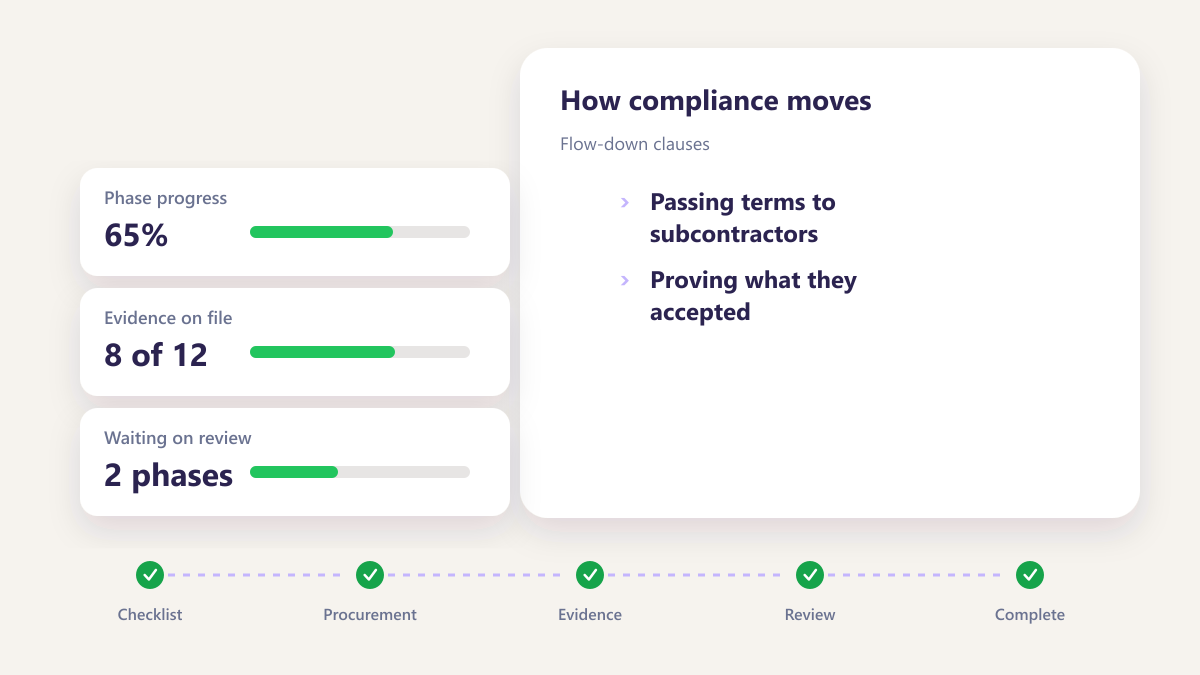
Read your files the way a reviewer would
Bring a handful of recent subcontracts. We will look at them against what your own policy requires.
Book a demo