Home / Guides / Flow-down clauses
GuideFlow-down clauses,
and proving what was accepted
Passing clauses down is the easy part. Showing, years later, exactly which terms a subcontractor accepted and when is where most purchase files come apart.
Flow-down clauses are terms from your prime contract that you are required or choose to impose on your subcontractors. Some are mandatory by regulation, some are required by the prime contract, and others are commercially prudent. Which apply depends on the contract type, the dollar value and the nature of the work, so the set is determined award by award rather than once.
Three categories, one determination per award
Contractors often keep a single standing list of flow-downs and apply it everywhere. That is quicker, and it is also why reviewers find both missing clauses and irrelevant ones in the same file.
Three categories, one determination per award
Every clause falls into one of three categories, and which ones apply is decided award by award, not once per vendor.
- Mandatory: required by regulation to flow down
- Prime contract: required by your own contract terms
- Prudent: not required, but protects you
| Category | What it is | How it behaves |
|---|---|---|
| Mandatory flow-downs | Clauses that regulation requires you to include in subcontracts, subject to the conditions in the clause itself | Non negotiable where the conditions are met. Whether they are met depends on contract type, value and work |
| Prime contract required | Clauses your customer's contract obliges you to pass on, whether or not regulation would | Read from the prime contract. Missing these is a breach of your own agreement rather than a regulatory finding |
| Commercially prudent | Terms you choose to impose to manage your own risk, such as audit rights or delivery remedies | Your judgement. Worth separating from the first two so the mandatory set stays clear |
The failure is almost never the clause itself
Four patterns account for most findings, and all four are about the file rather than the clause library.
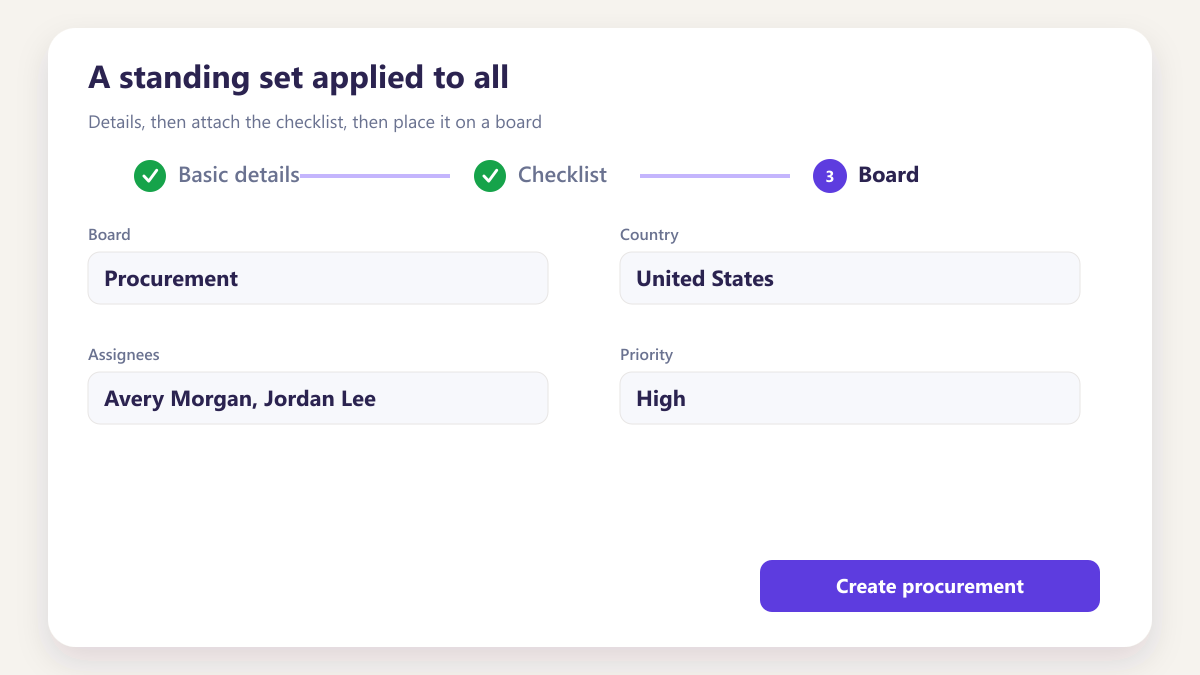
A standing set applied to all
The same block of clauses is attached to every subcontract regardless of value or type, which means some awards carry terms that do not apply and others miss terms that do.
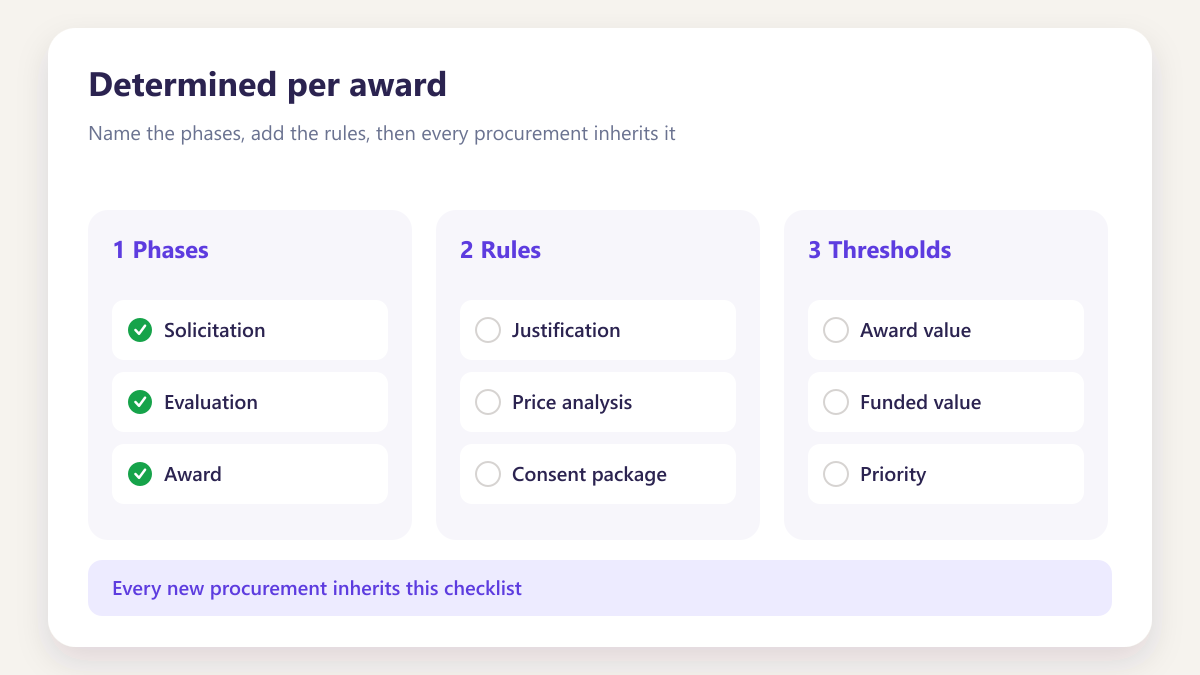
Determined per award
The applicable set is worked out from the contract type, the value and the nature of the work, and the basis is recorded alongside the award.
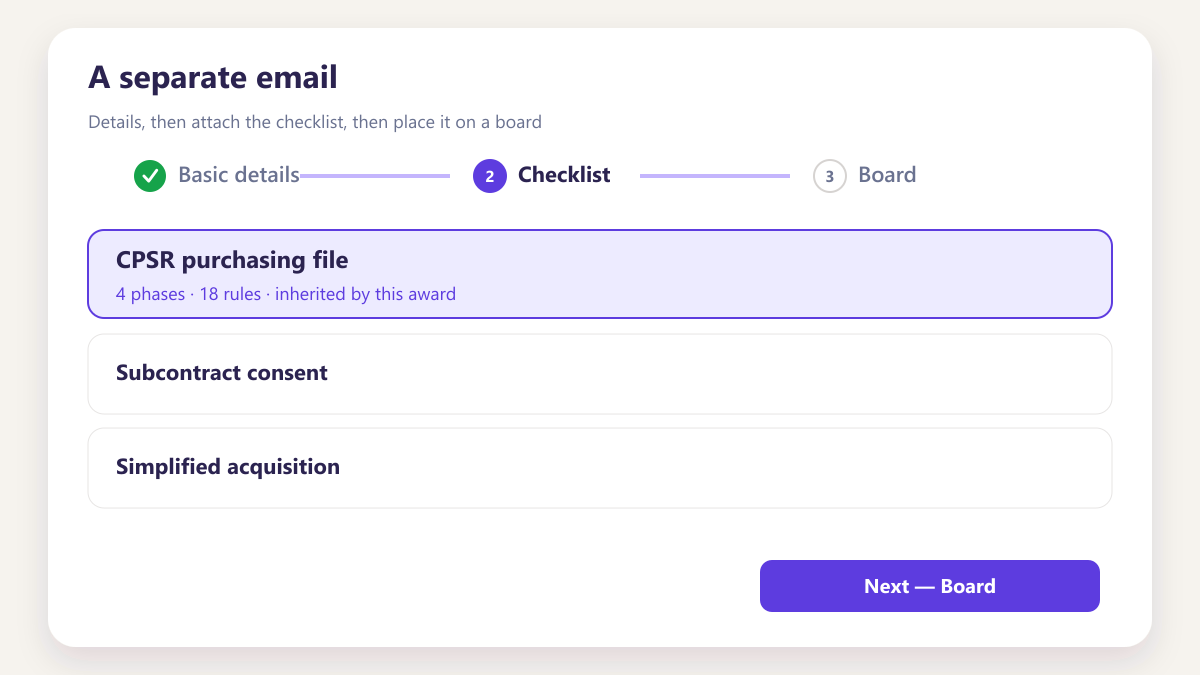
A separate email
Clauses go out in their own message, so establishing what a subcontractor accepted means finding a thread from several years ago.
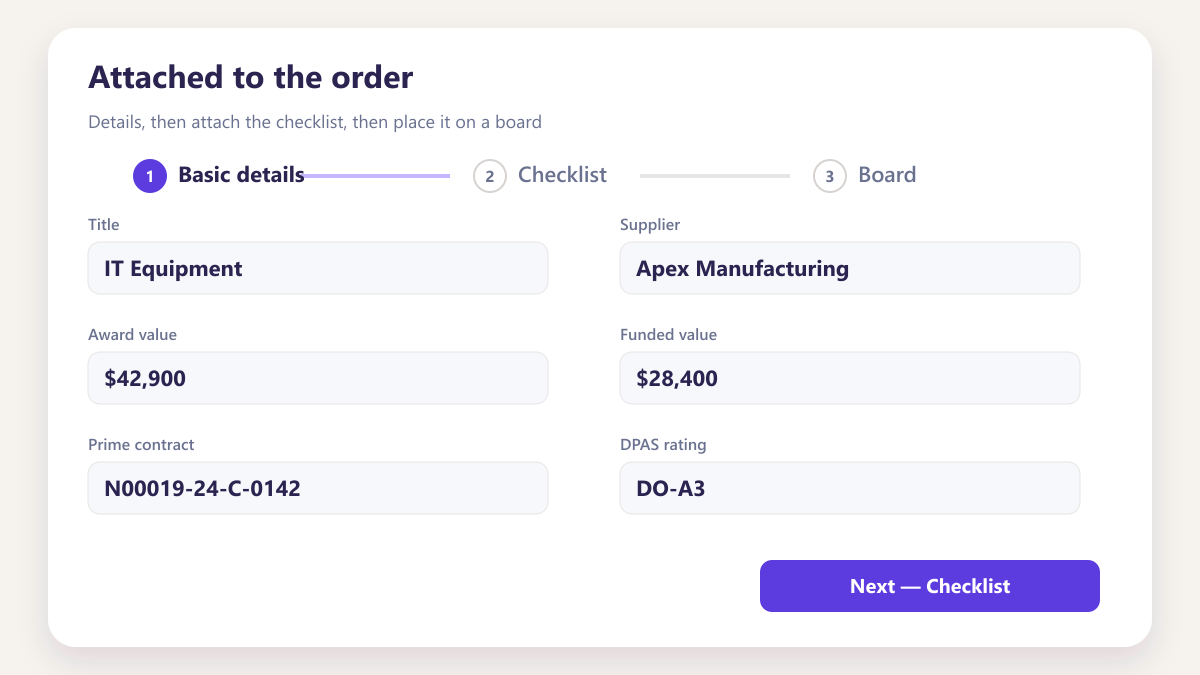
Attached to the order
Clauses travel with the subcontract and are accepted alongside it, so acceptance is part of the purchase record.
Only your subcontractor
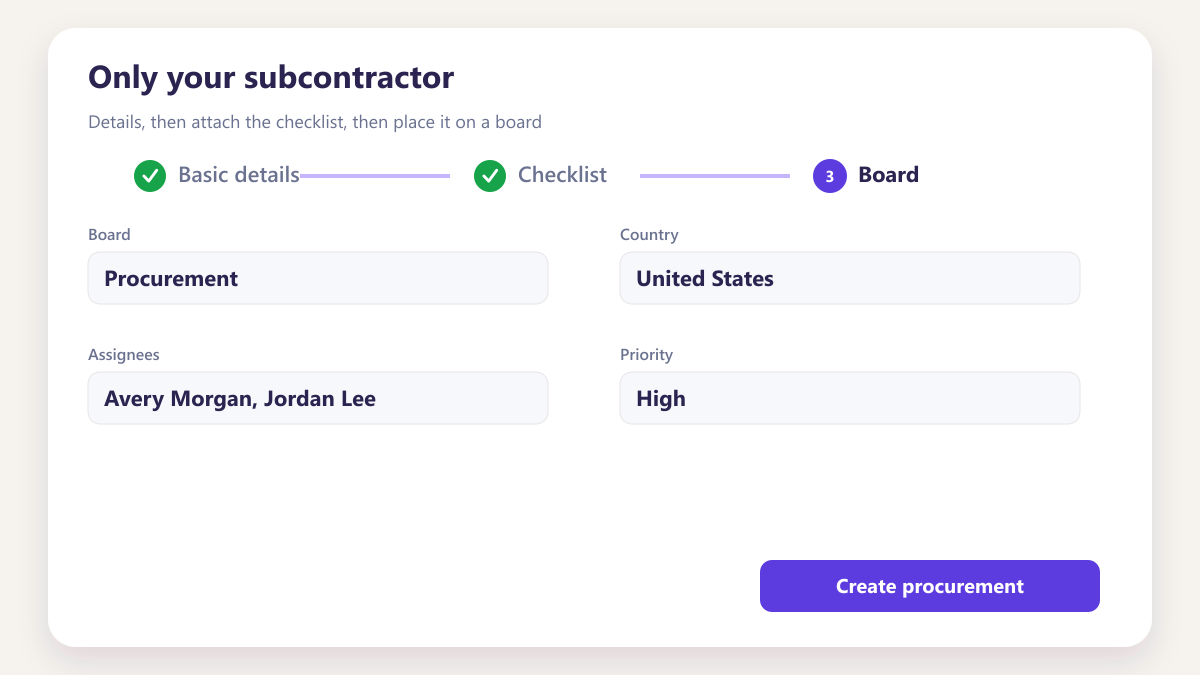
Flow-downs are imposed on your direct subcontractor and nothing shows that they were required to pass the terms further down.
Required onward
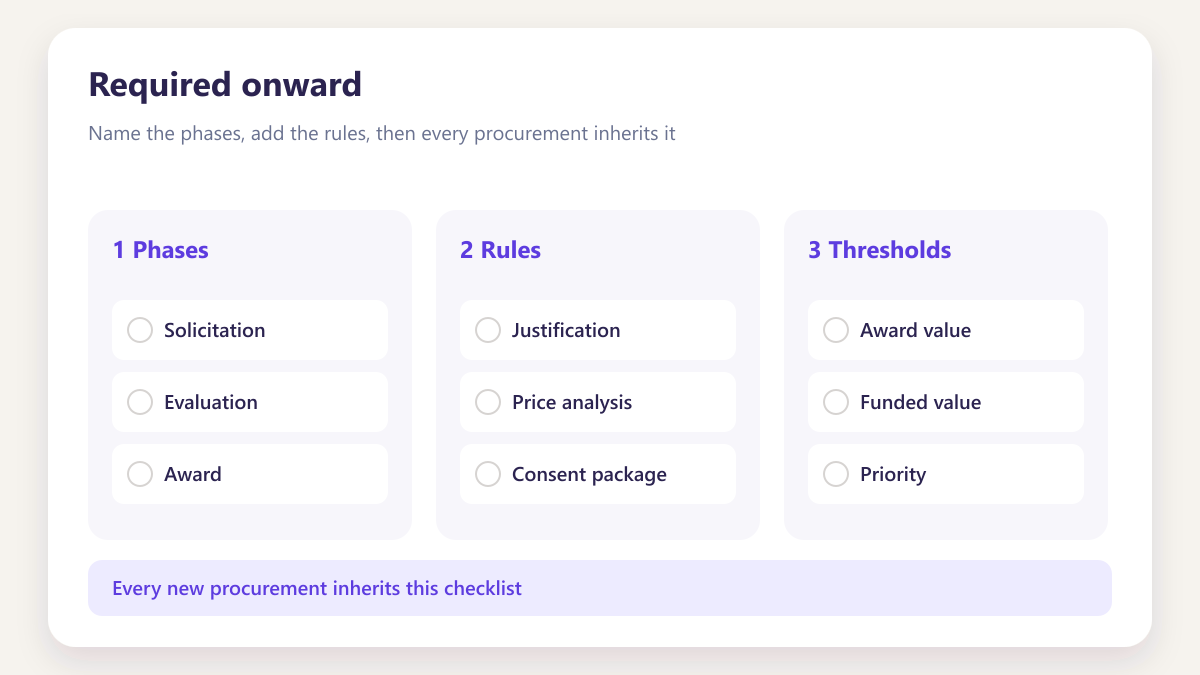
The obligation to include the substance in lower tier subcontracts is itself imposed, and the file shows that you required it.
Set once, years ago
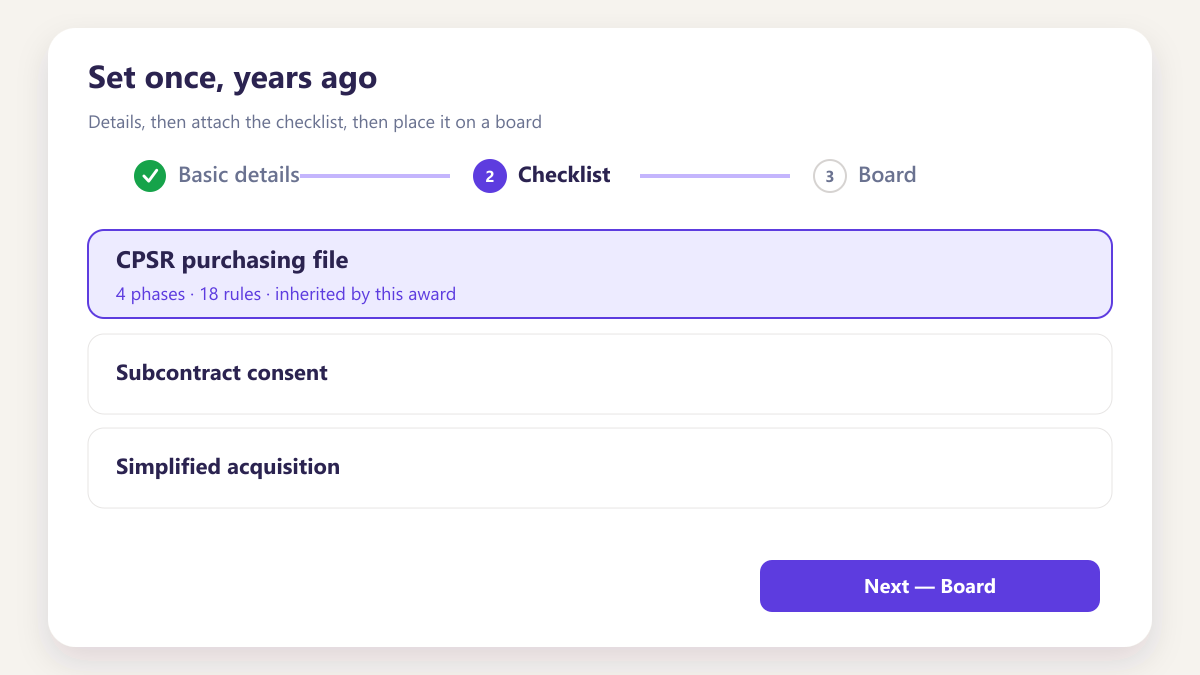
The clause library was assembled at some point and has not been reviewed since, so it cites text that has been amended or renumbered.
Reviewed on change
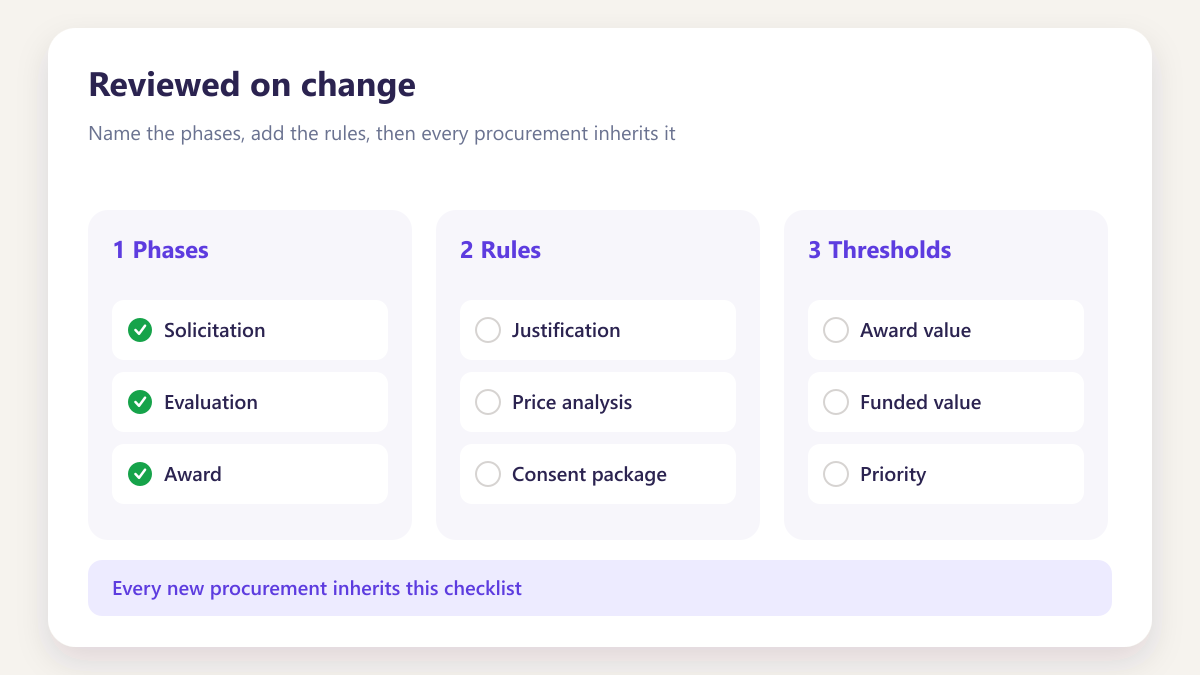
The library has an owner and a review trigger, so amendments and renumbering are picked up rather than discovered in a sample.
Six questions about a single subcontract
Six questions about a single subcontract
Six questions settle which clauses apply to one subcontract, and the answers belong on the award itself.
- Contract type and dollar value
- What work is performed, and where
- Whether the subcontractor accepted the clauses
| Question | Where the answer should live |
|---|---|
| Which clauses were flowed down | On the subcontract award itself, as an attached set rather than a reference to a shared document |
| Why that set | The determination basis: contract type, value and nature of the work, recorded at award |
| When were they accepted | With the award, evidenced by the order the subcontractor accepted rather than a separate exchange |
| What version applied | The text as it stood at the award date, retained rather than replaced by later updates |
| Were lower tiers addressed | The obligation to pass the substance onward, imposed and evidenced |
| What changed on a modification | Whether the clause set altered, recorded on the modification rather than assumed unchanged |
Clause numbering and applicability conditions change over time. Confirm the current text and conditions before applying a standing set to a new award.
Four habits that hold up under sampling
Attach the set to the award
Acceptance evidenced by the order itself rather than by an email somebody has to locate years afterwards.
Learn moreRecord the determination basis
Why that set applied to that award, so an unusual set reads as a decision rather than an oversight.
Learn moreRetain the version that applied
Clause text is amended over time, and the question is what applied on the award date rather than today.
Learn moreGive the library an owner
An unowned clause library drifts out of date quietly, which is exactly how superseded text ends up in a sample.
Learn moreCommon questions about flow-down clauses
What is a flow-down clause?
Are all flow-downs mandatory?
Do flow-downs apply below the first tier?
Where should flow-down evidence live?
Can we use one standard set for every subcontract?
How often should the clause library be reviewed?
Does a purchasing system decide which clauses apply?
Other explainers and the pages they connect to
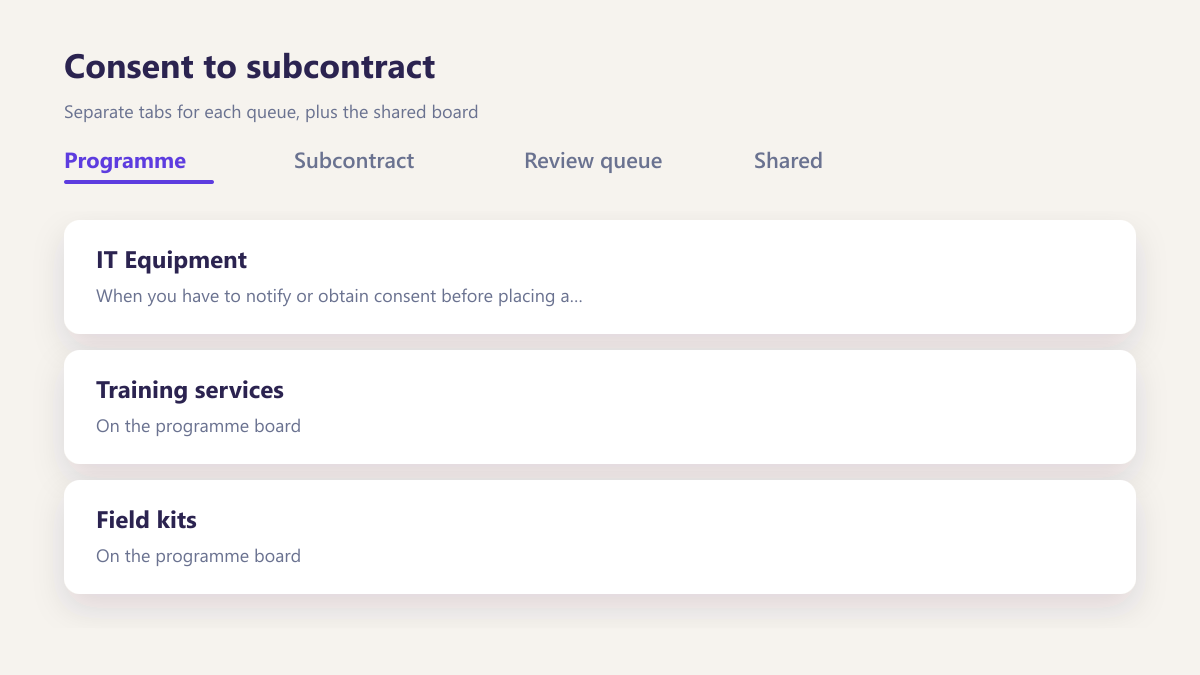
Consent to subcontract
When you have to notify or obtain consent before placing a subcontract.
Learn more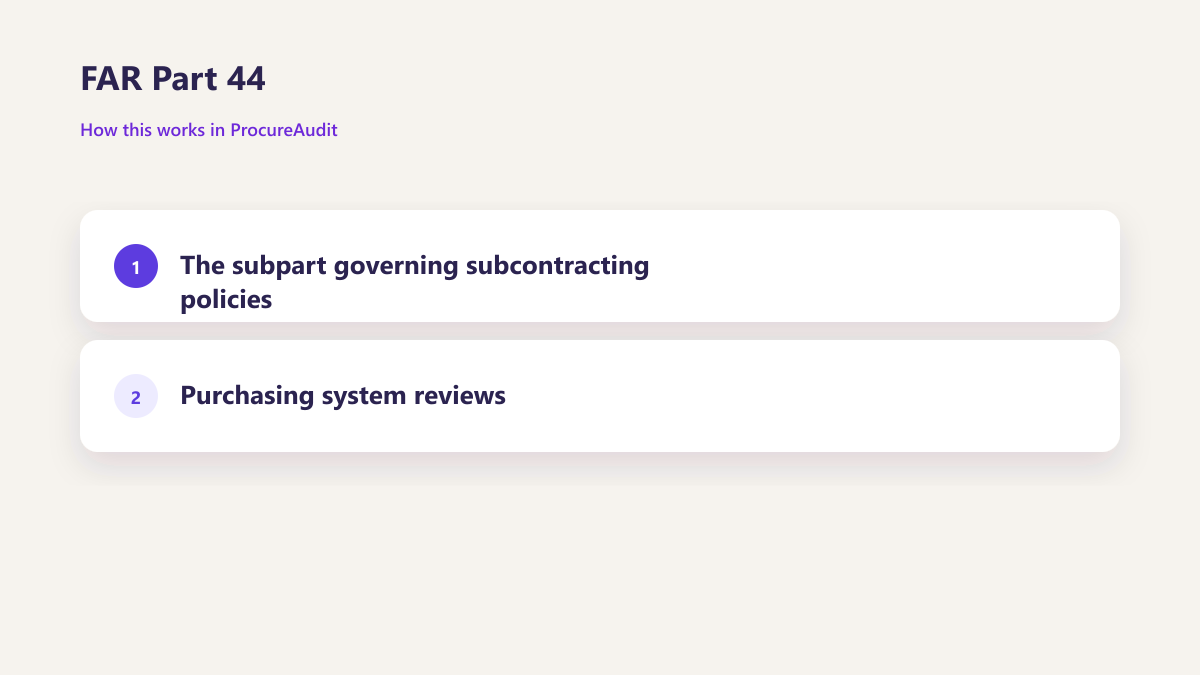
FAR Part 44
The subpart governing subcontracting policies and purchasing system reviews.
Learn more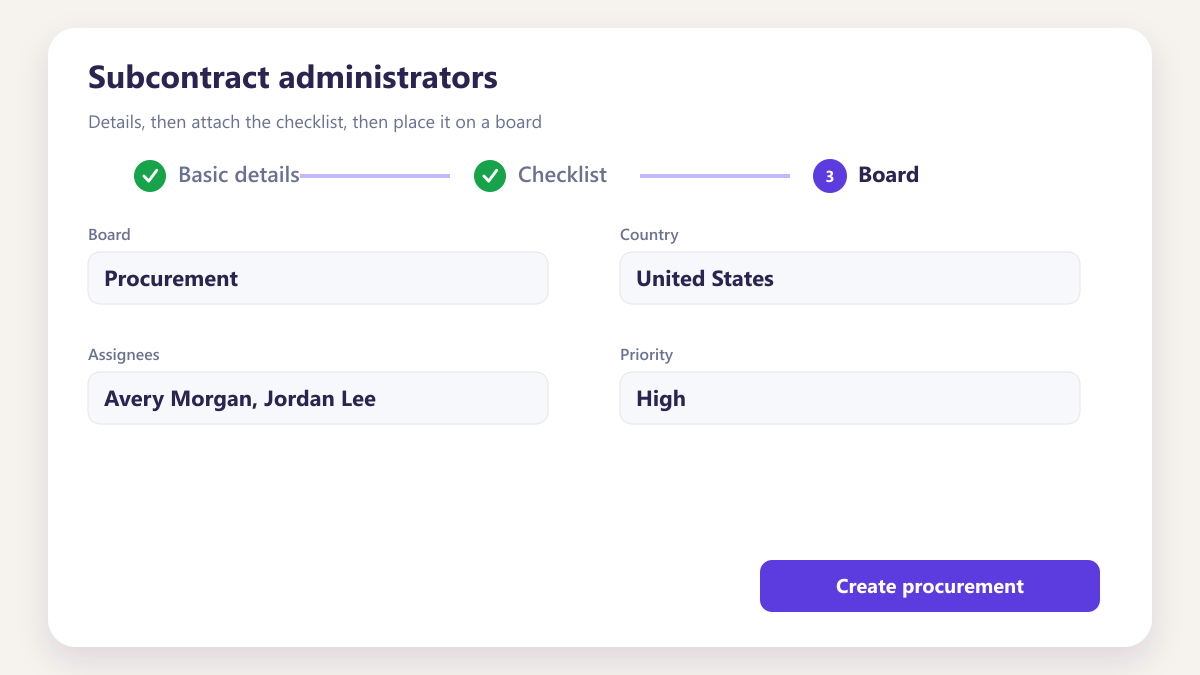
Subcontract administrators
Keeping modification records, flow downs and supplier documents current.
Learn moreBring a subcontract and its clause set
We will show what the record holds about which clauses applied, on what basis, and what the subcontractor accepted.
Book a demo