Home / Solutions / Small business and 8(a)
IndustryProcurement Compliance Software for Small Business and 8(a)
The same expectations, a tenth of the people
Nobody reduces what a purchasing file has to contain because your team is small. The documentation burden is identical, and it lands on people who are already doing three other jobs.
The burden does not scale down with you
A four person firm subcontracting to a prime carries documentation expectations written for organisations a hundred times its size. None of it is negotiable, and all of it lands on people with other jobs.
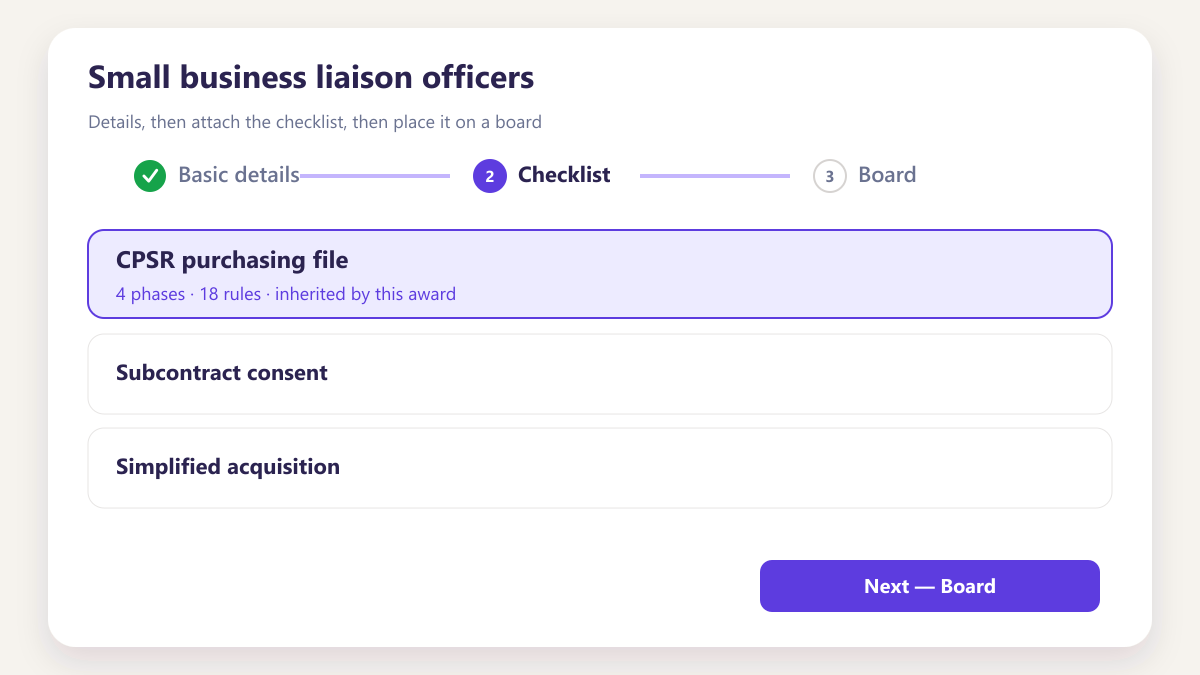
The single biggest lever for a small team. One template, built in an afternoon from a policy document you already hold, then inherited by every award afterwards without anybody setting anything up.
- A three step wizard rather than a configuration project
- Rules generated from your existing policy
- Applies to every future award automatically
- Maintained by one person without specialist knowledge
The document arriving from a supplier contains most of what the record needs. Reading it rather than keying it in is where the hours come back on a small team.
- Records drafted from uploaded documents
- Award values read rather than retyped
- Checklist rules produced from policy documents
- Everything reviewed before it is saved
In a small firm the purchasing file often depends entirely on one person understanding it. A record anybody can read removes that risk without adding headcount.
- Reasoning written at the decision, not held in memory
- Anybody with access can produce the file
- The person who built it is not required to explain it
- Holiday and turnover stop being events
What small teams usually do instead
None of these are wrong for a firm of four. They simply stop working at exactly the point the firm starts winning larger work.
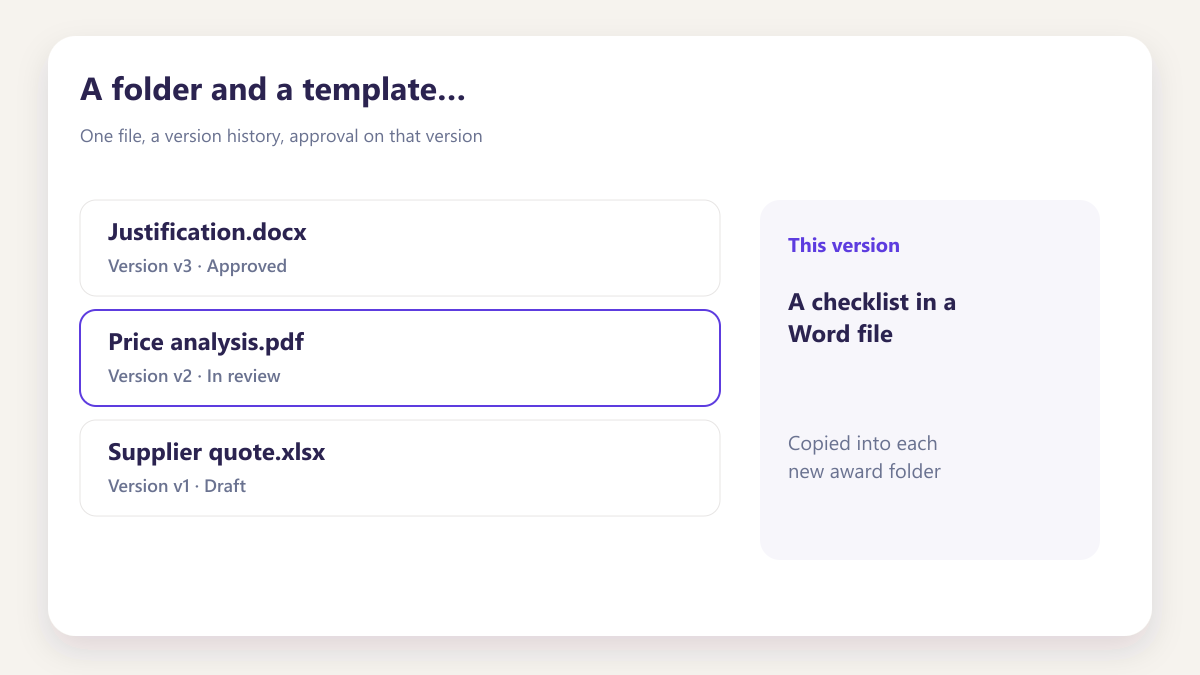
A folder and a template document
A checklist in a Word file, copied into each new award folder, kept by whoever set it up and slightly different every time.
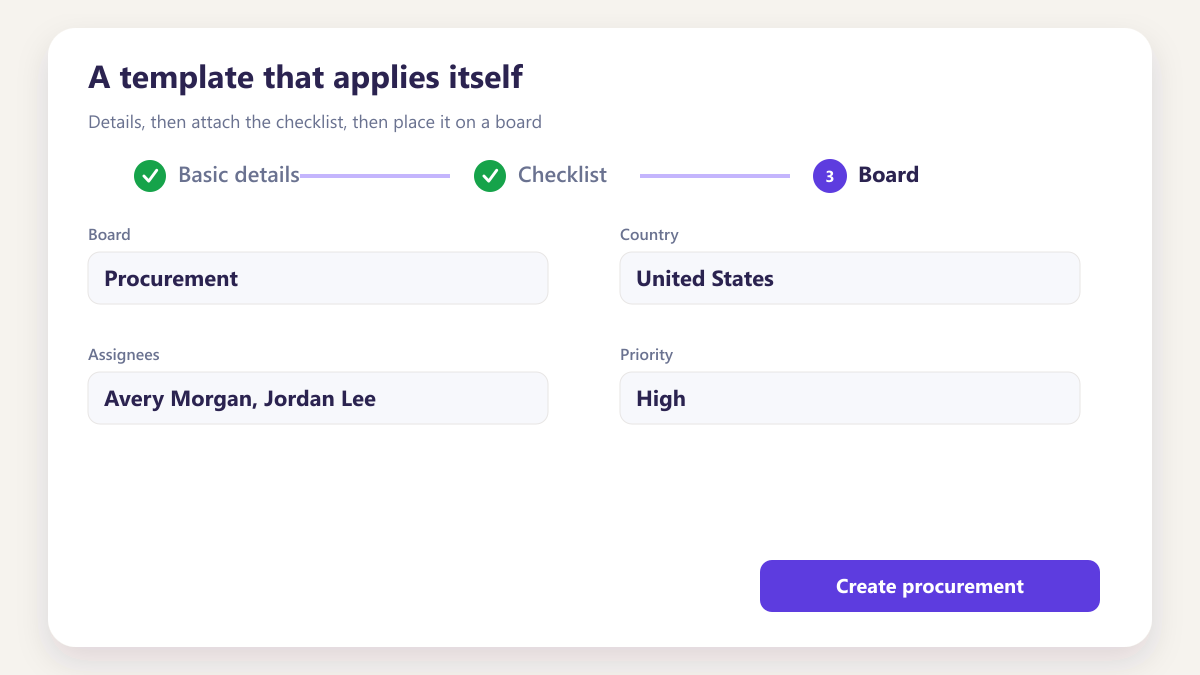
A template that applies itself
Built once and inherited by every award, so the structure is identical without anybody copying anything.
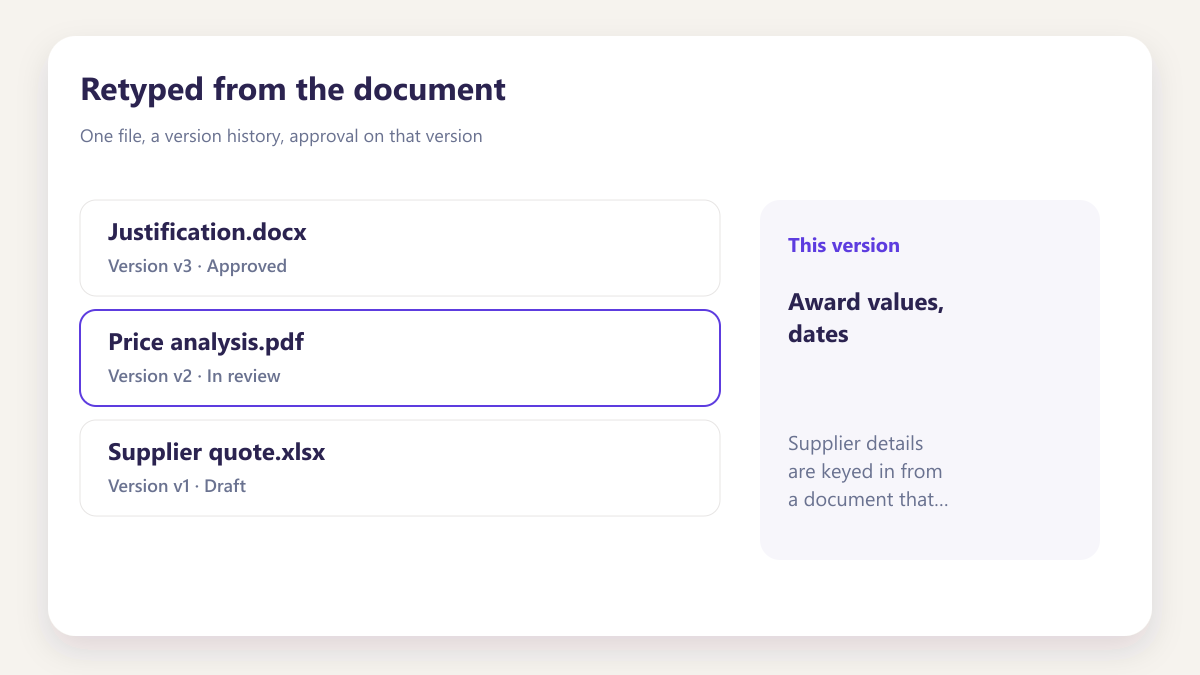
Retyped from the document
Award values, dates and supplier details are keyed in from a document that already contains them, which costs time and introduces errors.
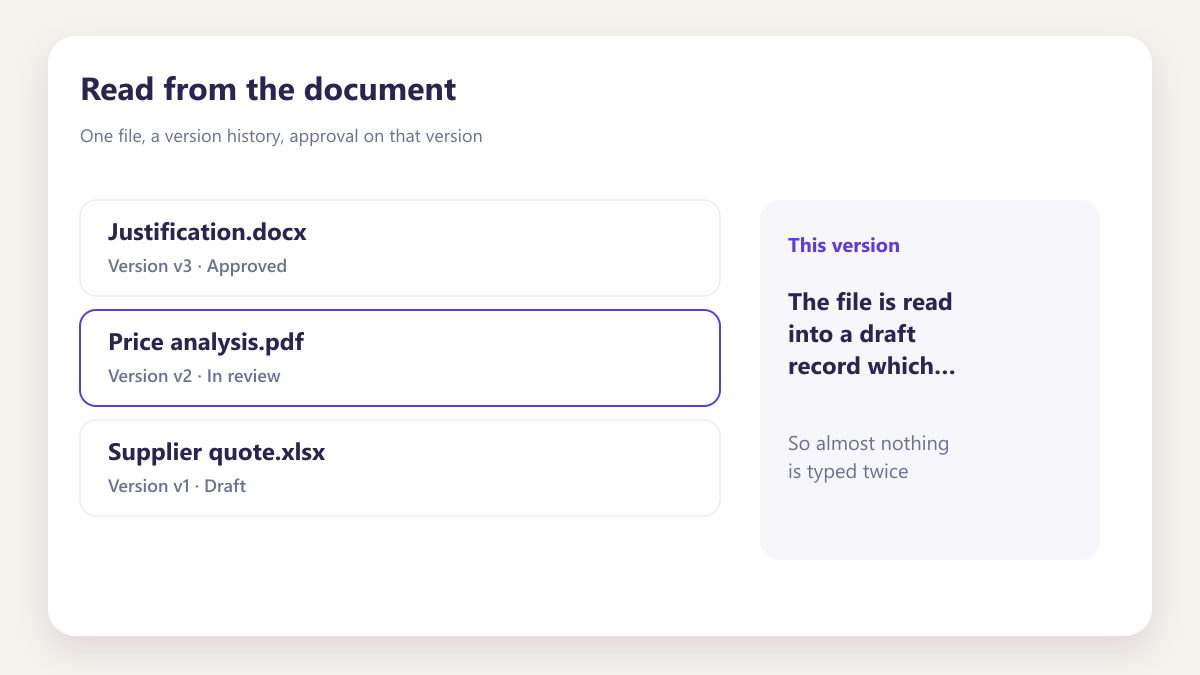
Read from the document
The file is read into a draft record which you review and adjust, so almost nothing is typed twice.
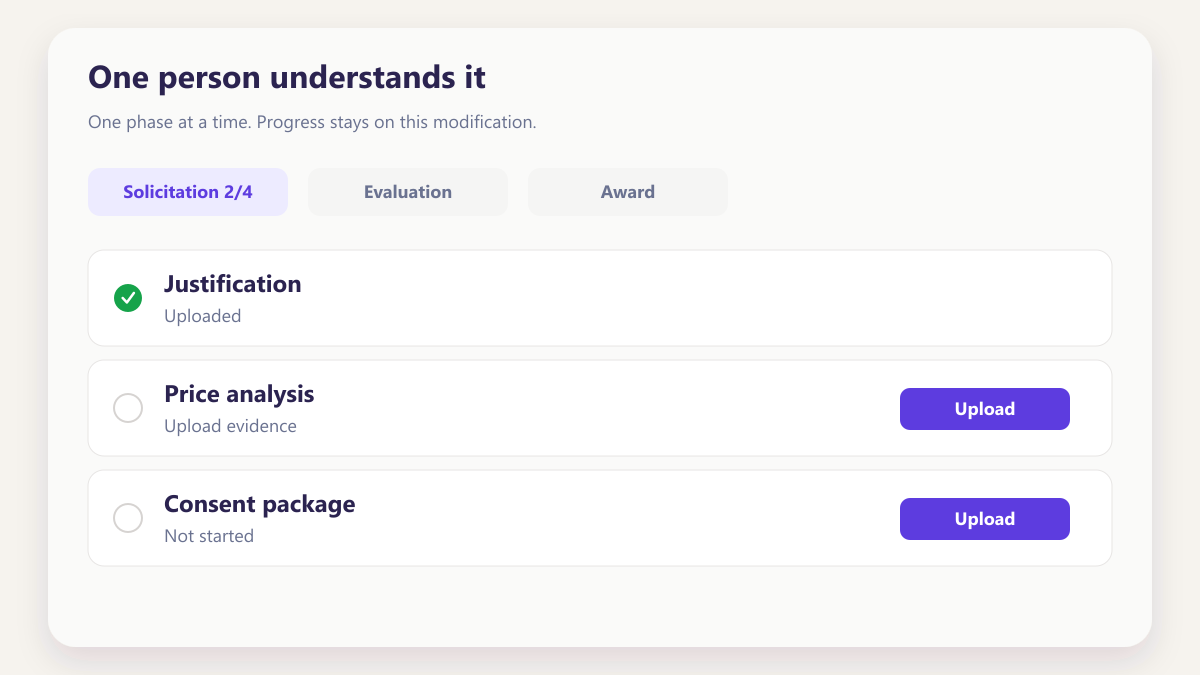
One person understands it
The purchasing file makes sense to whoever built it, and their absence turns a simple request into a problem.
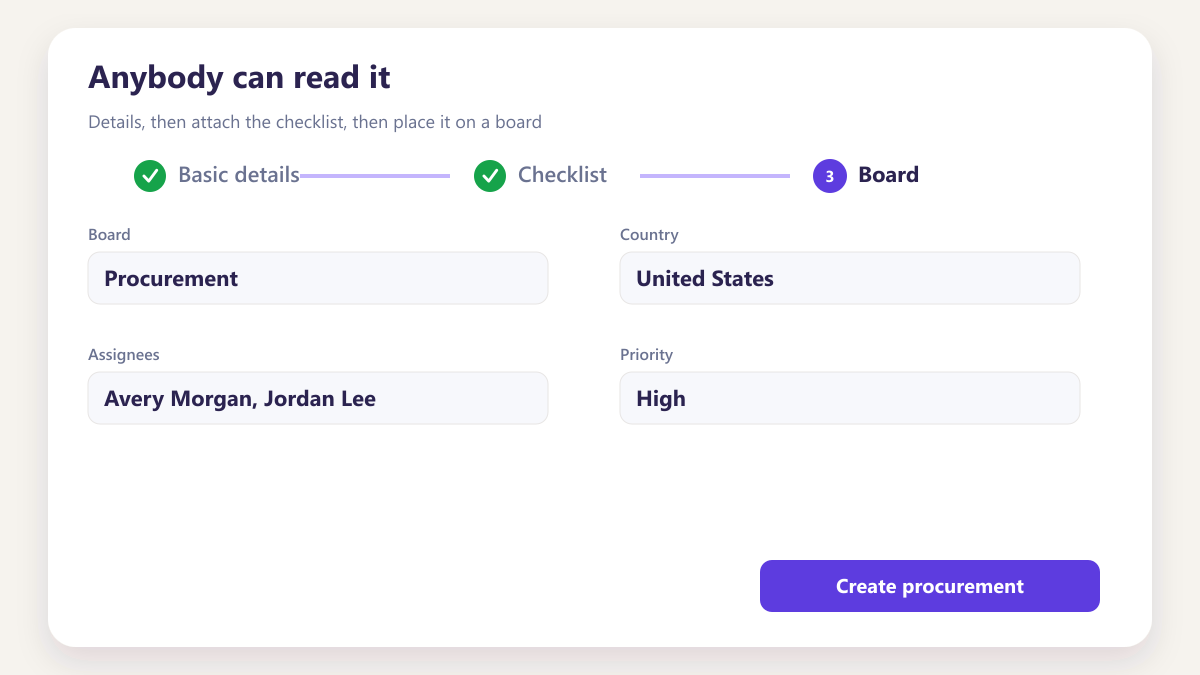
Anybody can read it
Reasoning and evidence sit on the record, so producing a file does not require the person who created it.
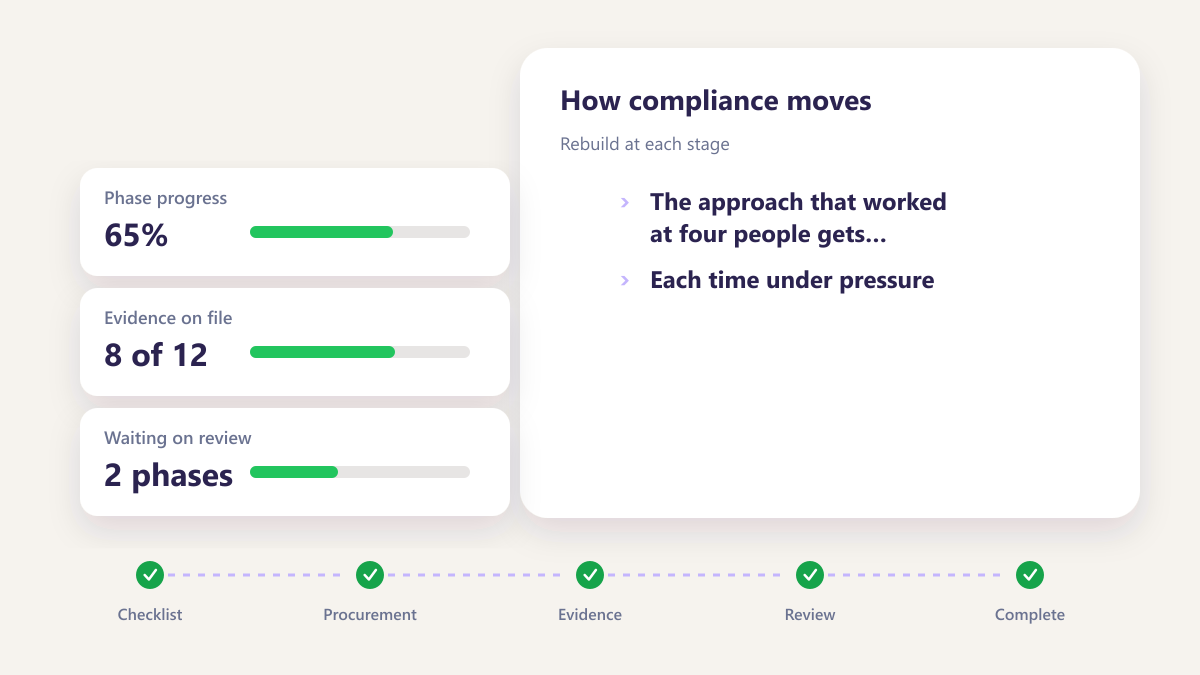
Rebuild at each stage
The approach that worked at four people gets rebuilt at fifteen and again at fifty, each time under pressure.
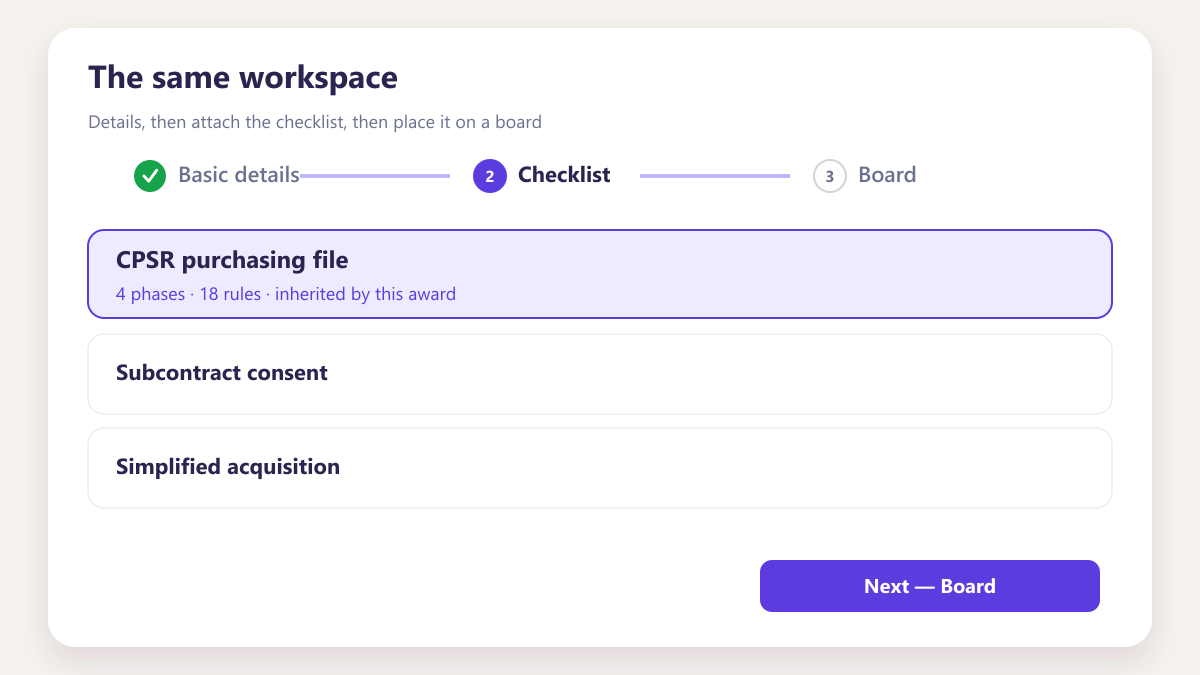
The same workspace
More people are invited, more awards inherit the same template, and nothing is reimplemented.
Six things a small team should not be doing
Six things a small team should not be doing
One template, inherited automatically, rather than copying a previous file each time.
- Rebuilding a checklist per award
- Keying in what was already sent
- Maintaining a folder convention
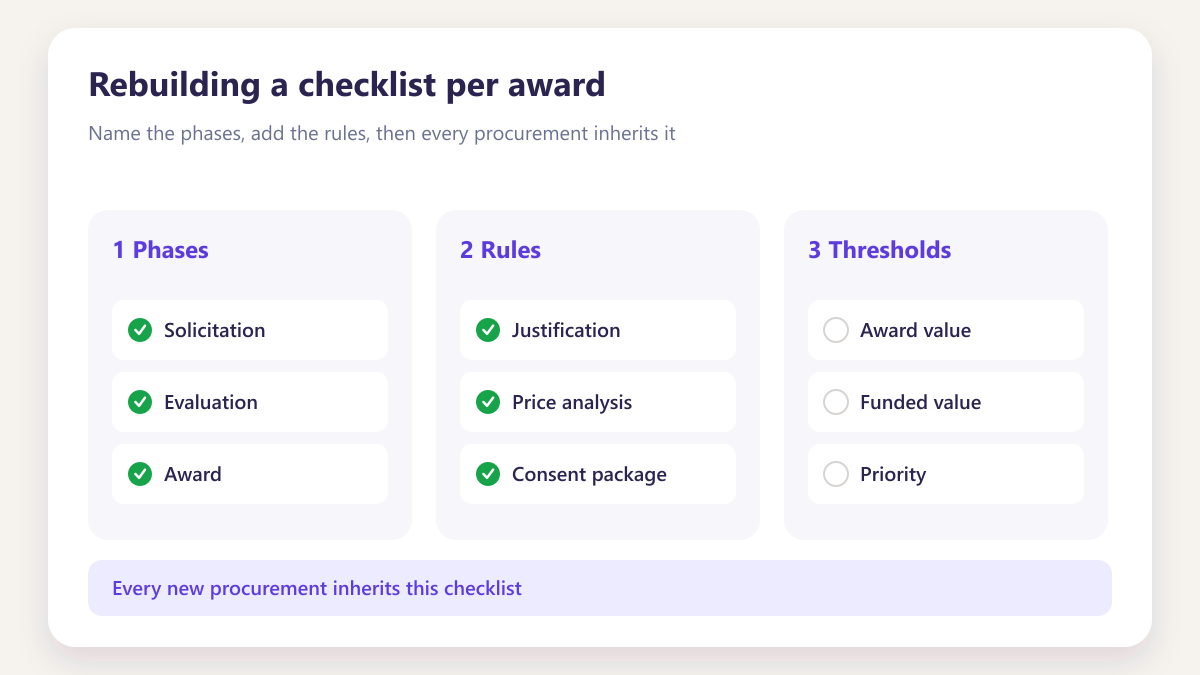
Rebuilding a checklist per award
One template, inherited automatically, rather than copying a previous file each time.
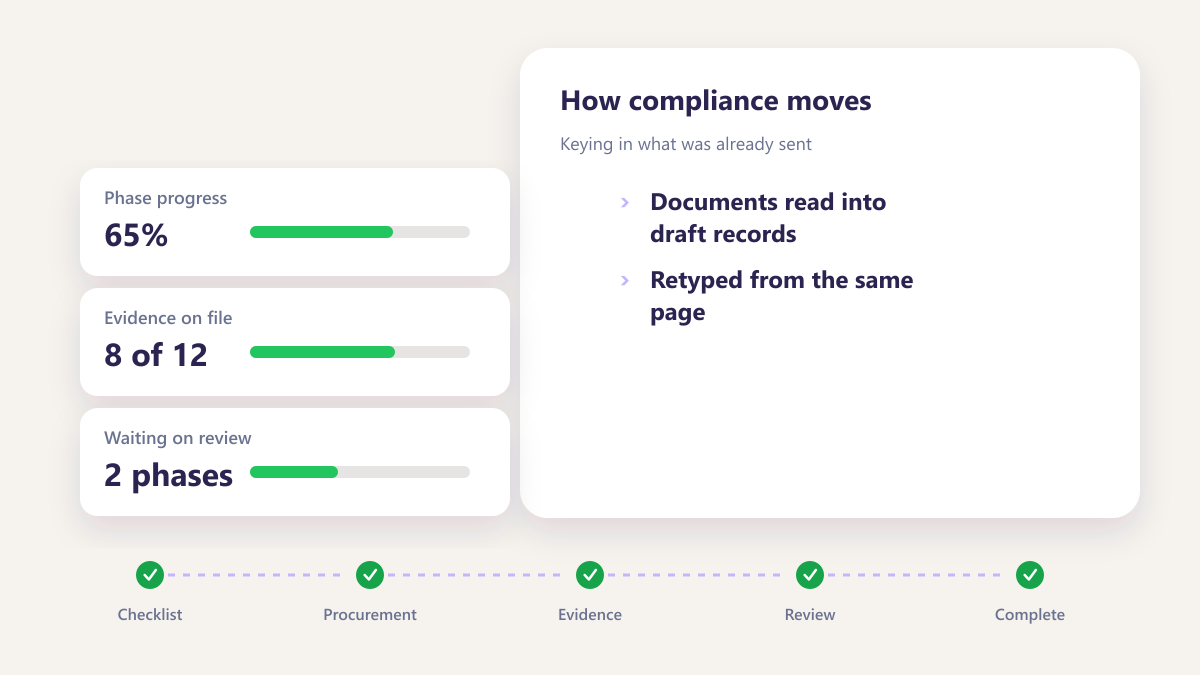
Keying in what was already sent
Documents read into draft records rather than retyped from the same page.
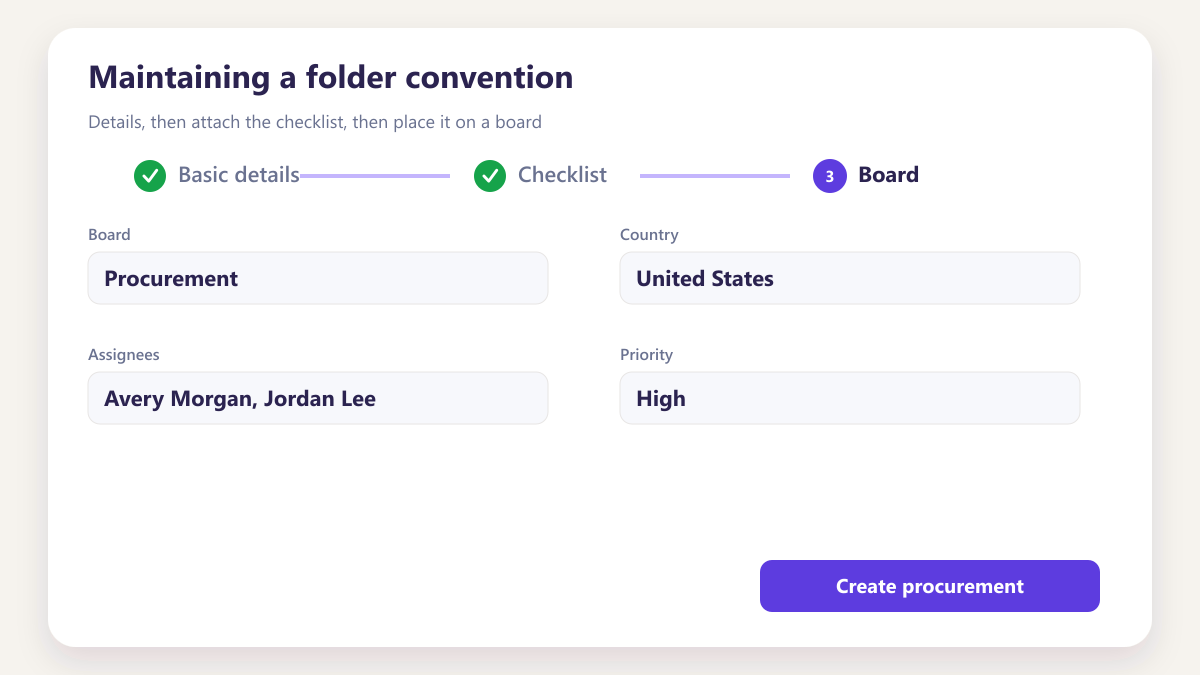
Maintaining a folder convention
The drive is structured by the record, so there is no naming scheme to agree or enforce.
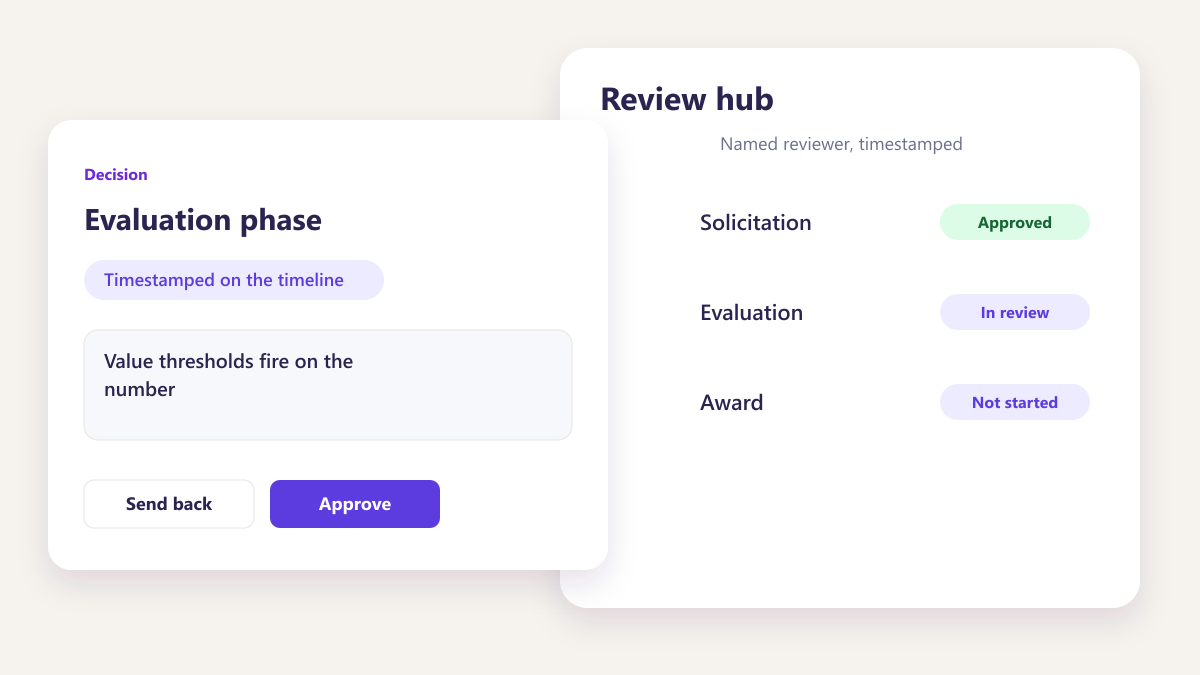
Remembering which award needs approval
Value thresholds fire on the number rather than on somebody noticing.
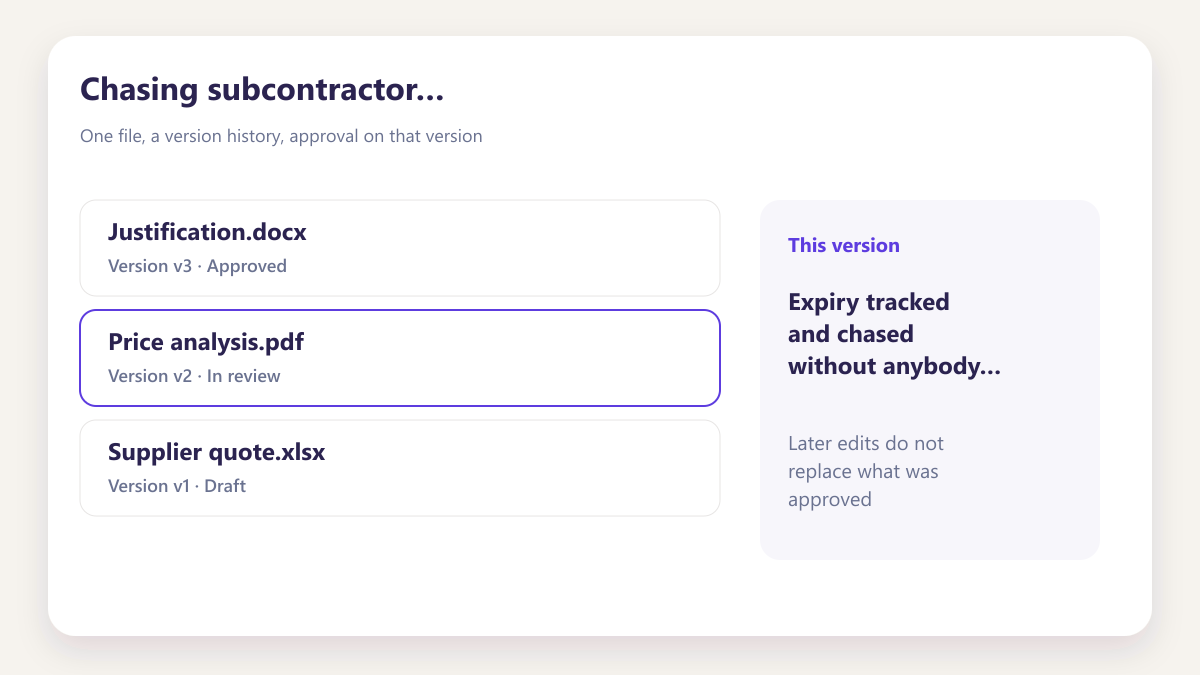
Chasing subcontractor documents
Expiry tracked and chased without anybody keeping a list.
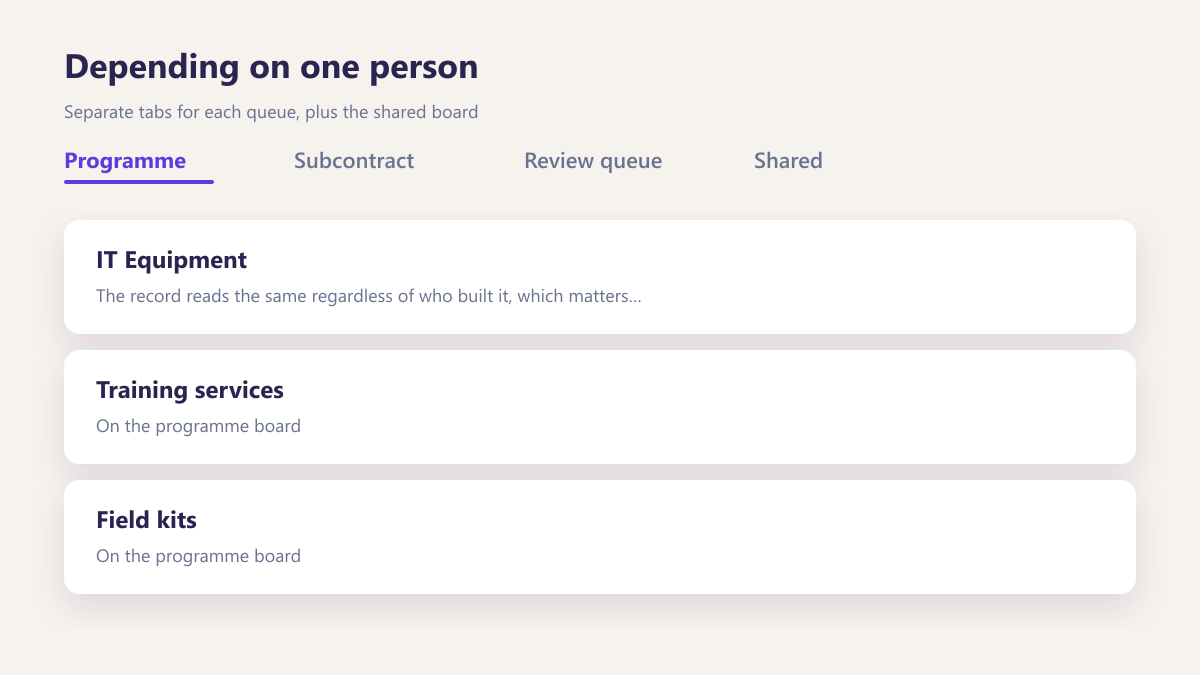
Depending on one person
The record reads the same regardless of who built it, which matters most when the team is small.
The moments that actually hurt
The moments that actually hurt
Documentation expectations rise sharply, and the template already handles them.
- Winning a larger subcontract
- Loading existing awards
- The one person who knows is away
Winning a larger subcontract
Documentation expectations rise sharply, and the template already handles them.
- Template built once, in an afternoon
- Applies to every future award
- No setup per award
- Documentation expectations already covered
Loading existing awards
Read into records from the documents you already hold rather than keyed in over a fortnight.
- Upload the documents you already hold
- Record drafted from them
- Almost no typing
- Fewer keystrokes where small teams win
The one person who knows is away
Anybody with access can produce the file, because nothing important lived only with them.
- Reasoning on the record
- Producible by anyone with access
- Single point of failure removed
- Cover when the one person is away
Growing past fifteen people
More colleagues invited, same template, no reimplementation at any stage.
- New people invited by email
- Same template unchanged
- No reimplementation
- Scales without a rebuild
Questions from small business and 8(a) contractors
Are we too small for this?
We have no back office. Who runs it?
Do we need a compliance specialist to set it up?
What happens as we grow?
We are a sub on most work. Does that matter?
Can we start with one award?
What if the person who set it up leaves?
Other sectors and roles worth reading
Professional services
Engagements where purchasing decisions have to be evidenced afterwards.
Learn more
Small business liaison officers
Subcontracting participation evidenced rather than estimated.
Learn moreBring one award and your policy document
We will build the template from the policy and run the award through it, which is usually the entire setup.
Book a demo