Home / Guides / Consent to subcontract
GuideConsent to subcontract,
and when you actually need it
Whether you need the contracting officer's consent before placing a subcontract depends largely on one thing: whether your purchasing system has been approved. That single fact changes the pace of your buying.
Consent to subcontract is the contracting officer's approval before you place particular subcontracts. Where your purchasing system has been approved following a review, consent is generally required only for subcontracts specifically identified in your contract. Where it has not been approved or approval has been withdrawn, advance notification and consent requirements are considerably broader.
Two things, checked in order
Contractors often check only the first and are caught by the second, or assume approval settles everything.
Two things, checked in order
Whether consent is needed turns on two checks, made in order: what the prime contract says, then the status of your purchasing system.
- First, read the consent clause in the prime contract
- Then, check whether your purchasing system is approved
- An approved system narrows consent to the cases named
| Check | What it means |
|---|---|
| Is your purchasing system approved? | Following a purchasing system review, the administrative contracting officer grants, withholds or withdraws approval. An approved system substantially narrows the subcontracts requiring consent |
| Does your contract identify specific subcontracts? | Individual subcontracts can be named in your contract as requiring consent, and that applies regardless of your system approval status. Reading your own contract is not optional |
| Is the subcontract type or value in scope? | Consent requirements can turn on the type of subcontract and its value, so the answer is determined per award rather than once for the programme |
| Is the sequence right? | Consent obtained after a subcontract has been placed does not retrospectively fix the position, and the dates in the file make the sequence visible |
The practical difference in a purchasing week
The penalty for an unapproved system is rarely financial. It is the pace at which you can commit to subcontractors.
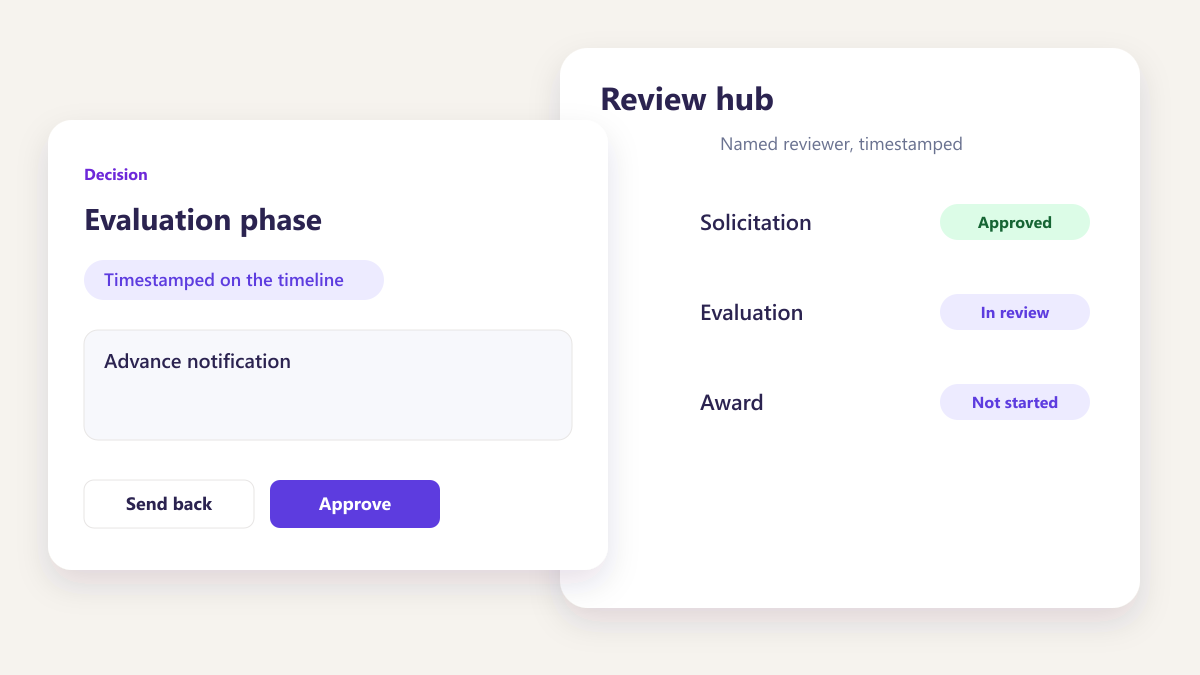
Without approval
Advance notification and consent are required before the subcontract is placed, which introduces a wait into every award of the relevant type.
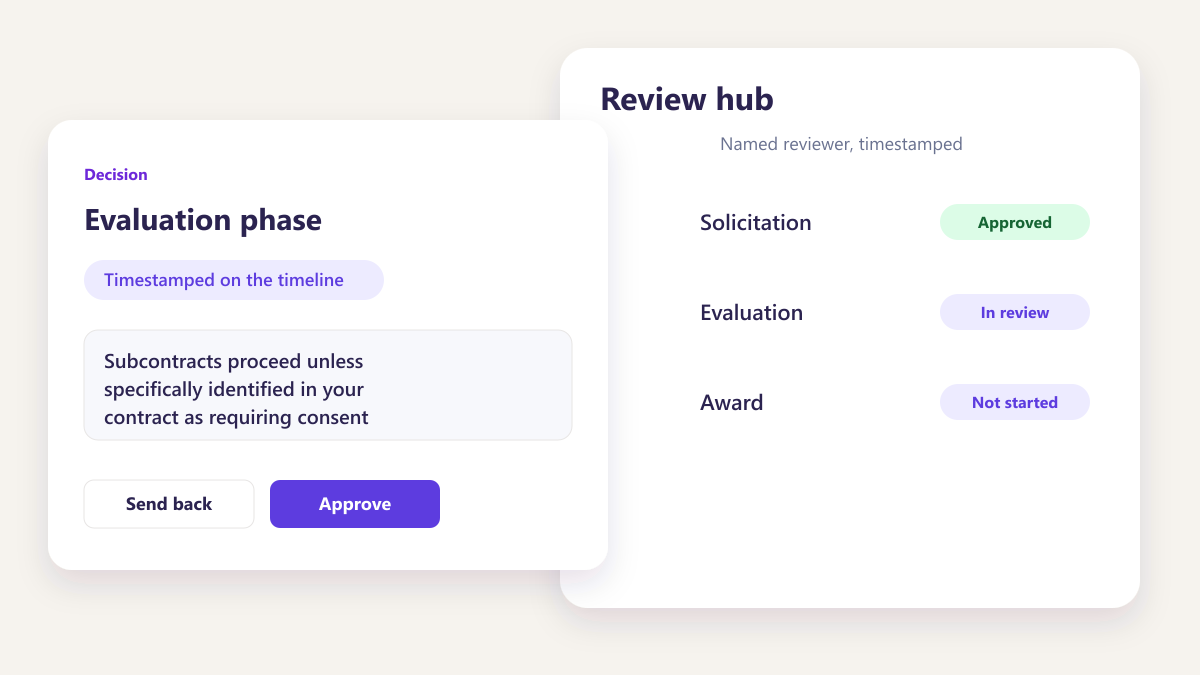
With approval
Subcontracts proceed unless specifically identified in your contract as requiring consent, so the routine path stays fast.
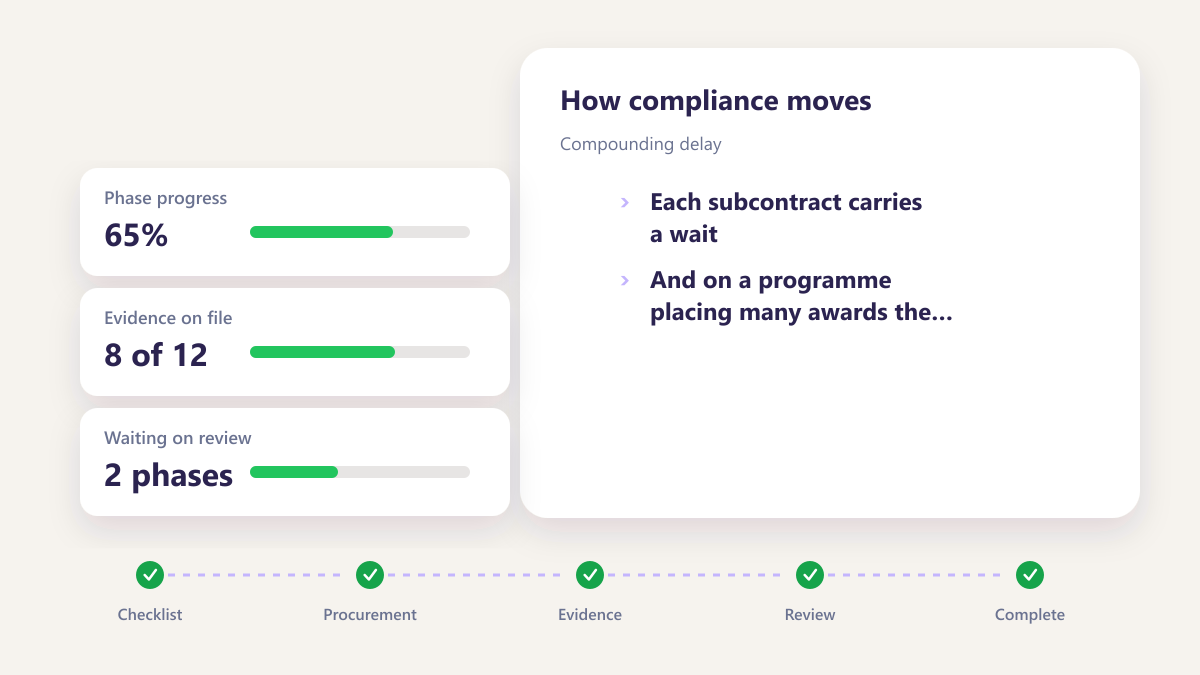
Compounding delay
Each subcontract carries a wait, and on a programme placing many awards the cumulative effect on schedule is substantial.
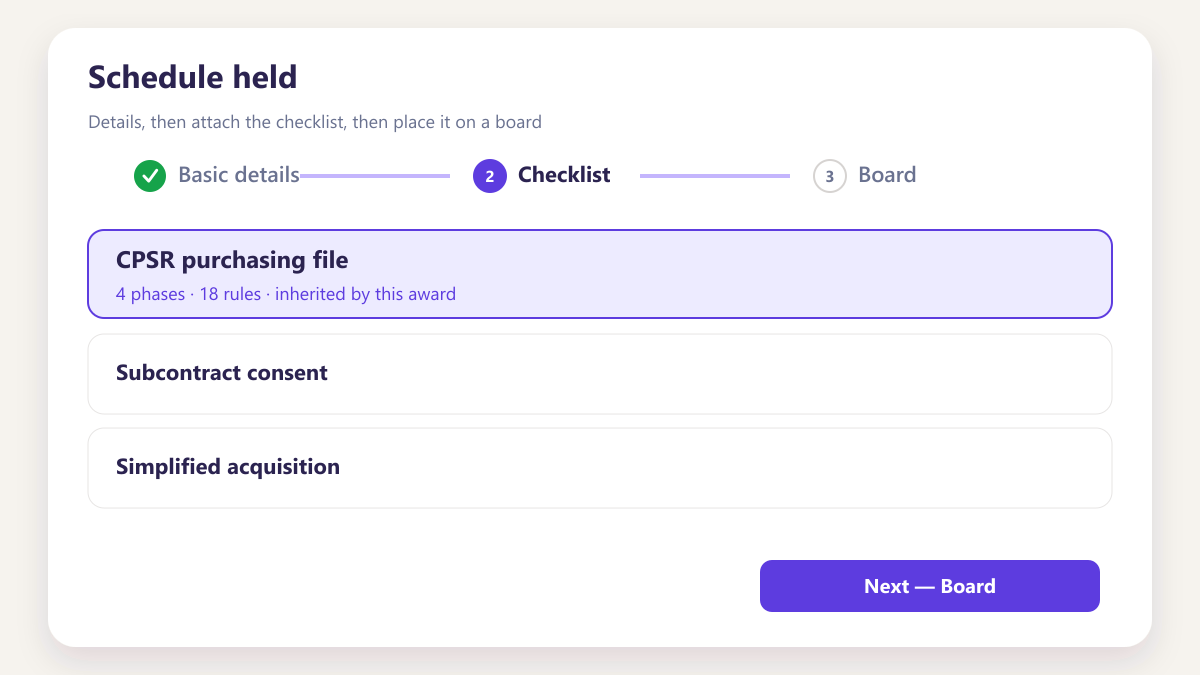
Schedule held
Awards move at the pace of the work rather than the pace of an approval queue, which is usually the strongest argument for getting the system approved.
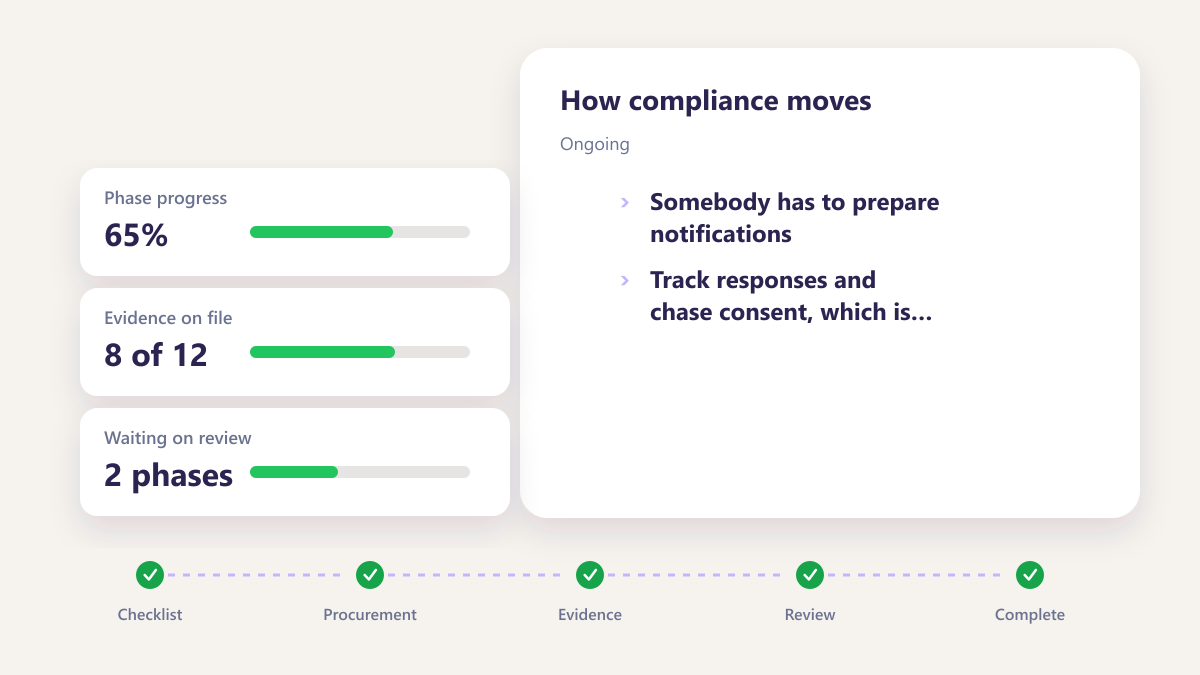
Ongoing
Somebody has to prepare notifications, track responses and chase consent, which is continuous work with no end date.
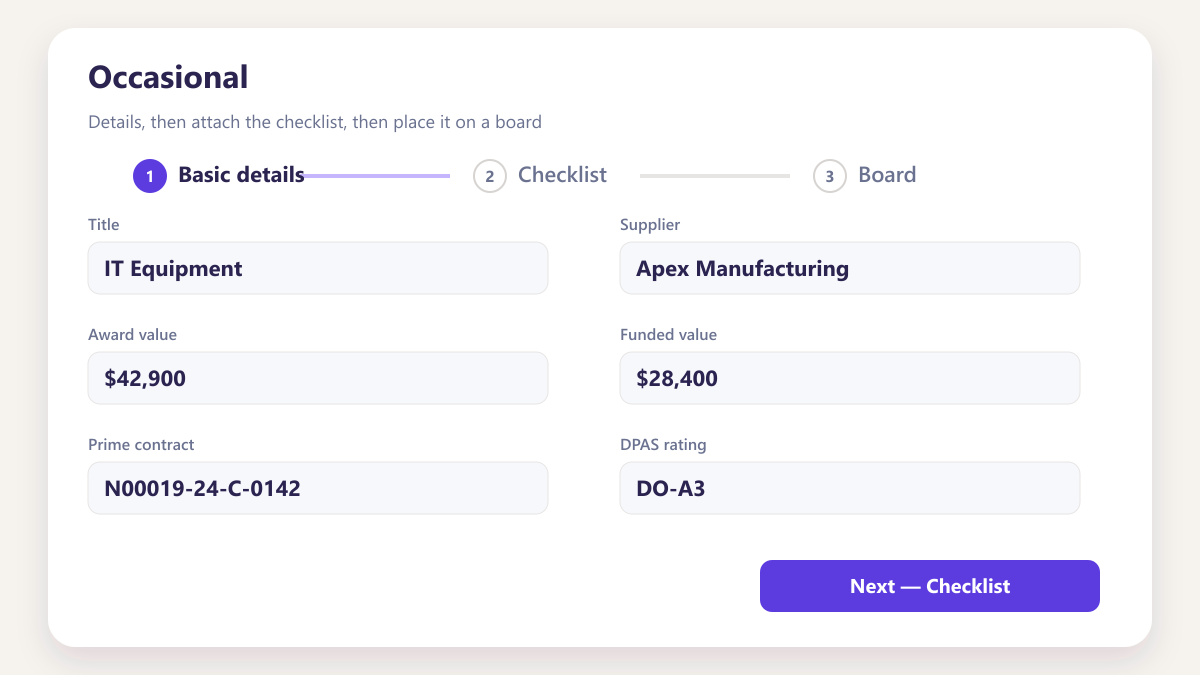
Occasional
Consent applies only to specifically identified subcontracts, so the administrative work is exceptional rather than routine.
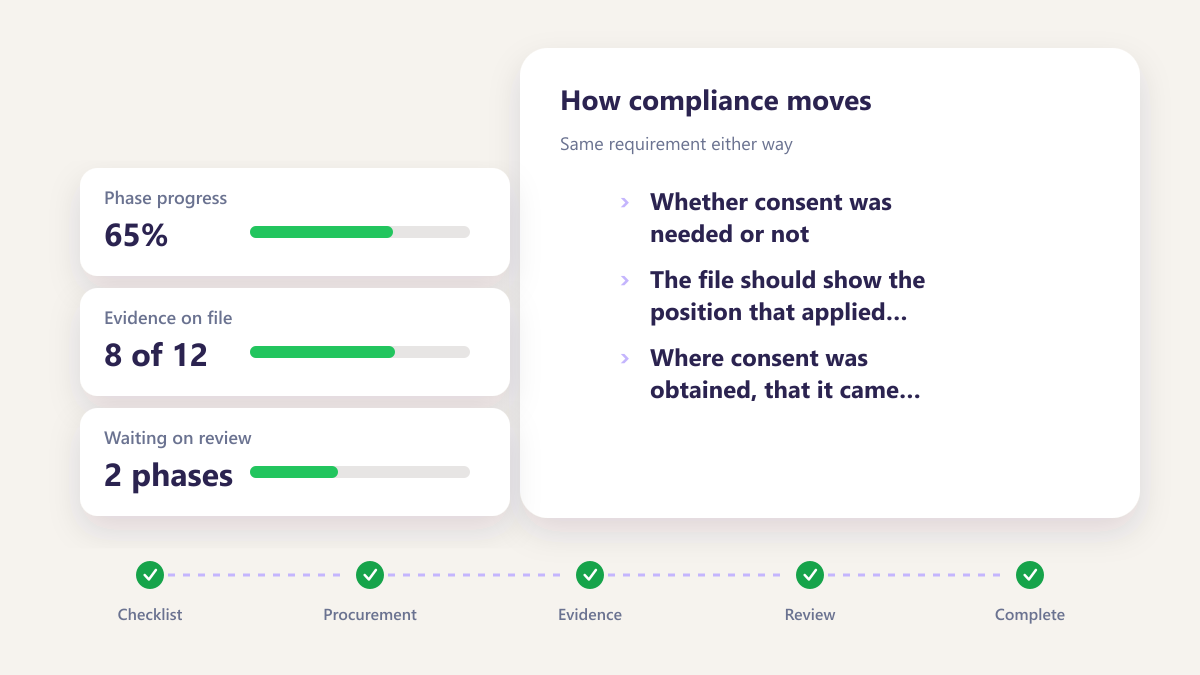
Same requirement either way
Whether consent was needed or not, the file should show the position that applied and, where consent was obtained, that it came before the award.
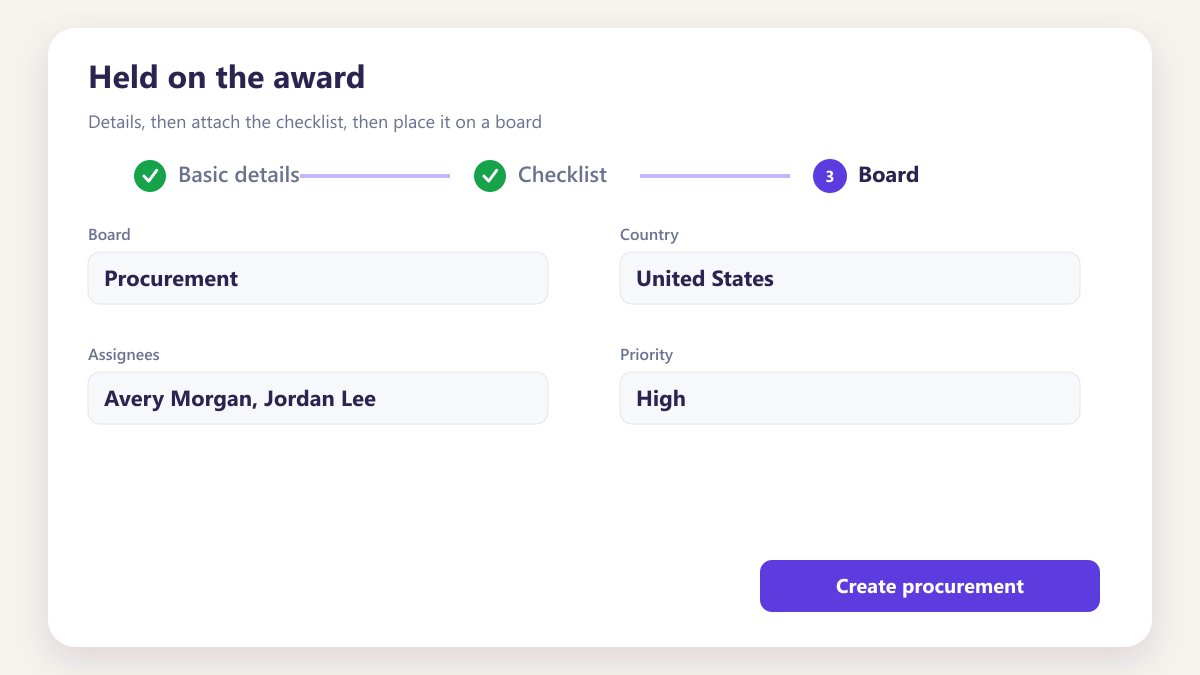
Held on the award
Notification and consent attach to the subcontract record with their dates, so the sequence is provable rather than asserted.
Four items on any subcontract touching consent
Four items on any subcontract touching consent
When consent applies, the subcontract file needs the same four items every time, and all of them in place before award.
- The consent request and what it covered
- Consent from the contracting officer, dated before award
- Pricing and flow-downs as they were submitted
| Item | Detail |
|---|---|
| The determination | Whether consent was required for this subcontract, and on what basis that was decided |
| The notification | Where required, what was sent to the contracting officer and when |
| The consent | The response received, attached to the subcontract record rather than held in an inbox |
| The dates | Enough to show that consent preceded the award, because that sequence is what gets tested |
Consent requirements can also arise from terms specific to your contract. Confirm the position from your own contract rather than from general practice.
Four habits
Determine it per subcontract
Consent requirements turn on type, value and what your contract names, so a single programme wide assumption tends to be wrong somewhere.
Learn moreKeep the sequence provable
Consent obtained after placement does not fix the position, and the dates in the file make the order visible.
Learn moreAttach the response to the award
Consent held in an inbox is the same problem as flow-downs held in an inbox, and it surfaces the same way in a sample.
Learn moreTreat approval as a schedule issue
The strongest internal argument for an approved purchasing system is usually pace rather than compliance.
Learn moreCommon questions about consent to subcontract
What is consent to subcontract?
Does an approved purchasing system remove the requirement?
Can consent be required even with an approved system?
What happens if we place a subcontract without required consent?
What is the real cost of an unapproved system?
Where should consent evidence live?
Does this apply to civilian agency contracts too?
Other explainers and the pages they connect to
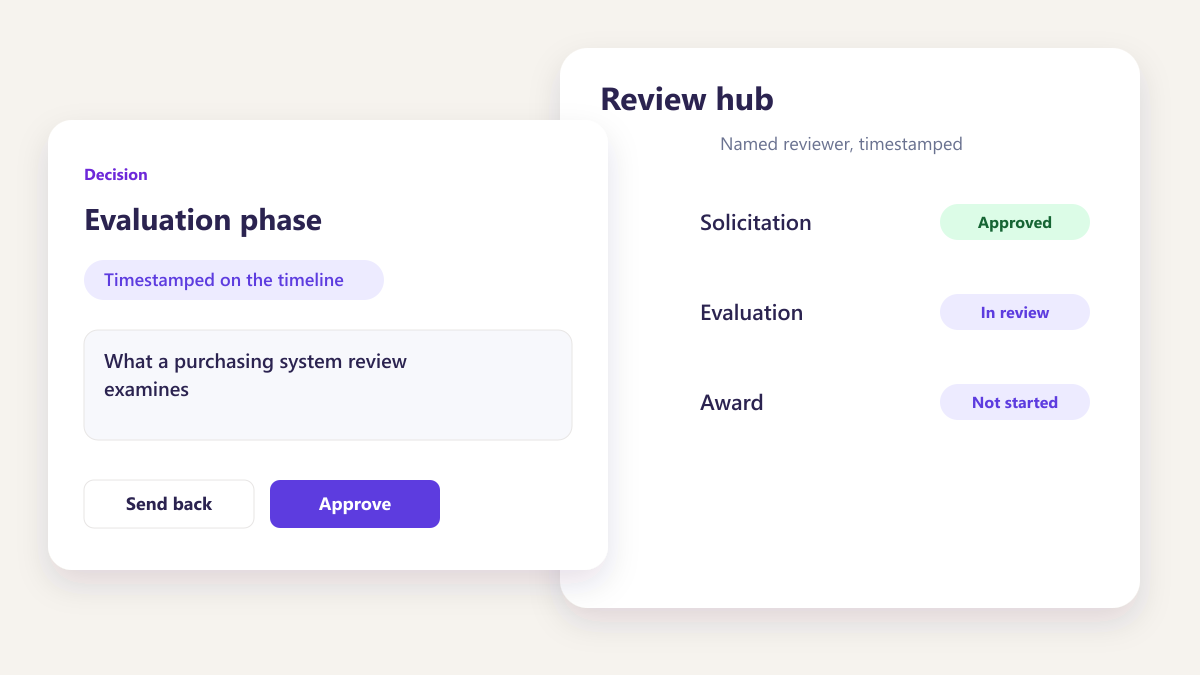
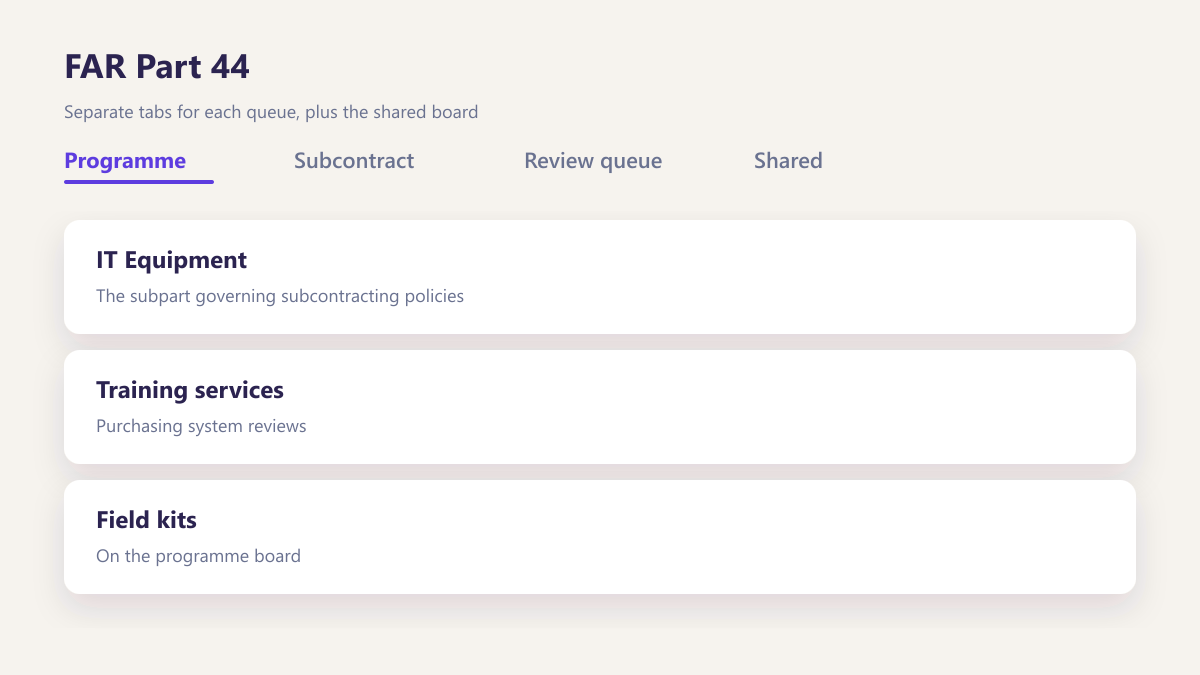
FAR Part 44
The subpart governing subcontracting policies and purchasing system reviews.
Learn more
Check your consent position
Bring a recent subcontract and your contract terms. We will walk through what the file should hold and in what order.
Book a demo