Home / Glossary / Purchase thresholds
GlossaryPurchase thresholds,
and what changes at each one
Thresholds decide how much process a purchase carries. They also move, and a policy citing figures that were superseded is one of the more common findings in a purchasing review.
As adjusted effective 1 October 2025 by FAC 2025-06, the standard micro-purchase threshold is $15,000 and the standard simplified acquisition threshold is $350,000. Below the micro-purchase threshold, purchases can be made without soliciting competitive quotations where the price is reasonable. Above the simplified acquisition threshold, fuller competition and documentation requirements apply. Variants exist for particular circumstances.
And what each level changes
These are the standard figures. Exceptions apply in particular circumstances, including contingency operations and certain categories of buyer, so check the current text at FAR 2.101 before relying on a number.
And what each level changes
These are the standard figures. Exceptions apply in particular circumstances, including contingency operations and certain categories of buyer, so check the current text at FAR 2.101 before relying on a number.
- $15,000 micro-purchase threshold, from 1 October 2025
- $350,000 simplified acquisition threshold
- Lighter documentation below a threshold is not none
| Level | Standard figure | What it means in practice |
|---|---|---|
| Micro-purchase threshold | $15,000 | Purchases at or below can generally be made without soliciting competitive quotations, provided the price is reasonable and that reasonableness is documented. Lighter does not mean undocumented. |
| Simplified acquisition threshold | $350,000 | Between the micro-purchase threshold and this figure, simplified acquisition procedures apply. Competition is expected and the file is expected to show it. |
| Above the SAT | Over $350,000 | Fuller competition and documentation requirements apply, including formal analysis supporting the price and a file that demonstrates how the decision was reached. |
| Subcontracting plan floor | $900,000 | The threshold at FAR 19.702 above which a prime contractor may be required to submit a small business subcontracting plan, raised from $750,000 in the same adjustment. |
The figure is rarely the problem
Reviewers seldom find a contractor that does not know what a threshold is. What they find is policies and habits built around figures that have since moved.
The figure is rarely the problem
Reviewers seldom find a contractor that does not know what a threshold is. What they find is policies and habits built around figures that have since moved.
- Keep the number out of the policy prose
- Fire the rule on award value, not on memory
- Watch for clustering just below a limit
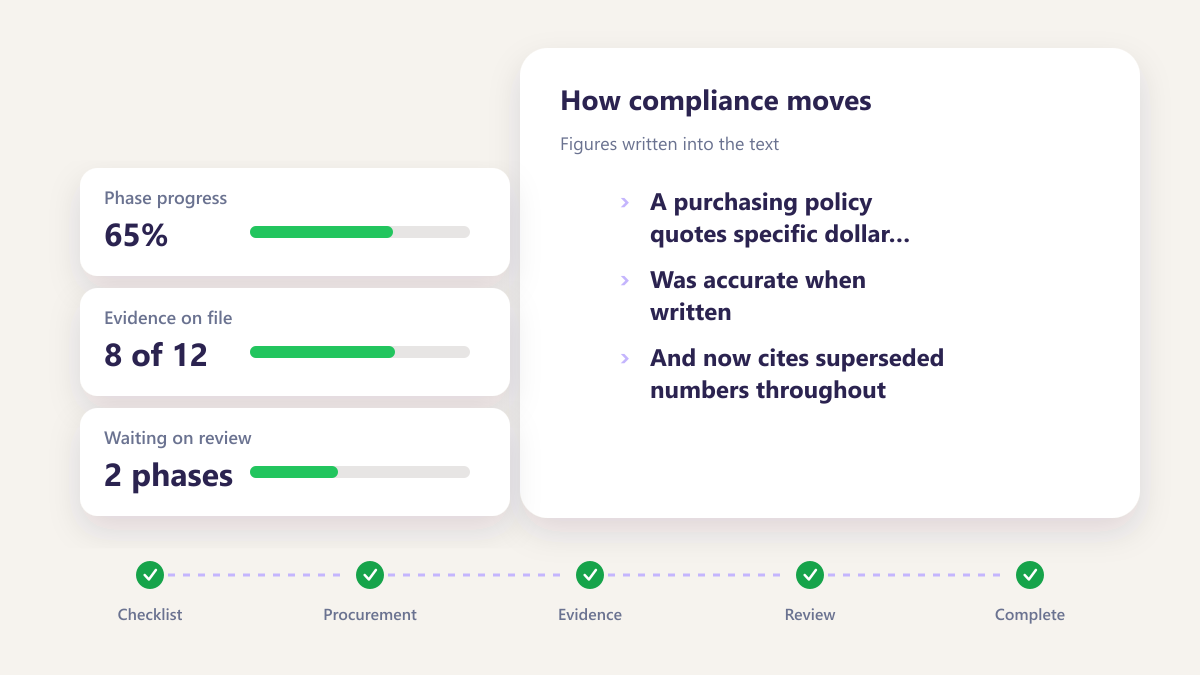
Figures written into the text
A purchasing policy quotes specific dollar amounts in its body, was accurate when written, and now cites superseded numbers throughout.
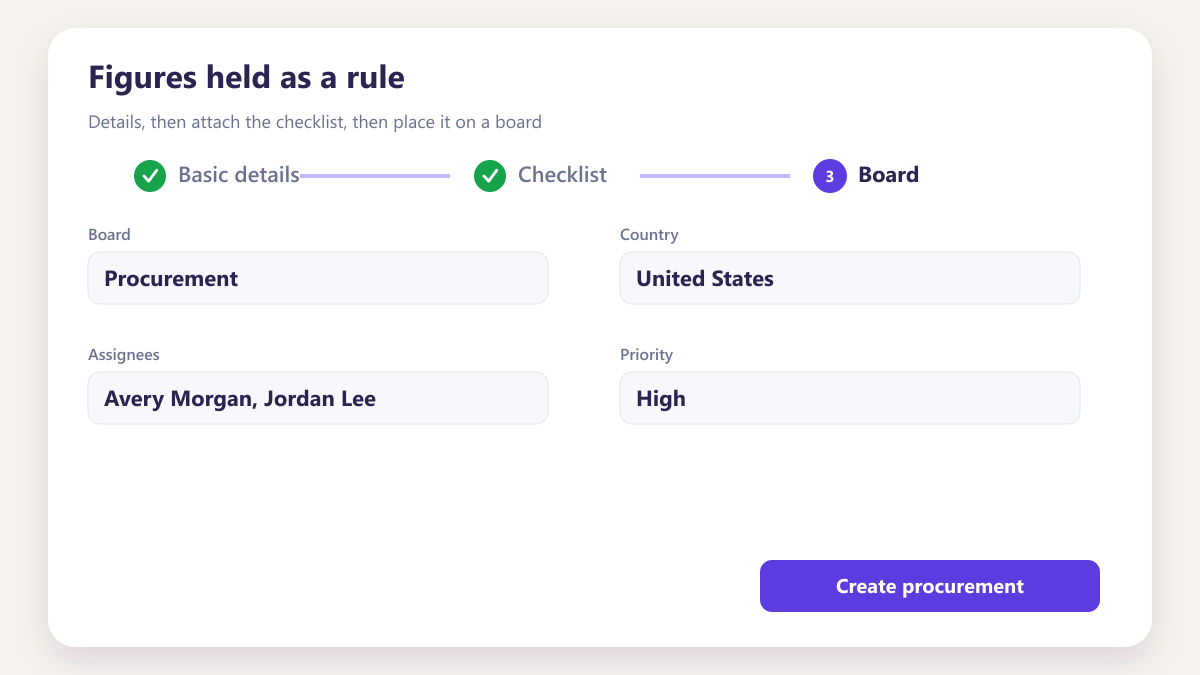
Figures held as a rule
The policy describes the principle and the actual number lives as a rule in the system, so updating it is one edit rather than a document rewrite.
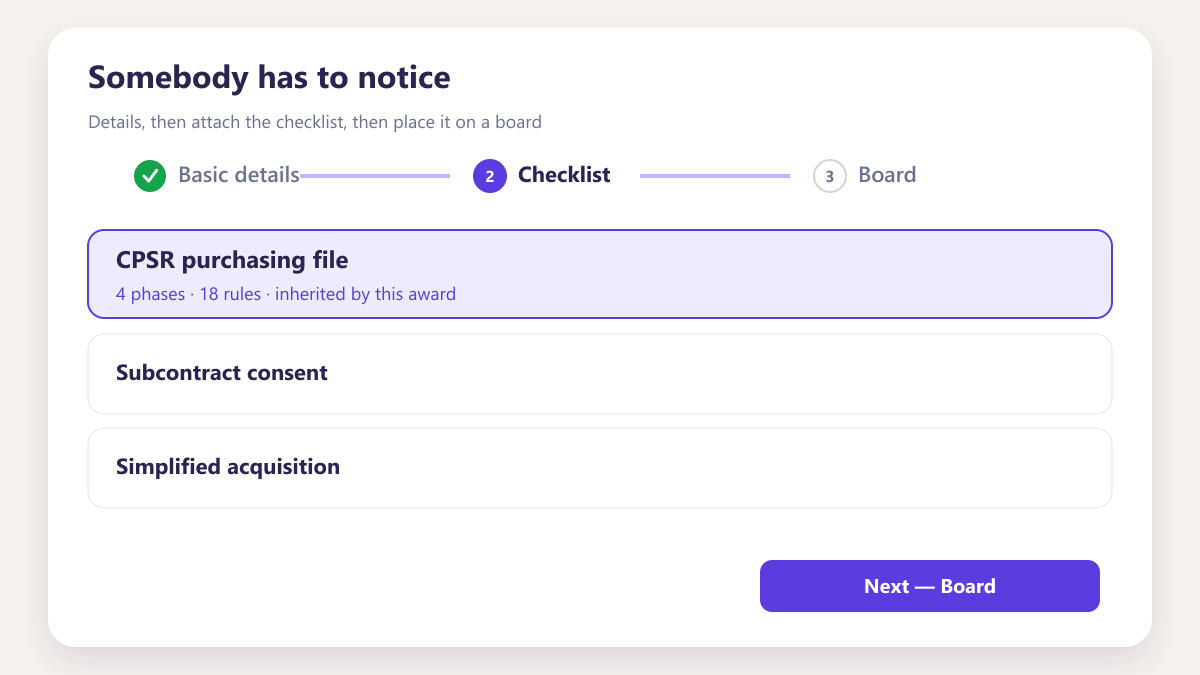
Somebody has to notice
Whether a purchase crosses a threshold depends on a buyer recognising the value as significant, which is exactly what fails in a busy quarter.
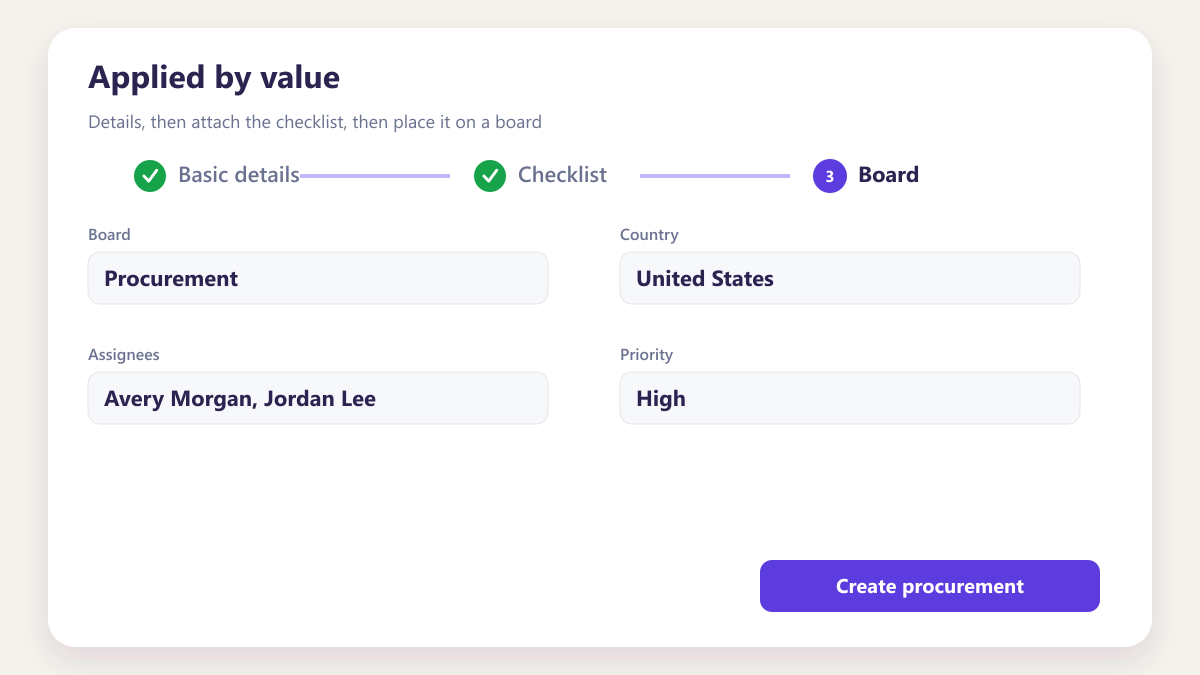
Applied by value
The rule fires on the award amount, so the same value routes the same way regardless of who placed it or how busy the month was.
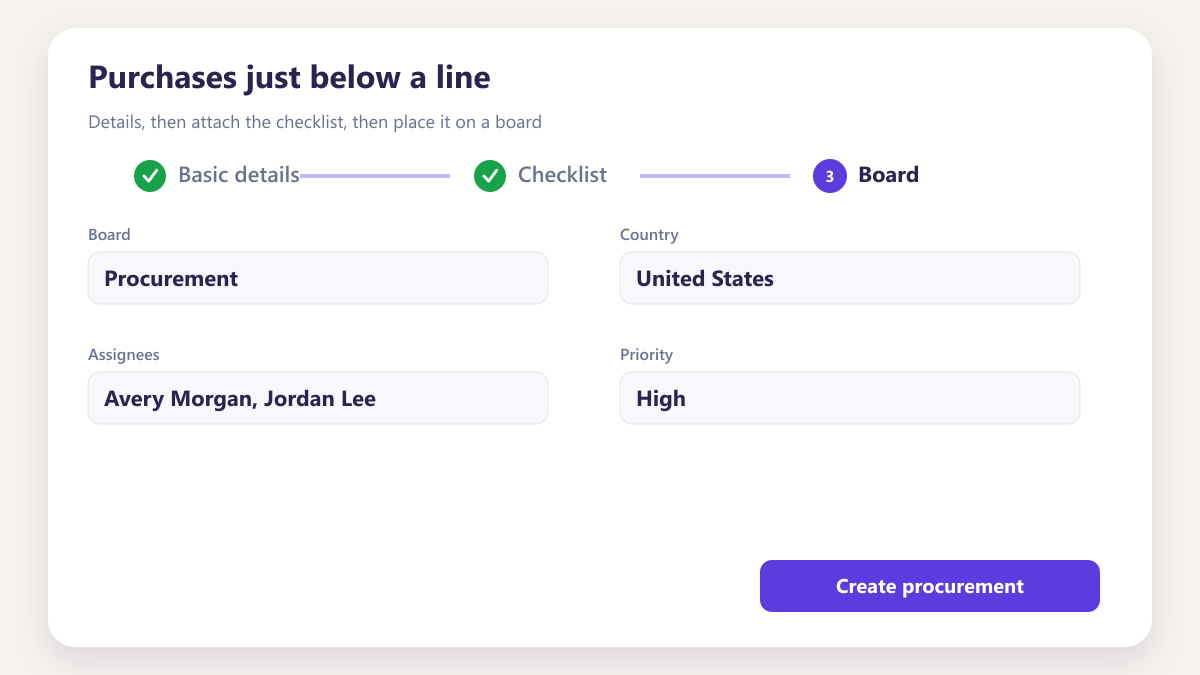
Purchases just below a line
Repeat purchases sitting just under a threshold attract attention, whether or not anything improper happened, and the pattern is invisible transaction by transaction.
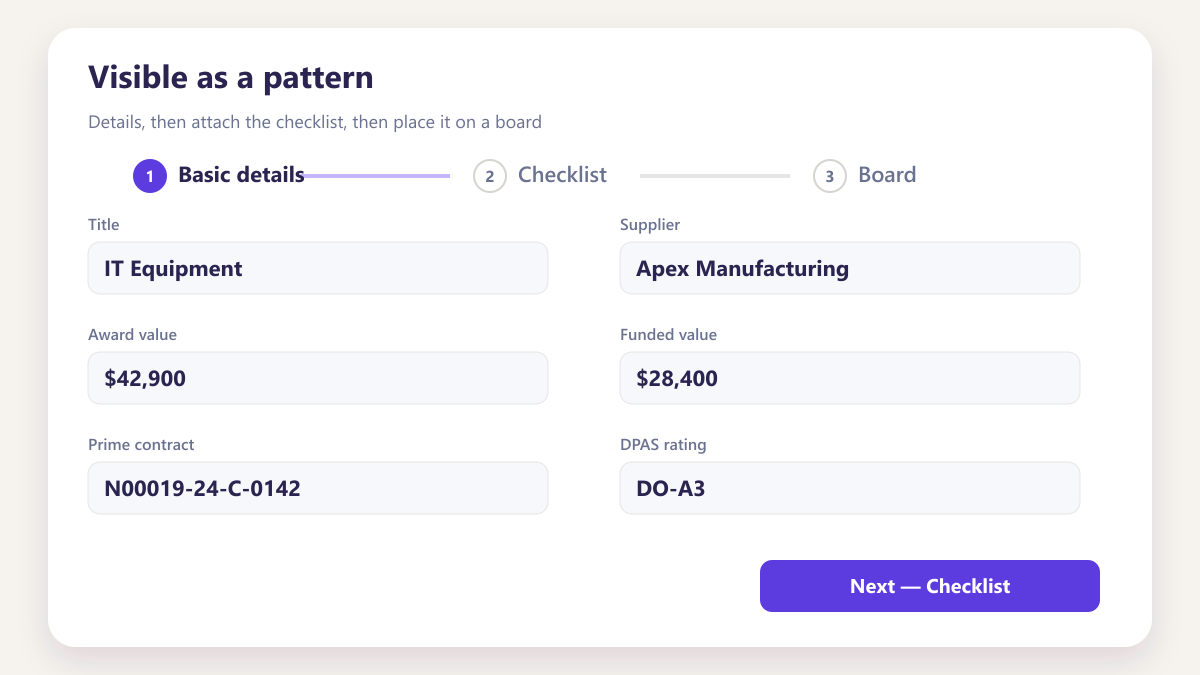
Visible as a pattern
Clustering below a limit is surfaced as a trend, which usually reveals that the threshold no longer matches how the team actually buys.
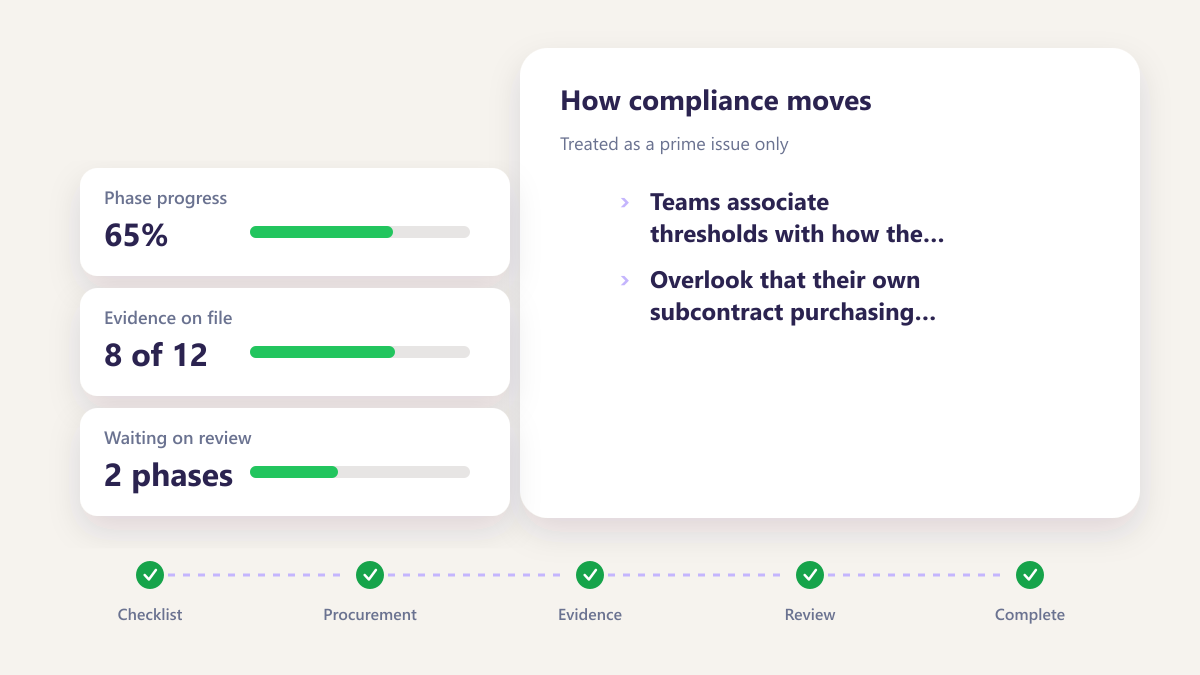
Treated as a prime issue only
Teams associate thresholds with how the government buys from them and overlook that their own subcontract purchasing carries documentation expectations too.
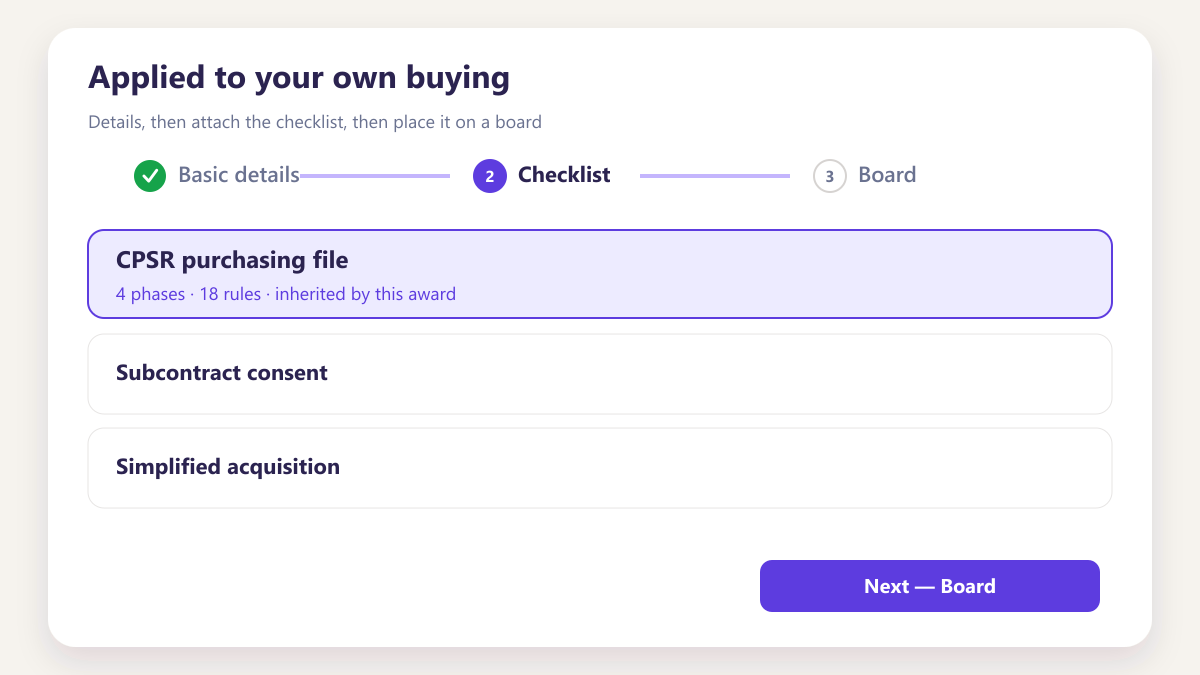
Applied to your own buying
The same principle runs downward. What you document when placing a subcontract is what a purchasing review examines.
Figures moved together
| Item | Previous | Current |
|---|---|---|
| Micro-purchase threshold | $10,000 | $15,000 |
| Simplified acquisition threshold | $250,000 | $350,000 |
| Small business subcontracting plan floor, FAR 19.702 | $750,000 | $900,000 |
Adjusted by FAC 2025-06 effective 1 October 2025 under the statutory inflation adjustment cycle. Separate changes affecting cost accounting and certified cost or pricing data thresholds took effect for contracts entered into after 30 June 2026. Always confirm the current figure at FAR 2.101 before applying it.
Four habits that survive the next adjustment
Keep the number out of the prose
A policy that states the principle and holds the figure as a rule survives an adjustment without a rewrite.
Learn moreFire the rule on award value
A threshold depending on somebody recognising significance is a threshold that behaves differently in December.
Learn moreWatch for clustering below a limit
Usually a sign the threshold sits below how the team actually buys rather than evidence of anything improper.
Learn moreApply it to your own subcontracts
Thresholds are not only about how the government buys from you. Your purchasing file is what gets sampled.
Learn moreCommon questions about purchase thresholds
What is the micro-purchase threshold?
What is the simplified acquisition threshold?
Do purchases below the micro-purchase threshold need documentation?
How often do these figures change?
Do thresholds apply to our subcontract purchasing?
Why do purchases just below a threshold attract attention?
Should thresholds be written into our policy document?
Other explainers and the pages they connect to
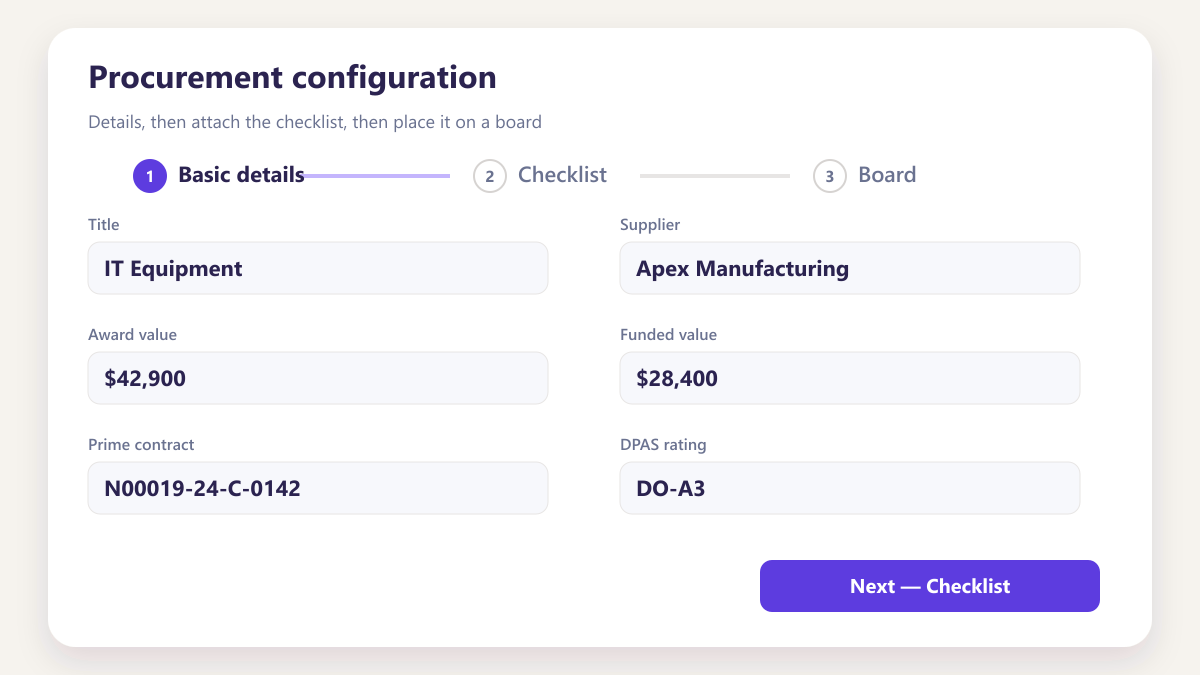
Procurement configuration
Value rules that fire on the award amount rather than on somebody noticing.
Learn moreSet your thresholds as rules
Bring your current approval limits. We will configure them on the call and show which of your recent awards would have routed differently.
Book a demo