Home / Solutions / Program managers
RoleProcureAudit for Program Managers | Subcontract Progress
Progress across a program, without chasing anybody
You need to know which subcontracts are moving and which have quietly stopped. Getting that today means asking people, which costs their time and yours and produces an answer that is already out of date.
Each of them weekly
None of these are the job. All of them consume the time that should go to the job.
Asking each buyer where their subcontracts have got to, assembling the answers, and presenting a picture that was accurate when you started writing it.
- Progress and last movement on every card
- A board you arranged for your own program
- Updated by the work rather than by reporting
- Everybody looking at the same thing
Finding stalled subcontracts today means noticing that somebody has gone quiet, which relies on you remembering what should have moved.
- Records with no recent activity flagged
- Unassigned work surfaced rather than hidden
- Owner visible against each item
- Found by the system rather than by memory
Assembling a deck of where things are, which everybody then reads aloud, is a large recurring cost that produces very few decisions.
- No preparation, because the board is the picture
- Everybody sees the same live view
- Meeting time spent on decisions
- Nothing out of date by the time it is discussed
How program oversight usually works
All of this functions. It simply costs more time than it needs to and produces information that is always slightly stale.
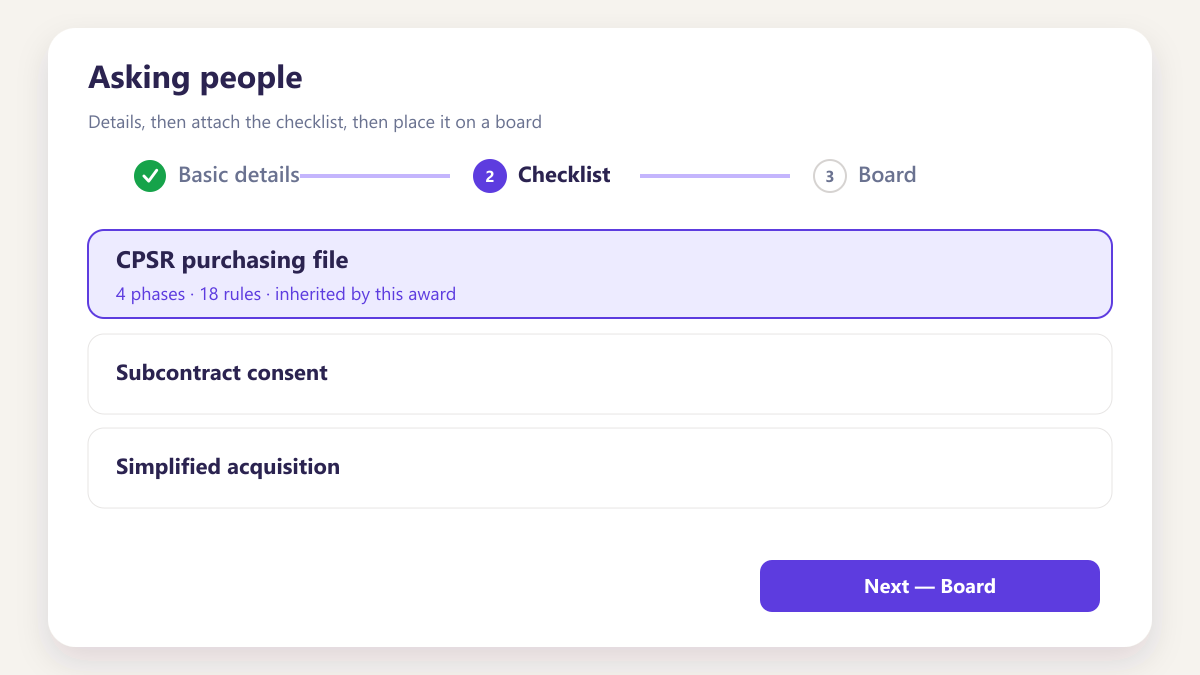
Asking people
A round of messages to buyers, answers collected over a day or two, assembled into a picture that is out of date on arrival.
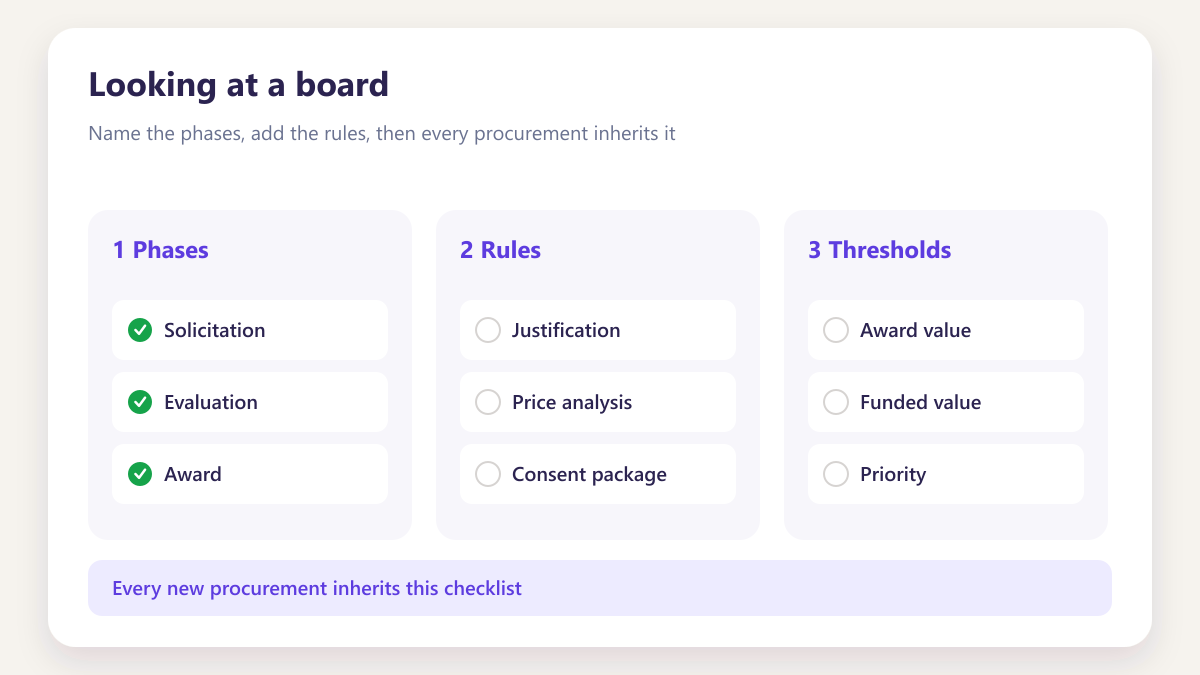
Looking at a board
Progress, owner and last movement on cards that update as work happens, arranged the way your program needs.
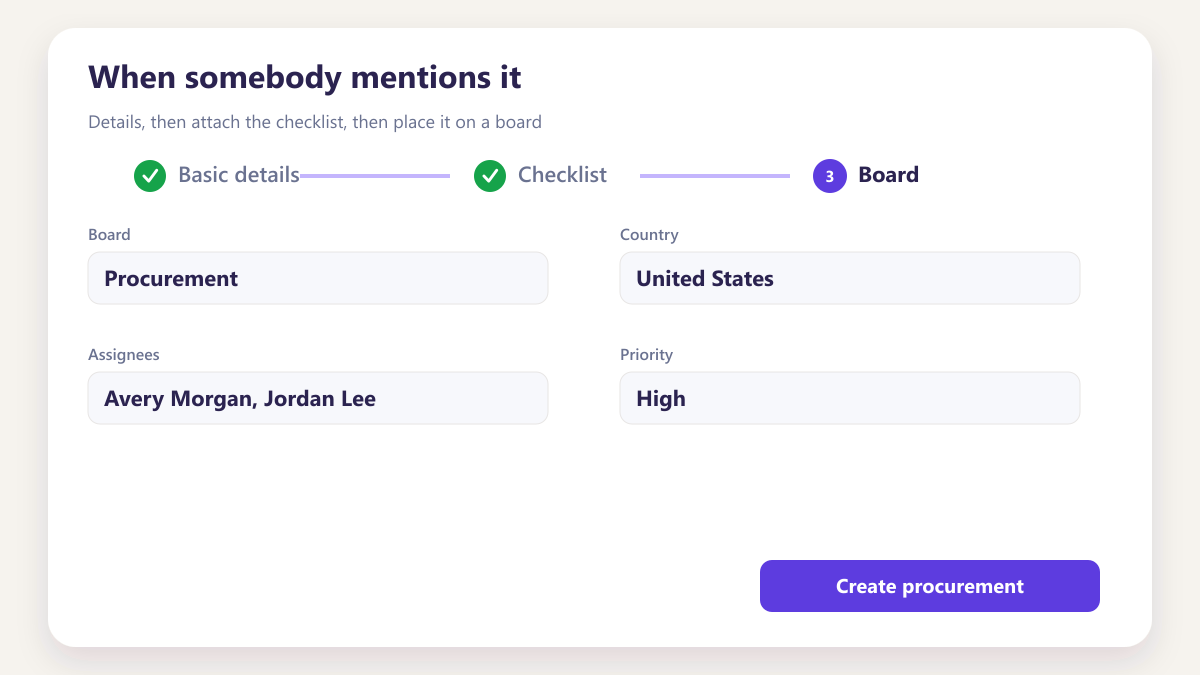
When somebody mentions it
A stalled subcontract surfaces because somebody raises it, which means the ones nobody raises stay invisible until they matter.
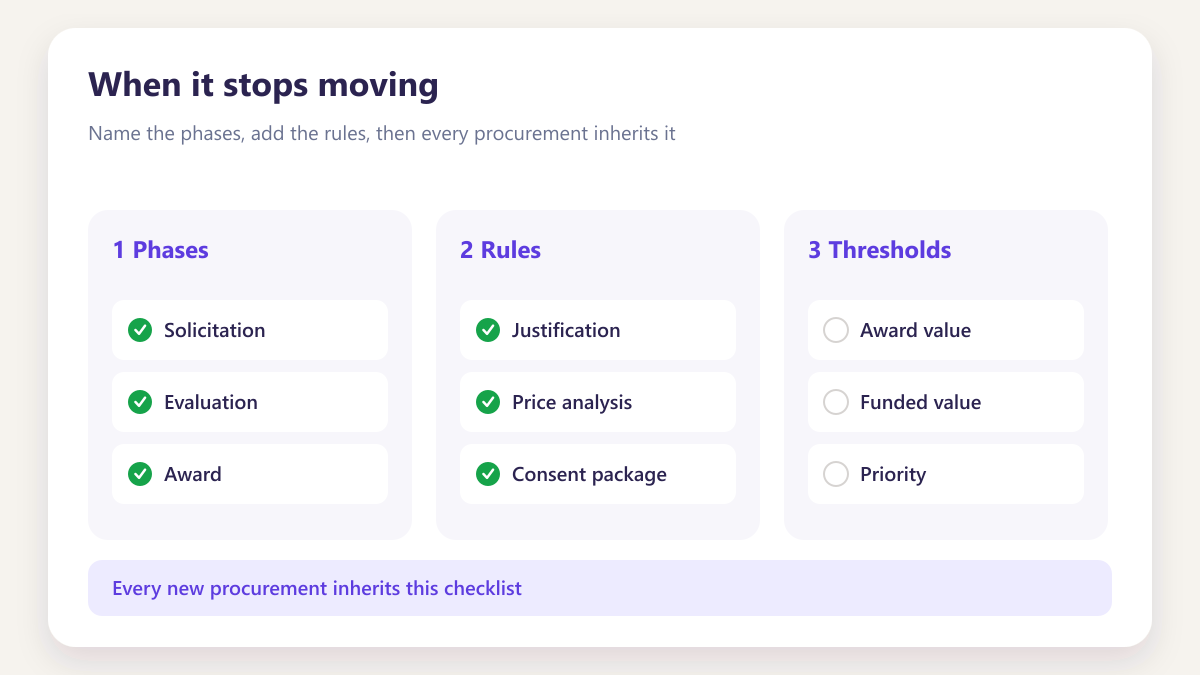
When it stops moving
Last movement on the card makes an award that stopped three weeks ago read differently from one that moved yesterday.
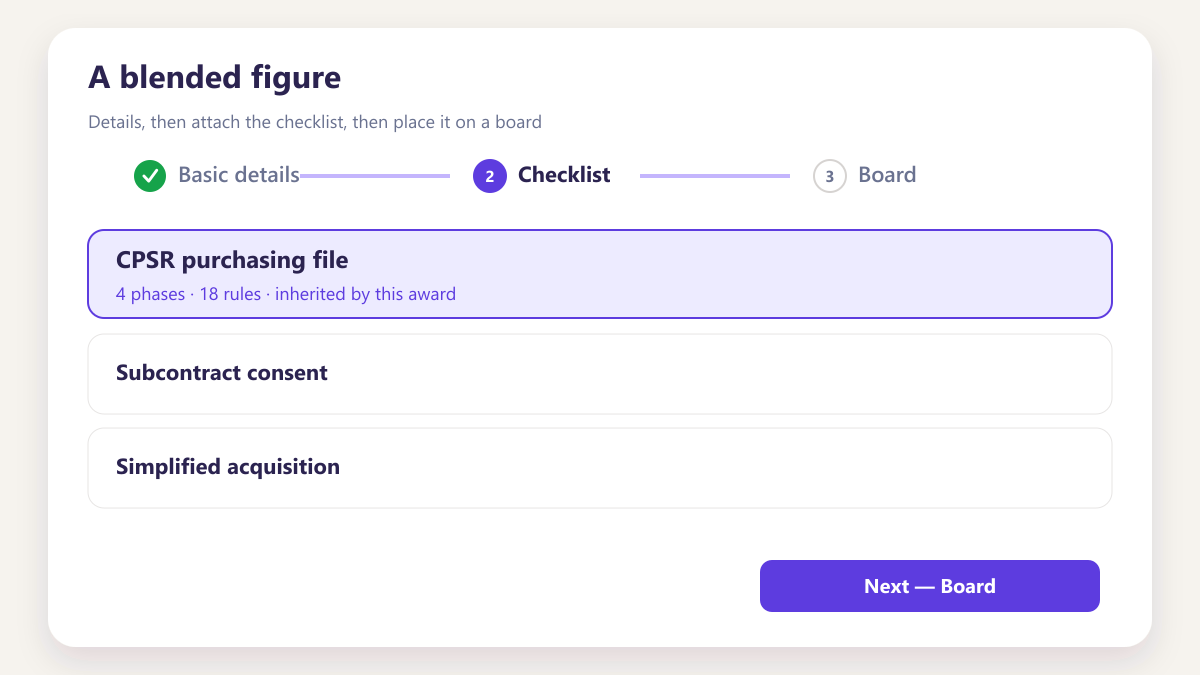
A blended figure
The award shows one completion percentage, which tells you nothing about which change is behind and by how much.
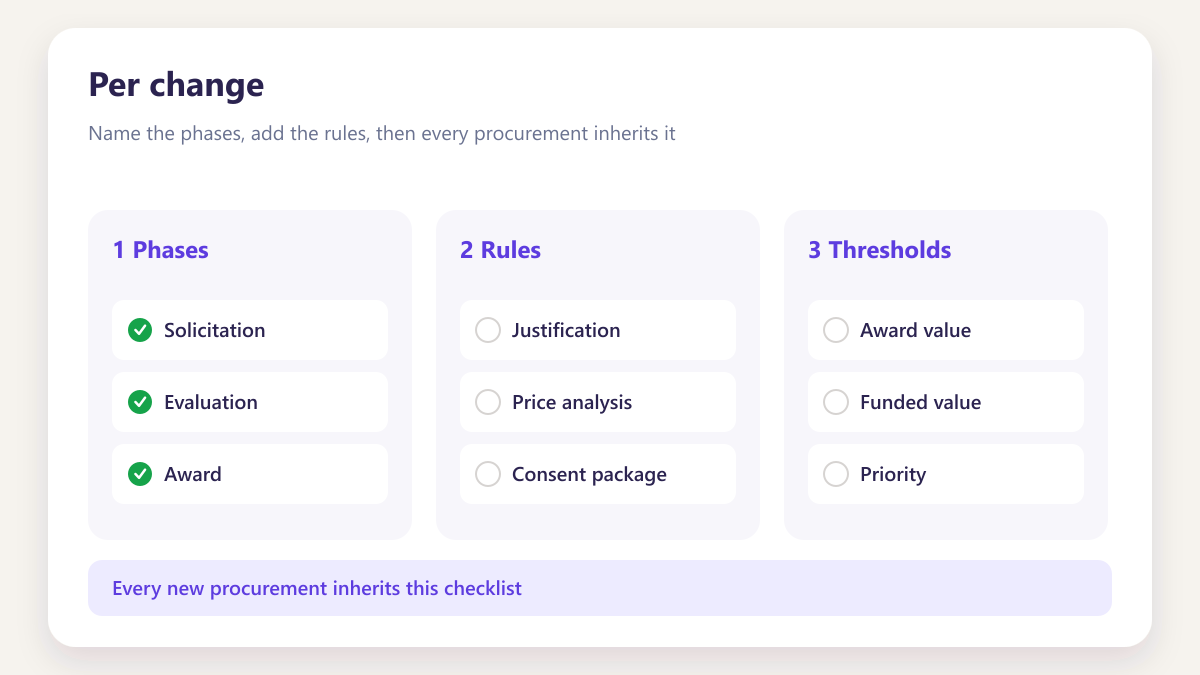
Per change
Each modification carries its own progress, so you can see which specific change needs attention.
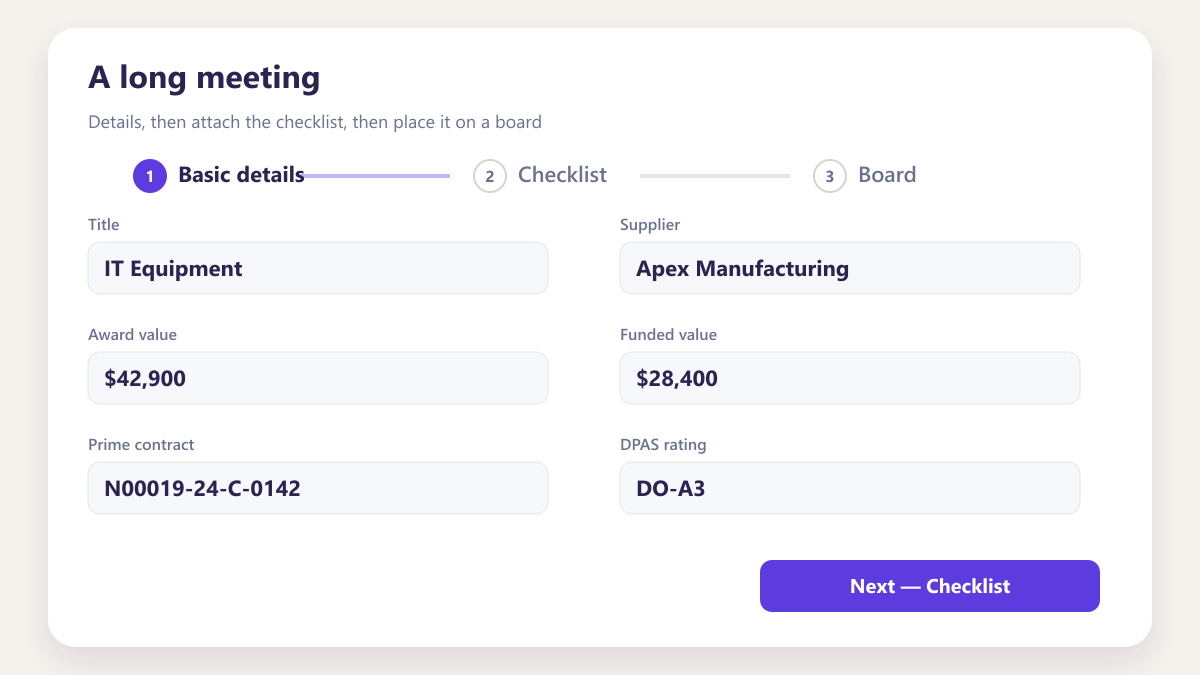
A long meeting
Knowledge transfers by conversation and whatever was not mentioned is lost, which compounds over a long program.
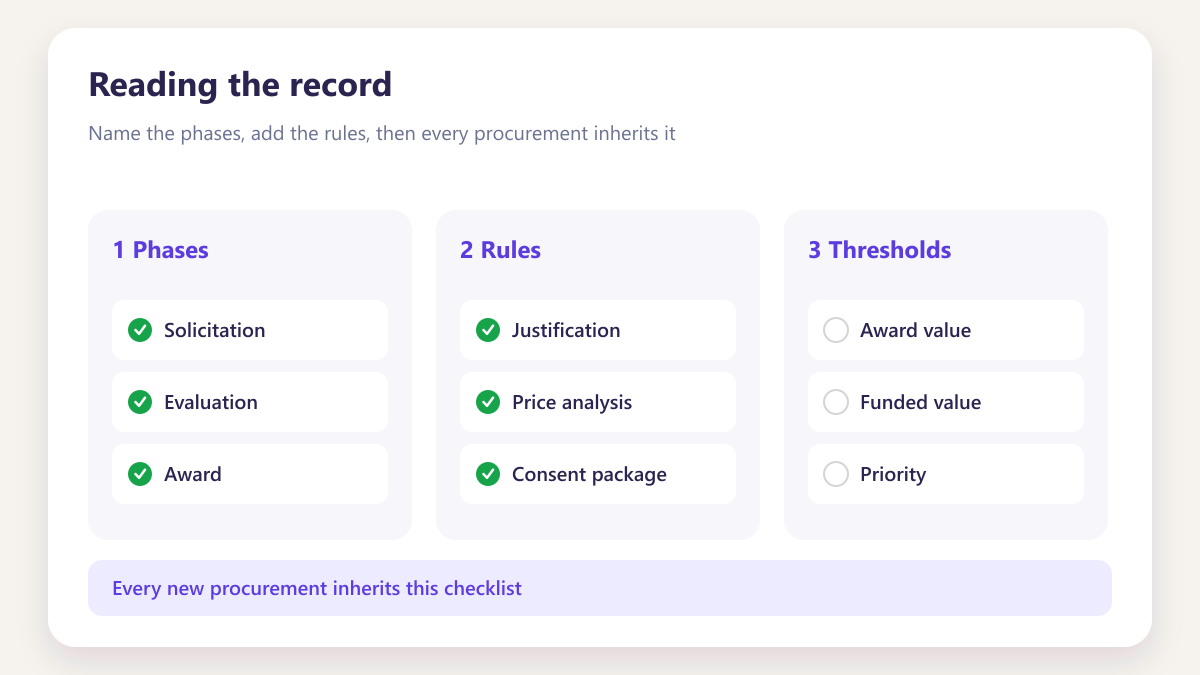
Reading the record
Reasoning and evidence are on the awards, so a handover is an introduction rather than a transfer of memory.
What you stop having to ask for
What you stop having to ask for
One board rather than a round of messages asking where things stand.
- Monday morning
- A subcontract has stalled
- A status meeting
Monday morning
One board rather than a round of messages asking where things stand.
Learn moreA subcontract has stalled
Flagged by last movement rather than surfacing when somebody finally mentions it.
Learn moreA status meeting
No preparation, because everybody is looking at the same live picture.
Learn moreHanding the program over
Your successor reads the record rather than relying on what you remembered to say.
Learn moreAsking people where things are
Collecting status is work for the person asking and for everybody answering, and the result is a snapshot that is out of date by the time it is assembled.
Asking people where things are
Collecting status is work for the person asking and for everybody answering, and the result is a snapshot that is out of date by the time it is assembled.
- Status collection stops entirely
- Stalled subcontracts surface in week three
- Handovers stop losing program knowledge
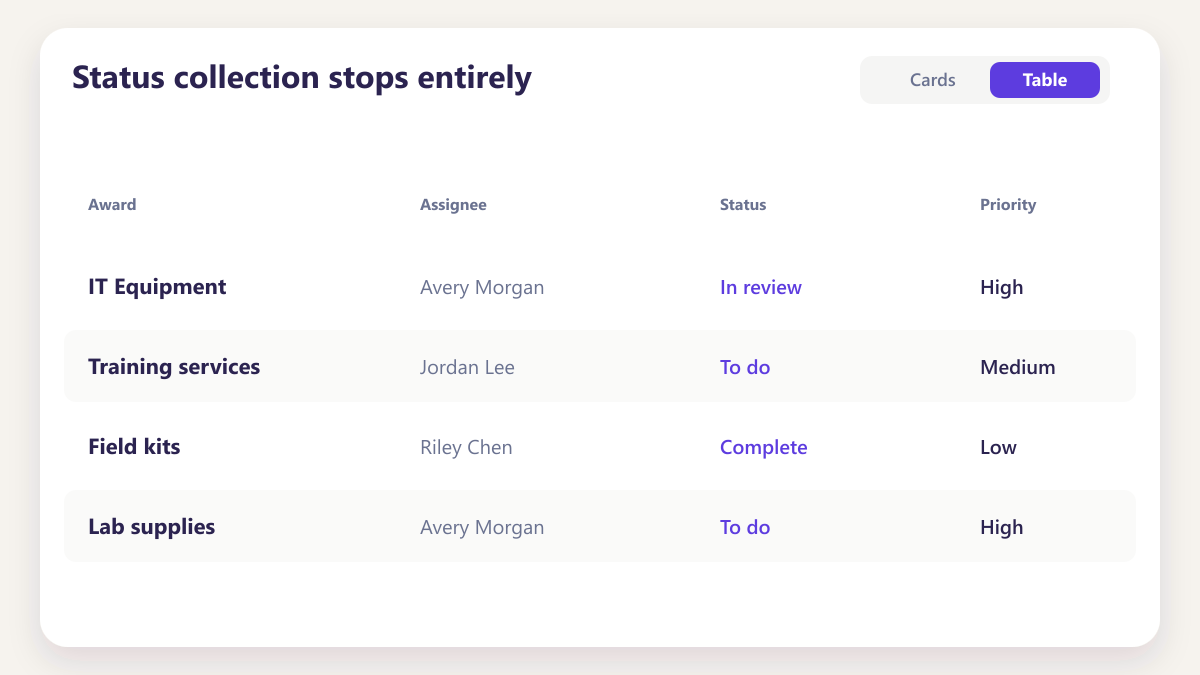
Status collection stops entirely
Progress, owner and last movement sit on a board you built for your own program, so the question is answered by looking rather than by asking six people.
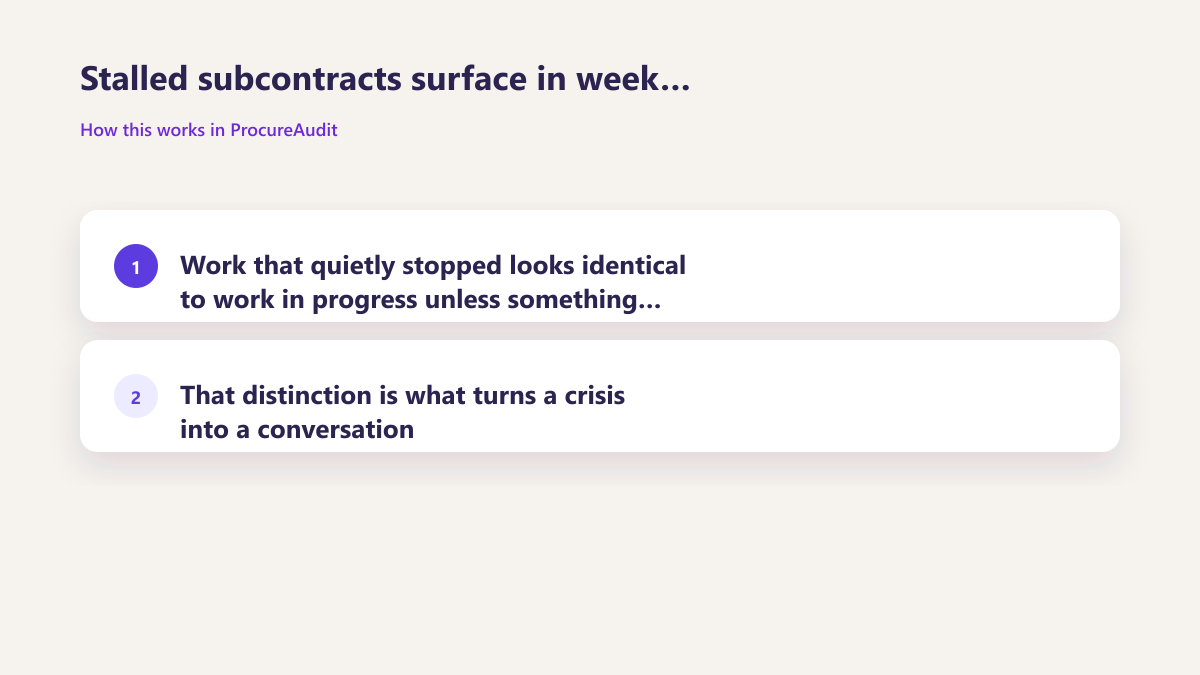
Stalled subcontracts surface in week three
Work that quietly stopped looks identical to work in progress unless something shows when it last moved. That distinction is what turns a crisis into a conversation.
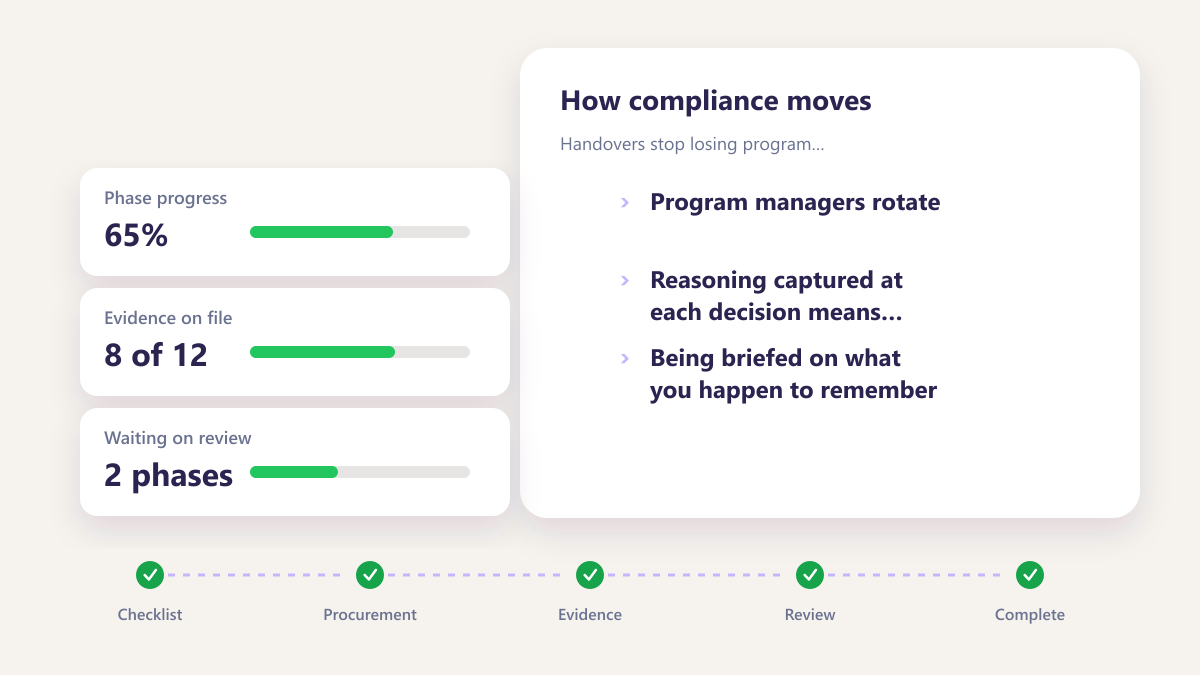
Handovers stop losing program knowledge
Program managers rotate. Reasoning captured at each decision means your successor reads the record rather than being briefed on what you happen to remember.
Questions from program managers
How do I see progress without asking people?
How do stalled subcontracts get surfaced?
Can I see progress per modification?
Do I need my buyers to update anything for me?
What happens at handover?
Can I have a board for just my program?
Does this replace program scheduling?
Other sectors and roles worth reading
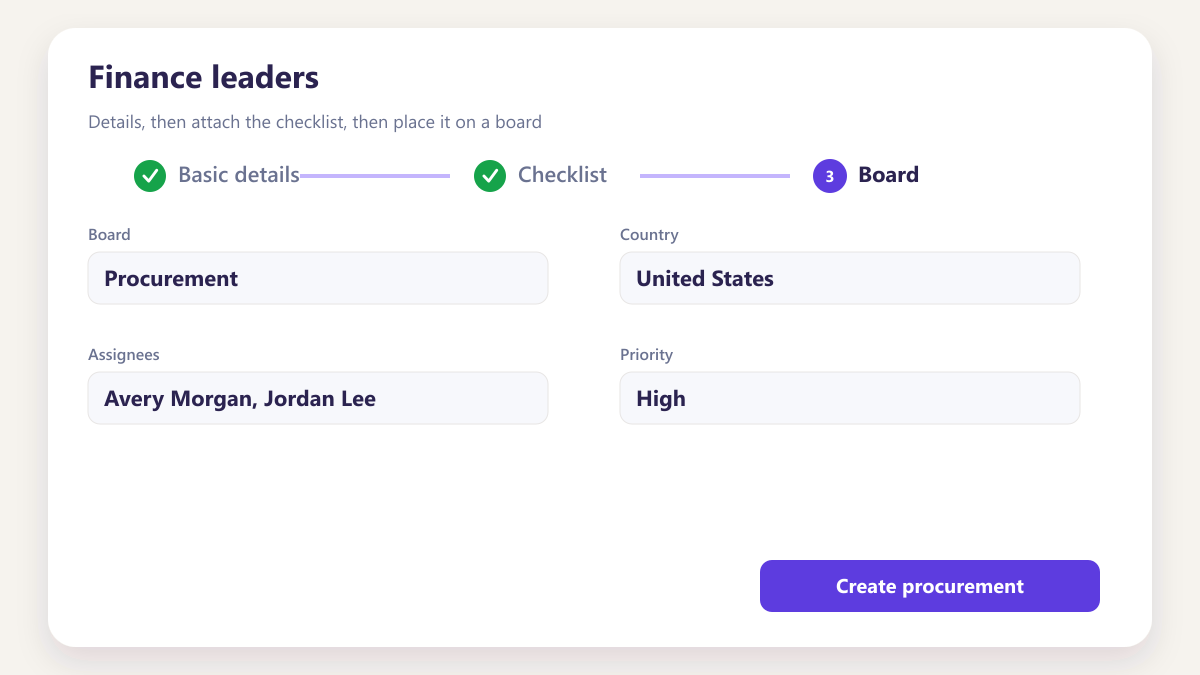
Finance leaders
Award against funded amounts, and what has actually been committed.
Learn more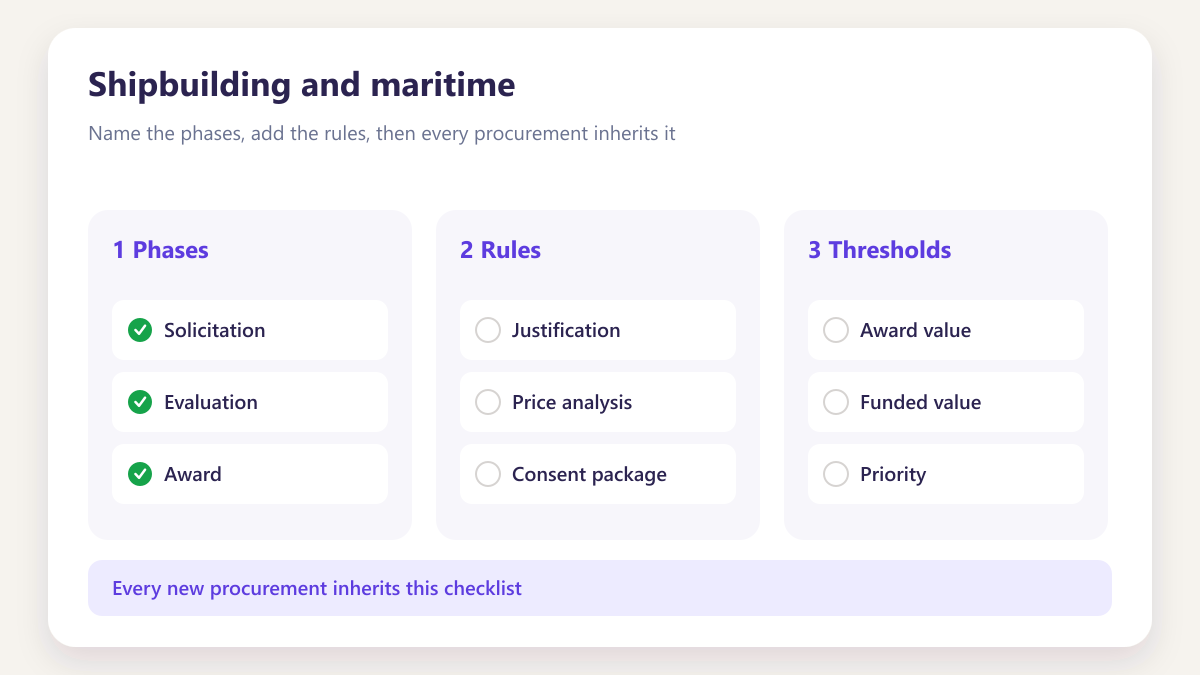
Shipbuilding and maritime
One award, dozens of modifications, over a multi year build.
Learn moreBring one of your programs
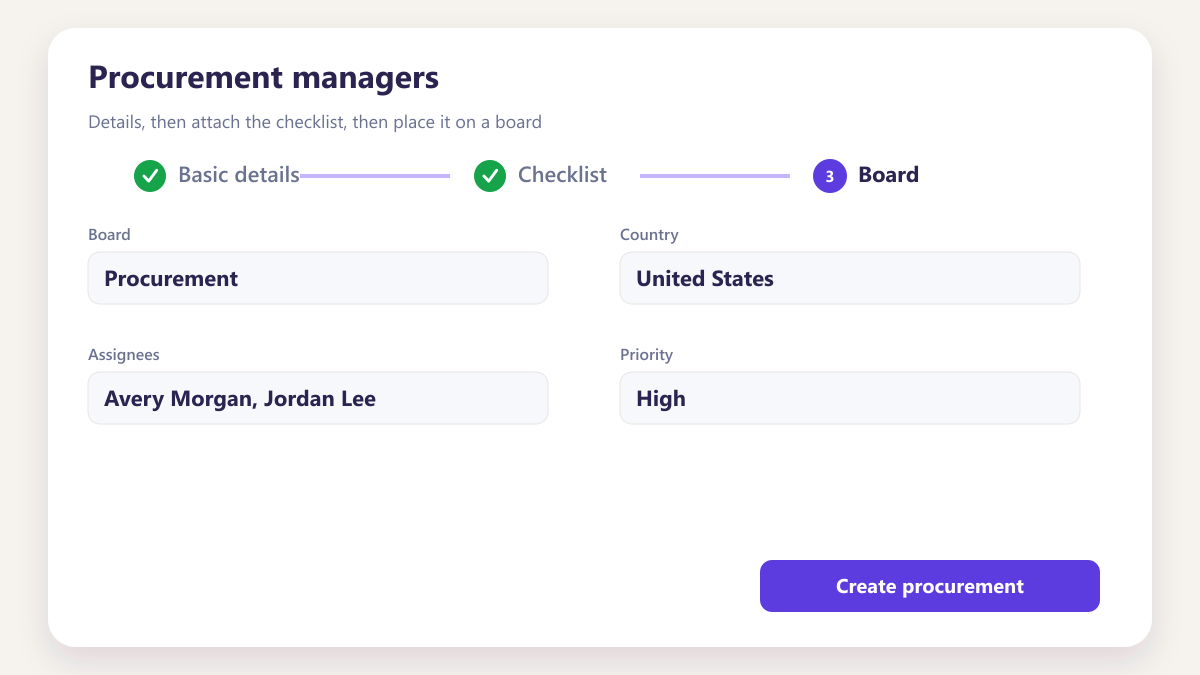
We will build a program board on the call using your live subcontracts and show what would already be flagged.
Book a demo