Home / Solutions / Internal audit
RoleProcureAudit for Internal Audit | Sampling Procurement
Sample the population. The support comes with it.
The slowest part of a purchasing audit is rarely the analysis. It is getting hold of the records, which usually means asking the team you are reviewing to find them for you.
Getting hold of the records
Analysis is quick. Collection is slow, and asking the team under review to assemble their own evidence is both slow and methodologically uncomfortable.
Getting hold of the records
Analysis is quick. Collection is slow, and asking the team under review to assemble their own evidence is both slow and methodologically uncomfortable.
- You get the records without asking
- The activity record carries weight
- Exceptions are already identified
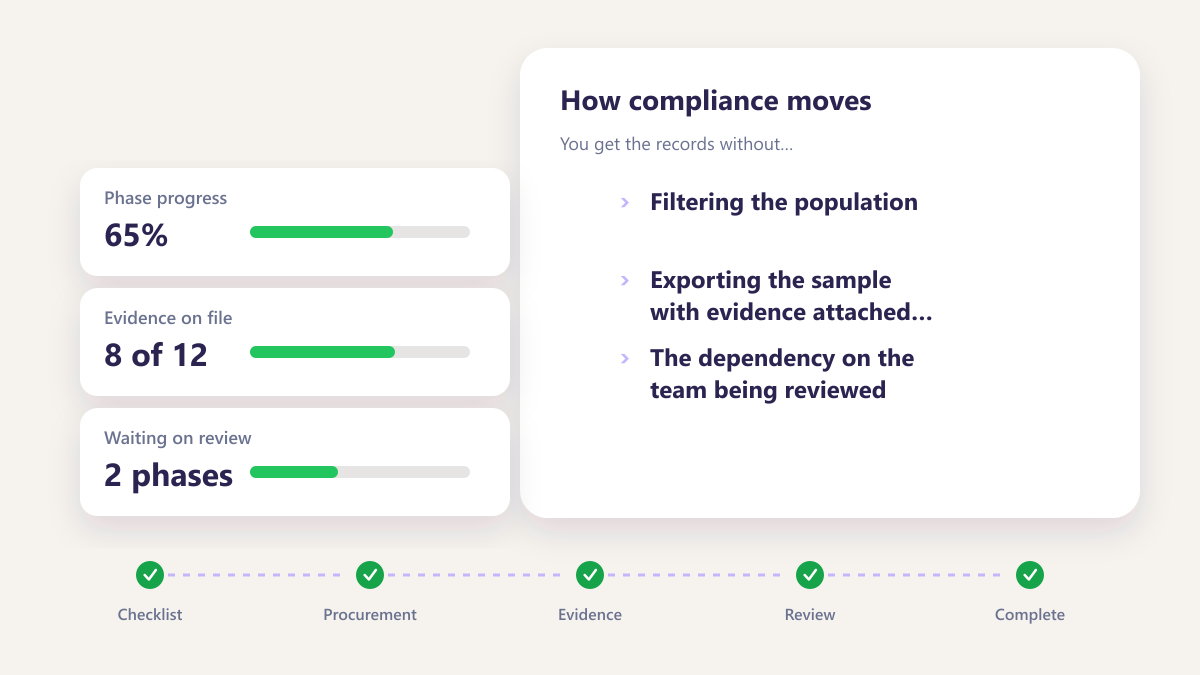
You get the records without asking
Filtering the population and exporting the sample with evidence attached removes the collection step and the dependency on the team being reviewed.
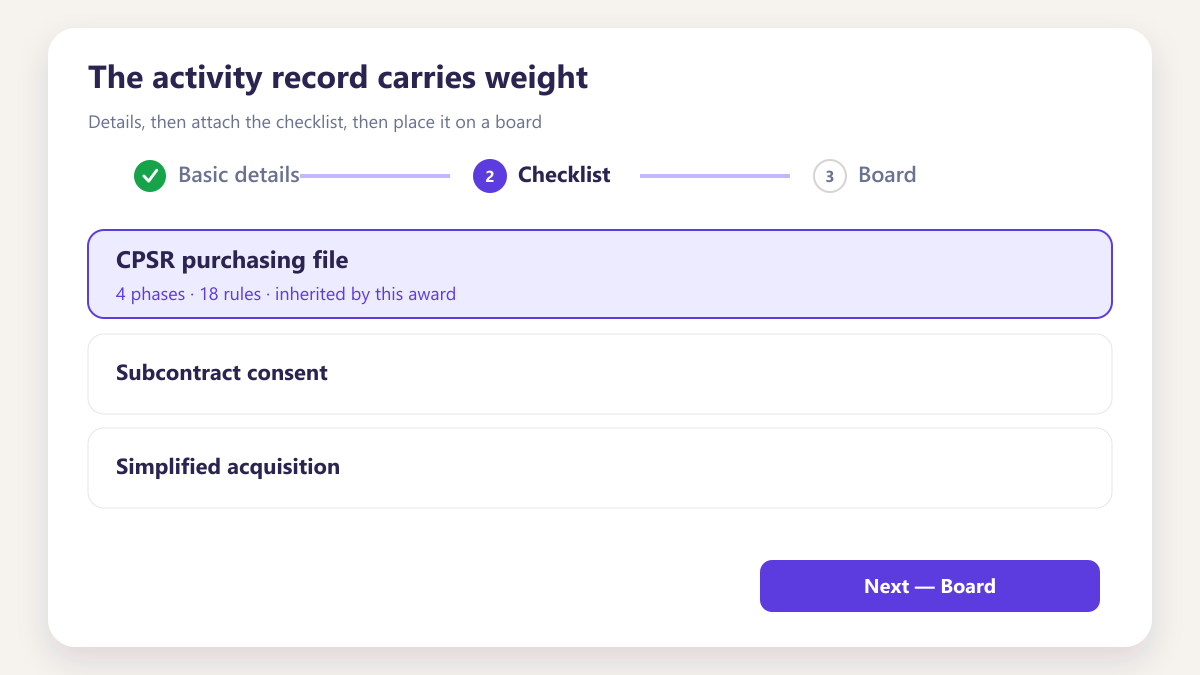
The activity record carries weight
Entries written as work happens and not editable afterwards are evidence. A log that could have been tidied up later is not, and everybody knows it.
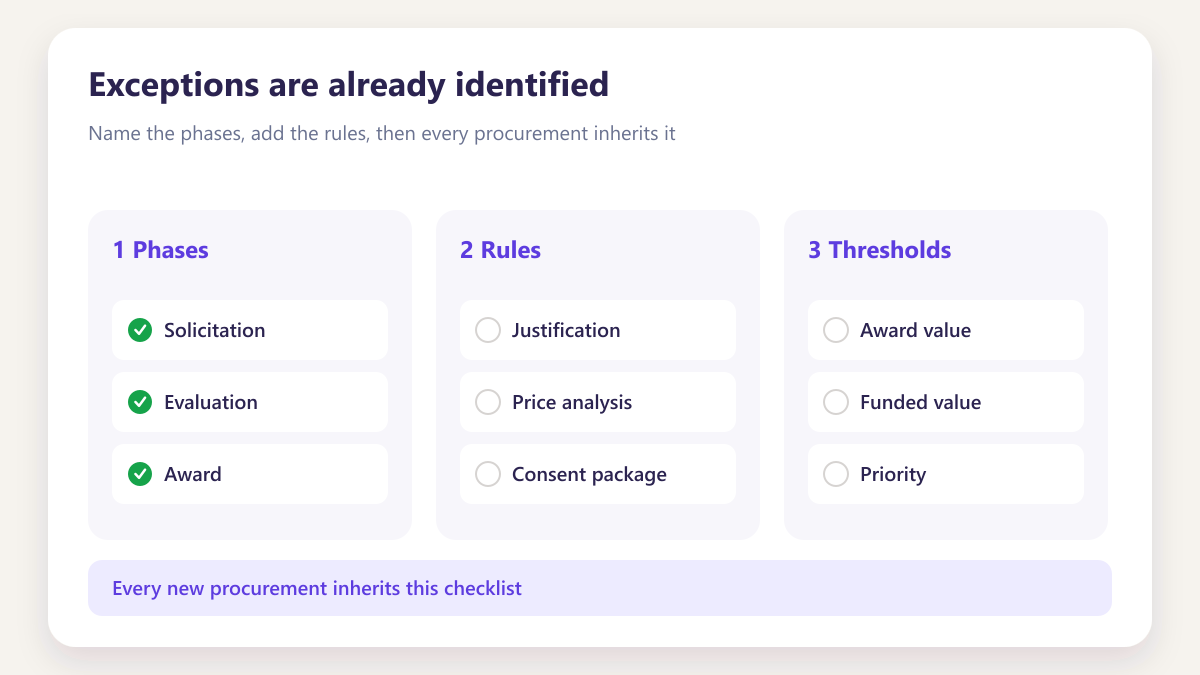
Exceptions are already identified
Because exceptions were recorded as exceptions at the time with reasons attached, the interesting population is available rather than something you have to derive.
Where purchasing audits lose time
Every one of these is about access to records rather than about the testing itself.
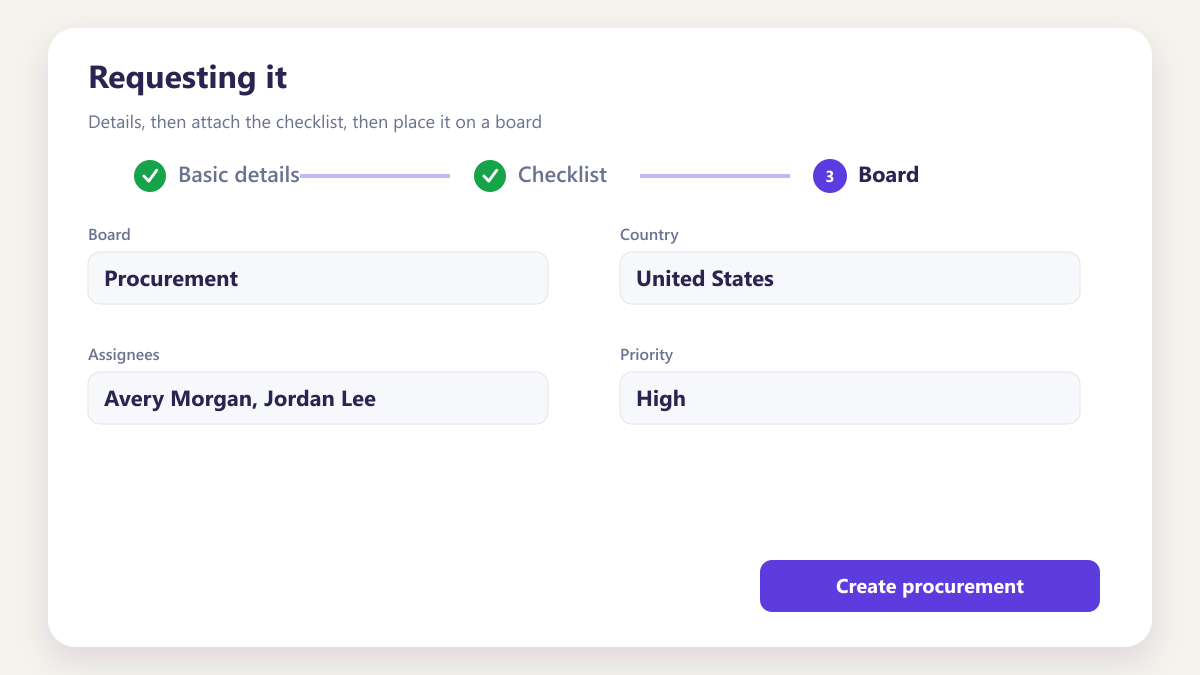
Requesting it
You define the population, ask the team to supply the records, and wait. What arrives is what they could find, which is not necessarily what exists.
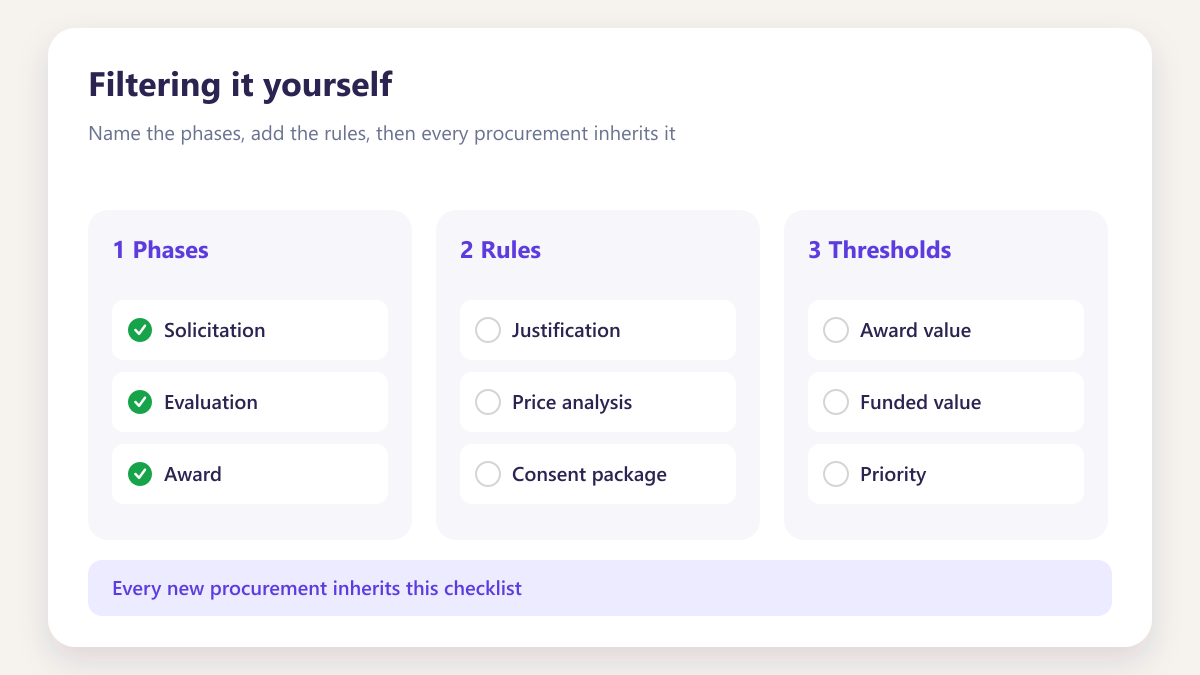
Filtering it yourself
The population is filterable directly and the sample exports with supporting documents attached to each record.
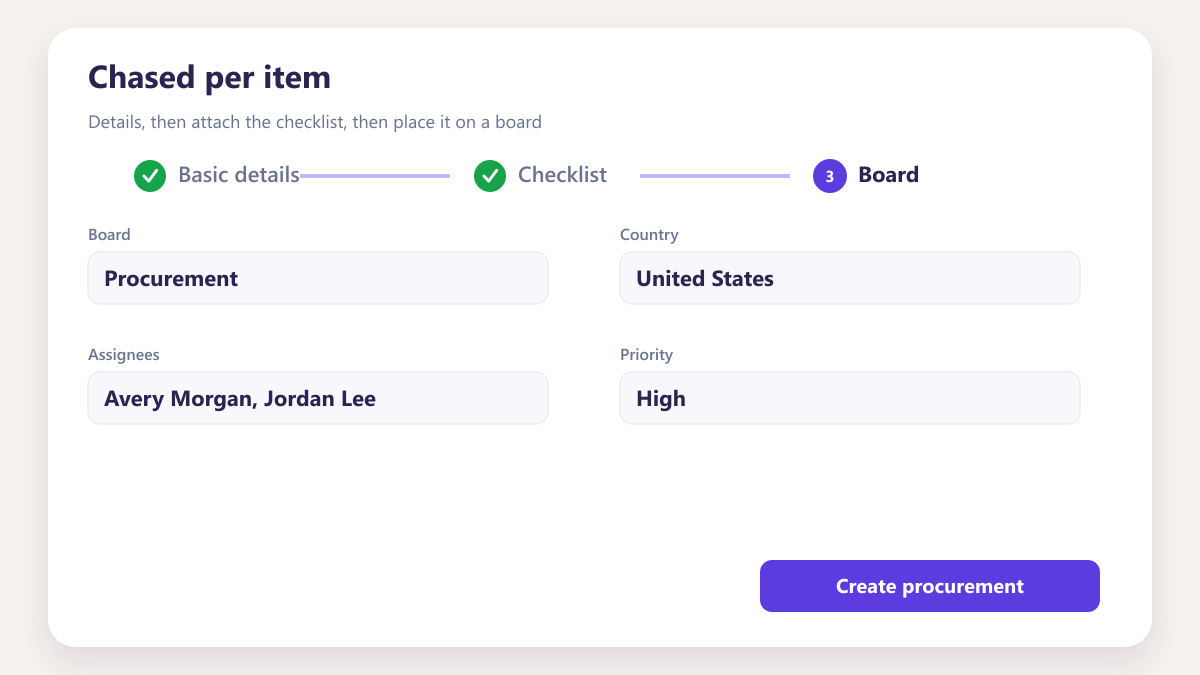
Chased per item
Each sampled item generates follow up requests for the document behind it, and the round trips are where audits lose weeks.
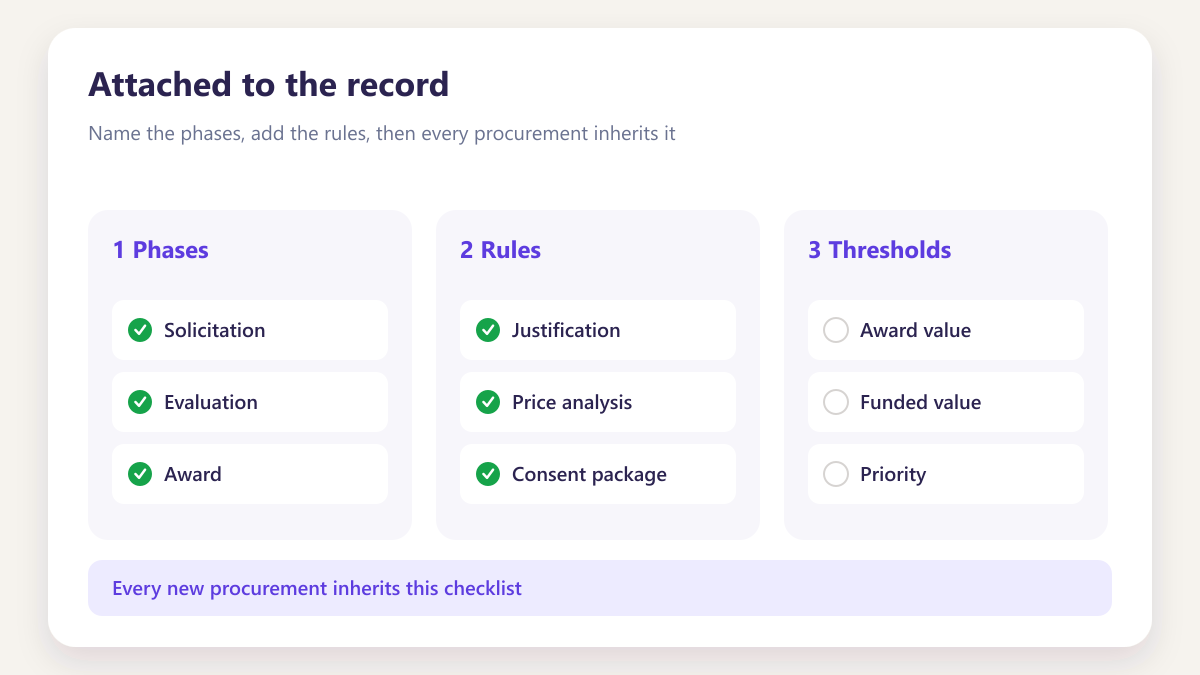
Attached to the record
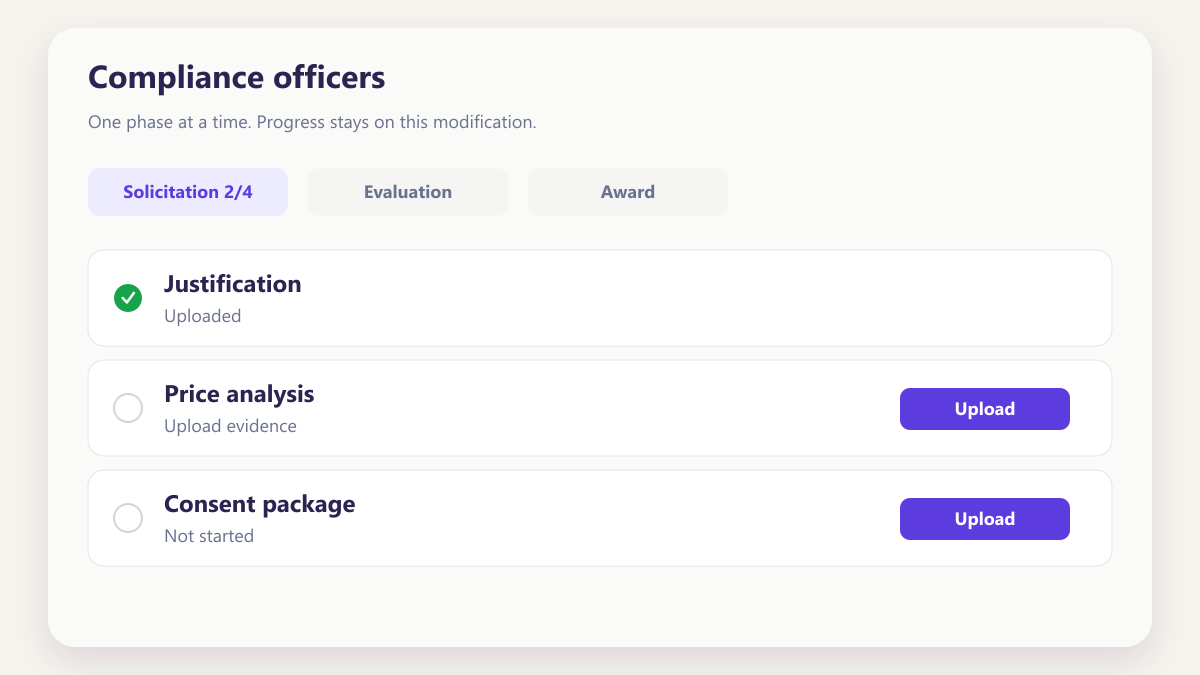
The evidence sits against the award, modification and phase, so it exports with the sample rather than being requested afterwards.
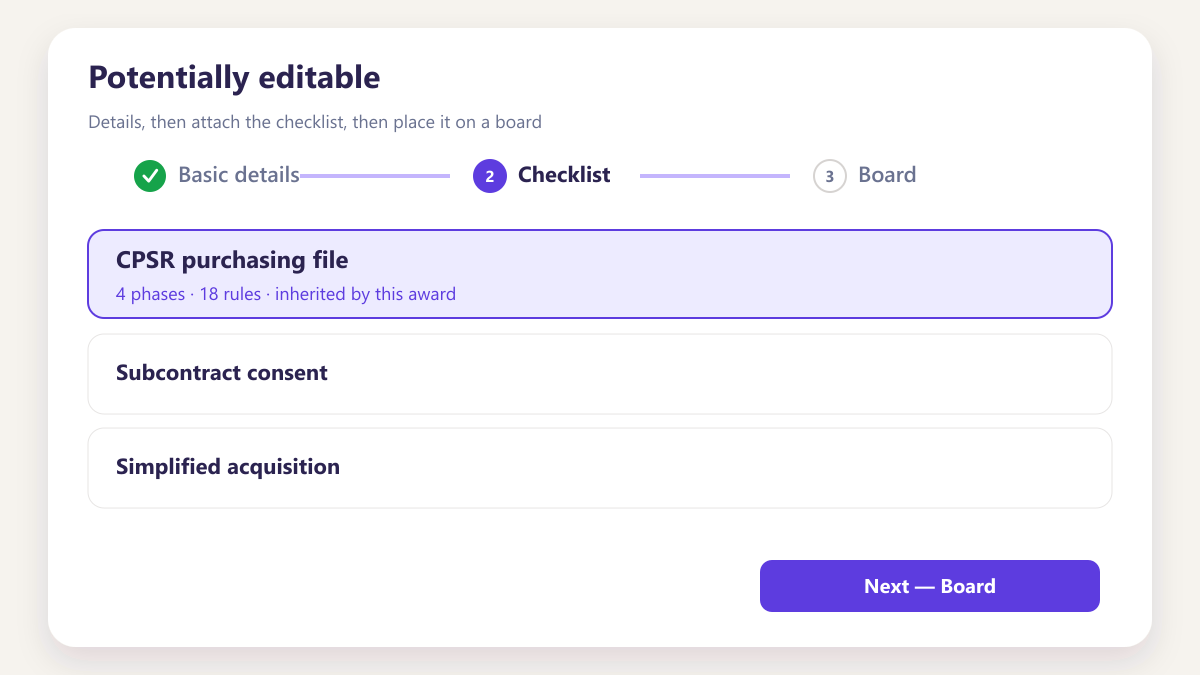
Potentially editable
A log that can be adjusted after the fact is difficult to rely on, regardless of whether it was actually adjusted.
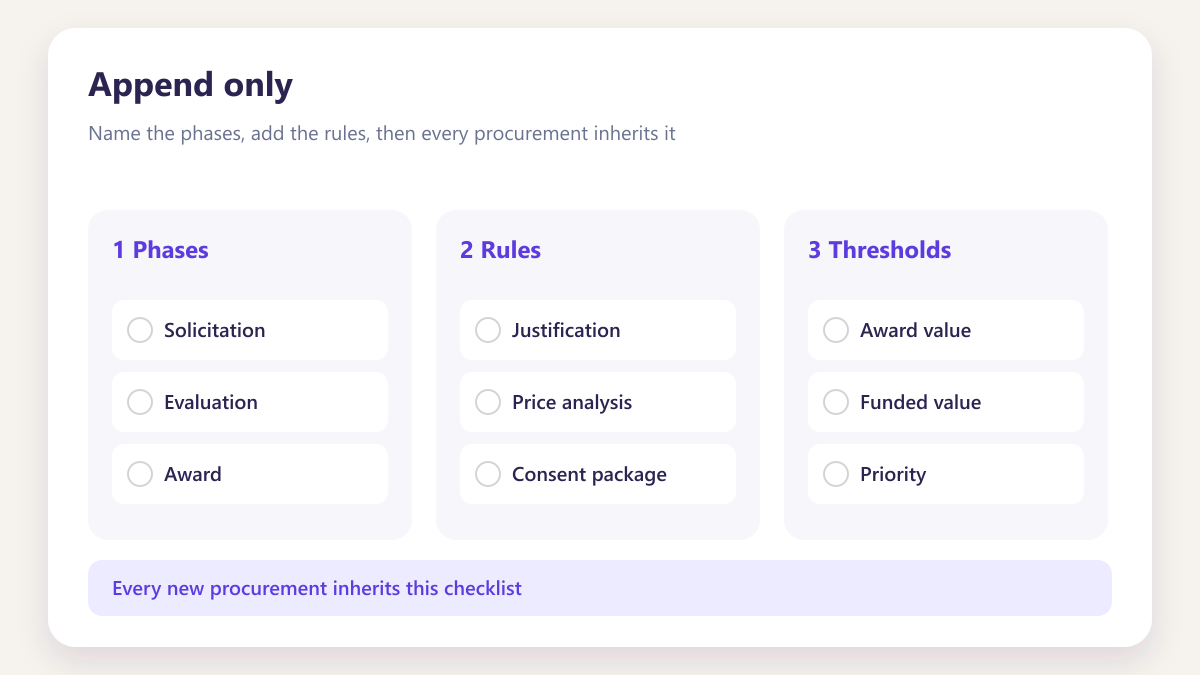
Append only
Entries are written as work happens and cannot be changed afterwards, which is what allows the sequence to be relied on.
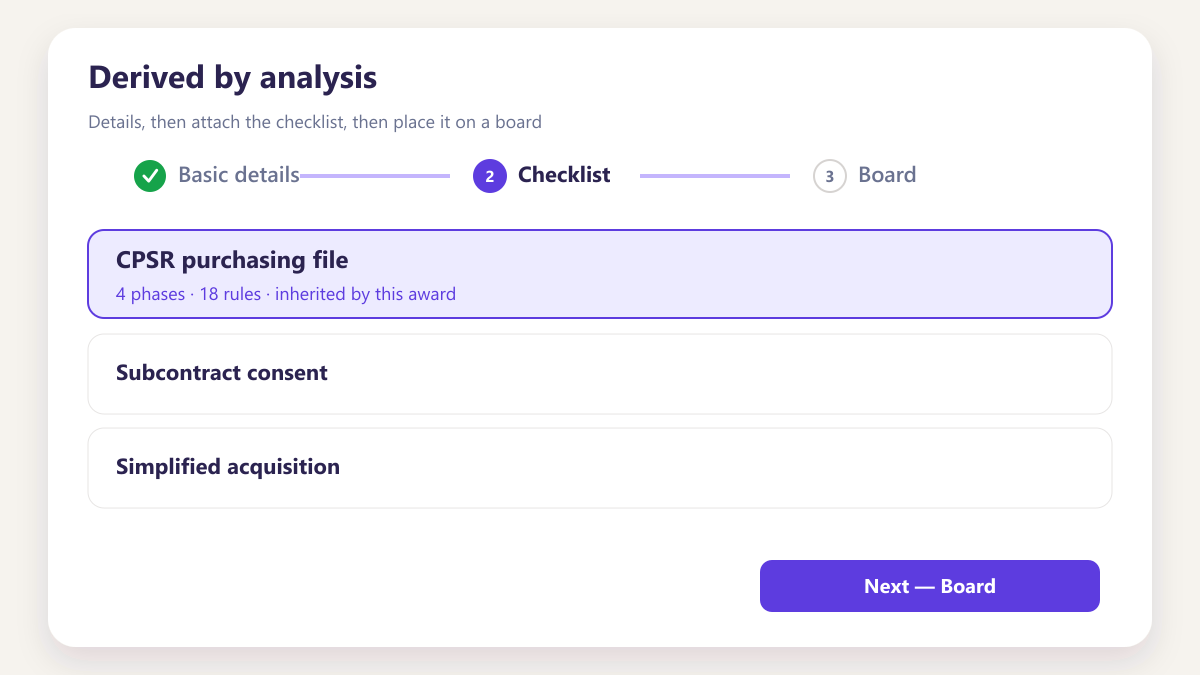
Derived by analysis
Identifying which transactions deviated means analysing the whole population, because exceptions were never marked as such.
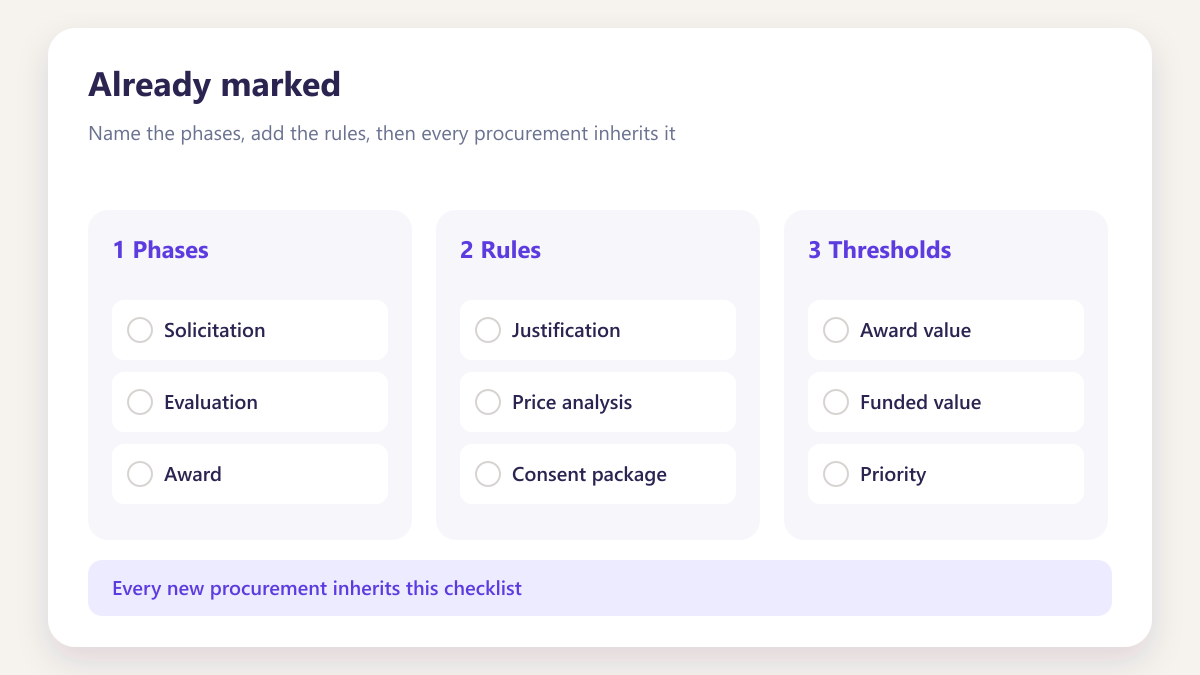
Already marked
Exceptions were recorded as exceptions at the time with reasons, so the population exists rather than needing derivation.
Where a purchasing audit loses its time
Where a purchasing audit loses its time
Filtered directly by value, period or type rather than requested from the team.
- Defining the population
- Pulling the sample
- Testing approvals
Defining the population
Filtered directly by value, period or type rather than requested from the team.
Learn morePulling the sample
Exported with supporting documents attached rather than chased item by item.
Learn moreTesting approvals
Approver, timestamp and approved version all on the record rather than in an inbox.
Learn moreTesting a threshold
The rule sits in the template, so testing checks the rule and its exceptions rather than every award.
Learn moreTracing who did what
Every entry named and timed, written as work happened and not editable afterwards.
Learn moreSix things attached to each record
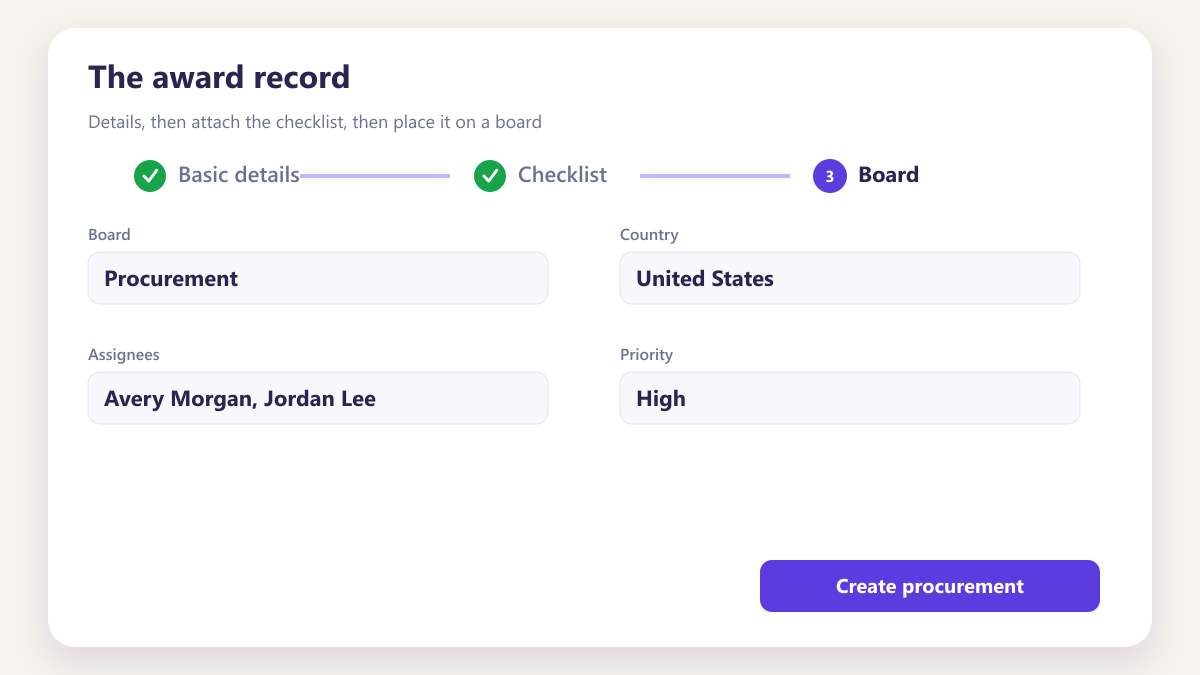
The award record
Value, type, supplier and dates, without a separate request.
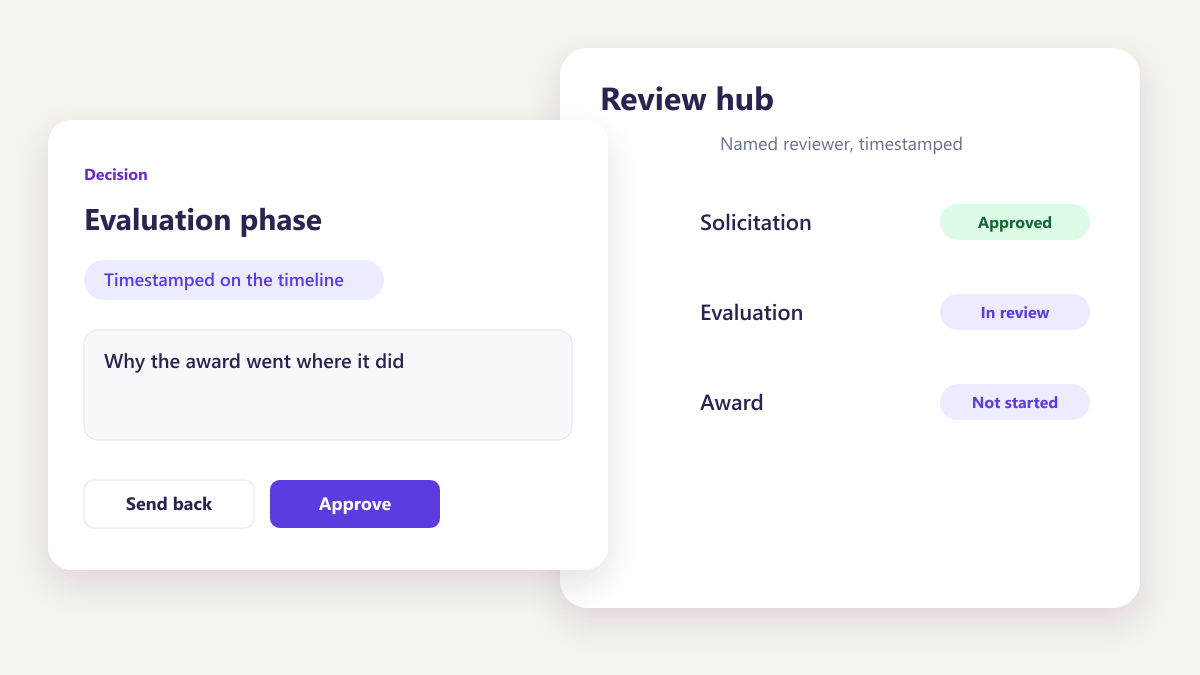
The reasoning
Why the award went where it did, written at the decision.
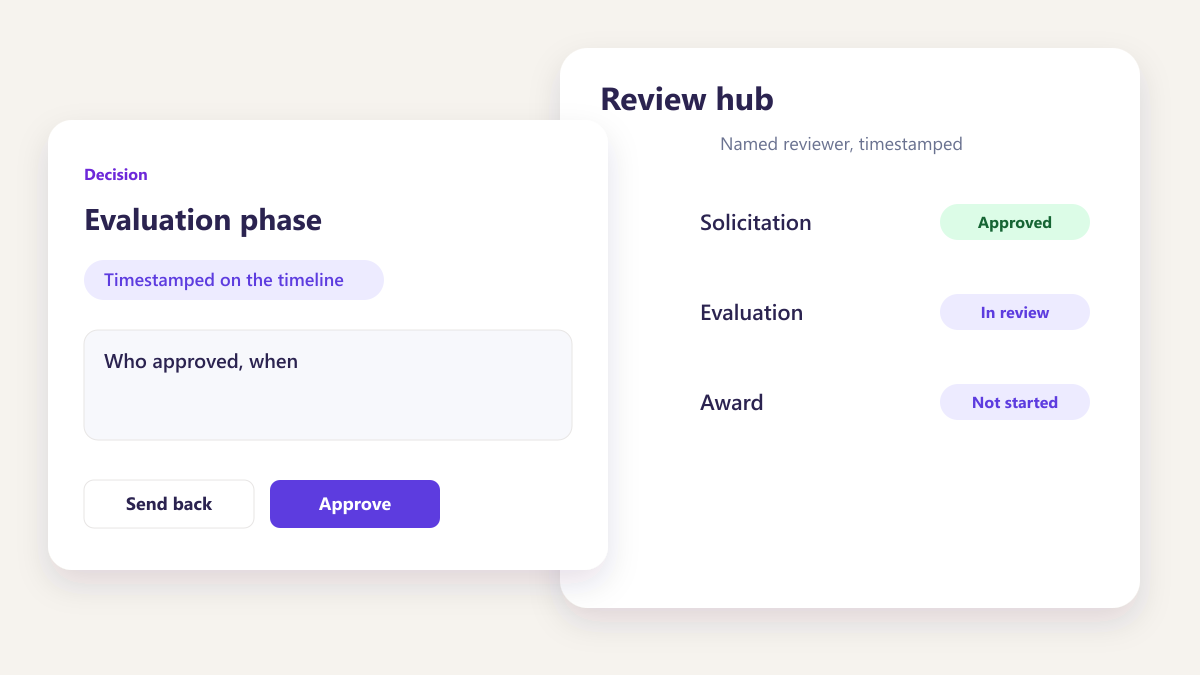
The approvals
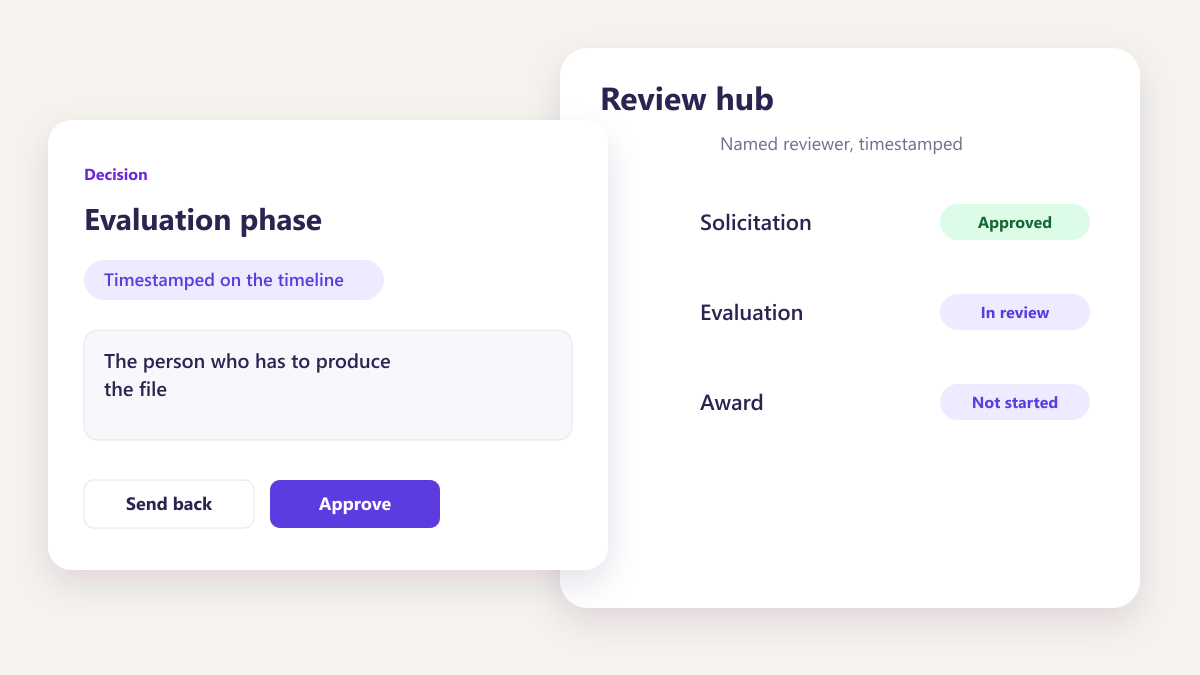
Who approved, when, and against which version of the document.
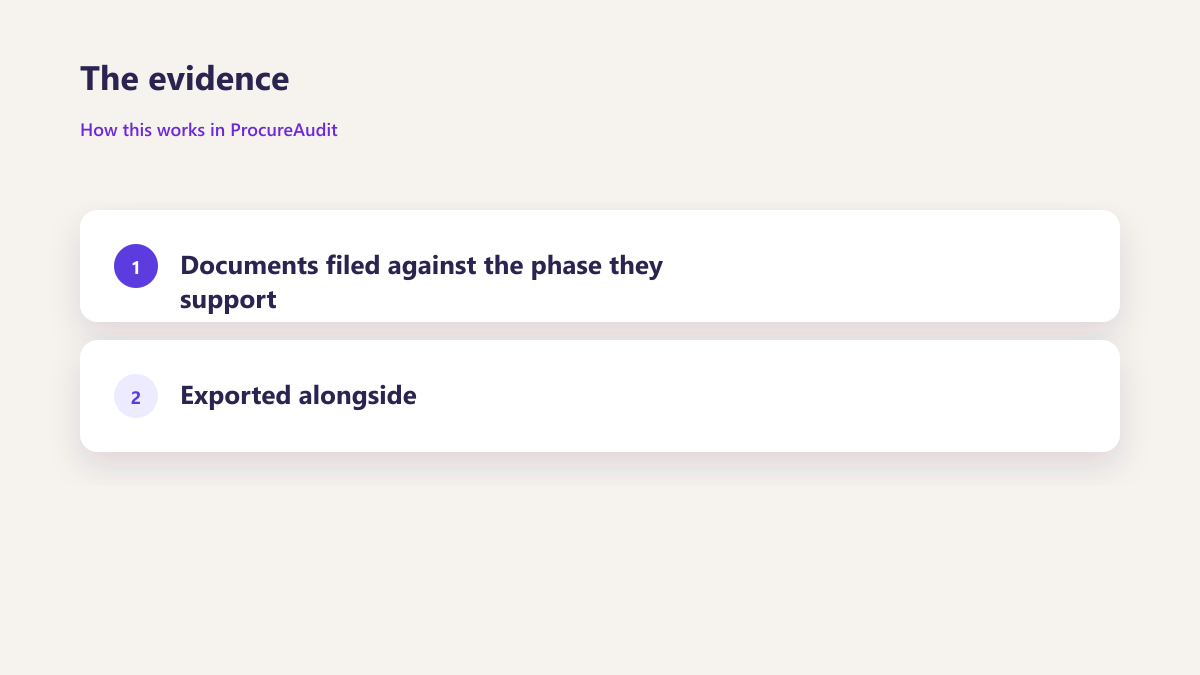
The evidence
Documents filed against the phase they support, exported alongside.
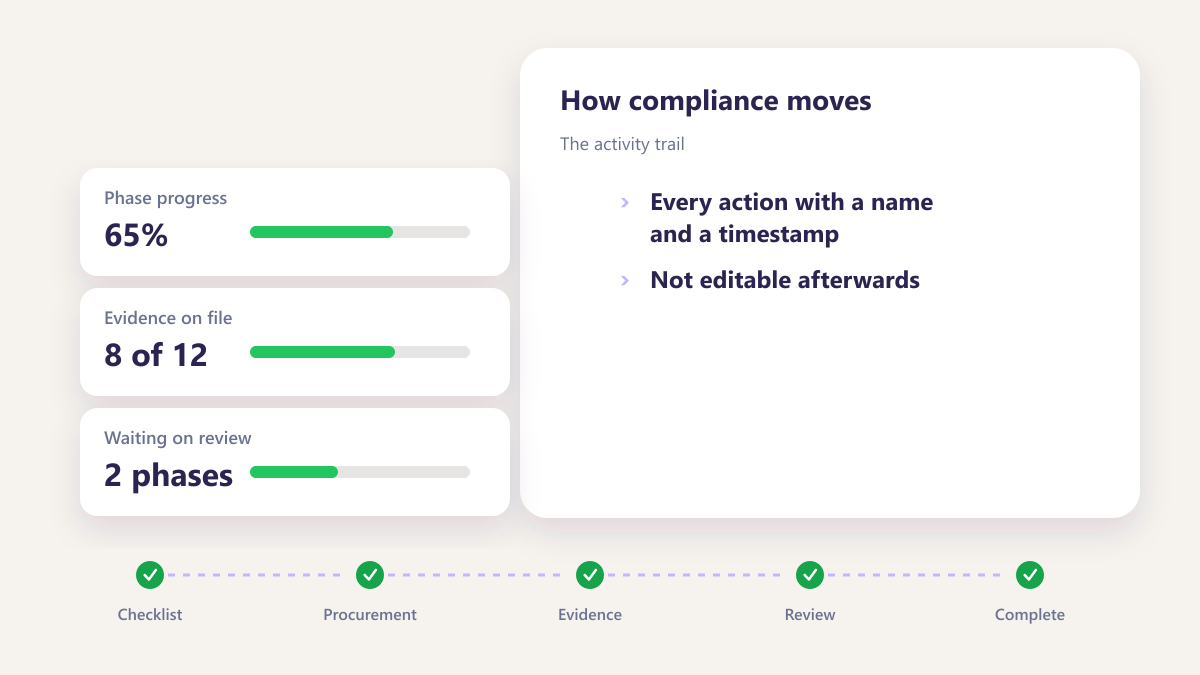
The activity trail
Every action with a name and a timestamp, not editable afterwards.
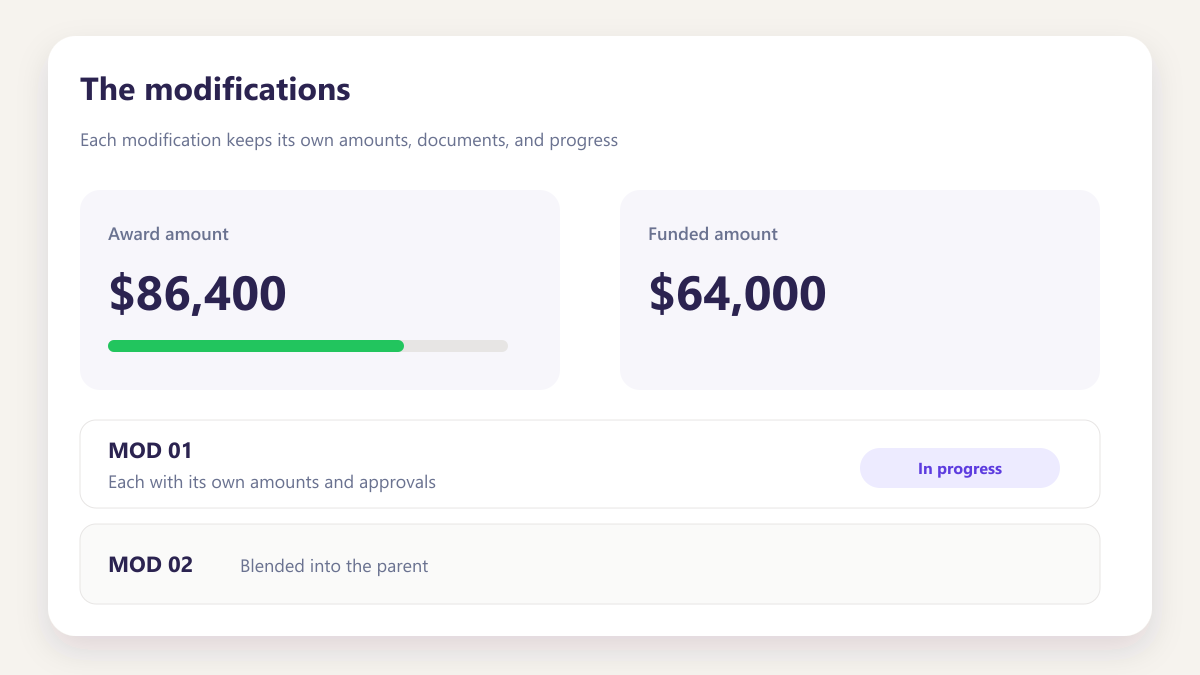
The modifications
Each with its own amounts and approvals rather than blended into the parent.
Questions from internal audit
Can I pull a sample without involving the team?
Does the supporting evidence come with the sample?
Can activity entries be edited after the fact?
How are exceptions identified?
Can I test whether thresholds were applied?
What about awards from before implementation?
Does this replace our audit software?
Other sectors and roles worth reading
Contracts managers
The person who has to produce the file, usually at short notice.
Learn more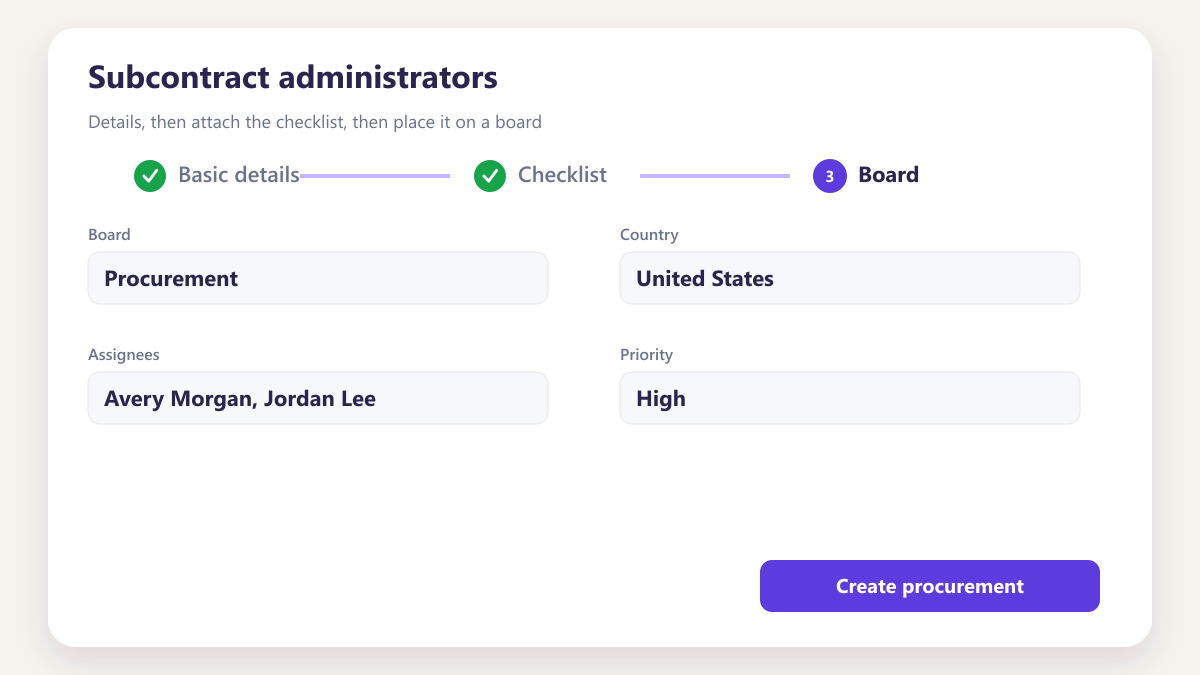
Subcontract administrators
Modification records and supplier documents kept current across a program.
Learn moreBring a scope you are planning
We will show what filtering the population and exporting the sample would look like against live records.
Book a demo