Home / Glossary / IDIQ vs BPA vs schedules
GlossaryIDIQ, BPA and schedules,
three different instruments
These get used interchangeably in conversation and behave quite differently in practice. The distinction matters most for what has to be documented each time an order is placed.
An IDIQ is a contract for an indefinite quantity of supplies or services within a stated period, under which orders are placed. A blanket purchase agreement is a simplified arrangement for recurring purchases and is not itself a contract creating an obligation to buy. A multiple award schedule is a government wide set of pre-negotiated contracts from which orders are placed.
What each one actually is
The most useful distinction is whether the instrument is itself a contract, and where competition and documentation happen as a result.
What each one actually is
The most useful distinction is whether the instrument is itself a contract, and where competition and documentation happen as a result.
- IDIQ: a contract, ordered through task or delivery orders
- BPA: an arrangement, not an obligation to buy
- Schedule: pre-negotiated contracts, ordered against
| IDIQ | Blanket purchase agreement | Multiple award schedule | |
|---|---|---|---|
| What it is | A contract for an indefinite quantity within stated limits and a stated ordering period | A simplified arrangement for filling anticipated recurring needs | A set of government wide contracts with pre-negotiated terms and pricing |
| Is it a contract | Yes | Generally not a contract creating an obligation to buy | The underlying schedule contracts are contracts; orders are placed against them |
| How work is ordered | Task orders for services, delivery orders for supplies | Calls placed against the agreement | Orders placed against schedule contracts |
| Minimum commitment | Usually a guaranteed minimum | Generally none | None inherent in the schedule itself |
| Where competition typically happens | At contract award for single award; at order level for multiple award | Depends on how the agreement was established | Generally at the order level among schedule holders |
Four practical consequences
Teams get into difficulty by assuming that because an instrument exists, the work of competing and documenting has already been done.
Four practical consequences
Teams get into difficulty by assuming that because an instrument exists, the work of competing and documenting has already been done.
- Competition is determined per instrument, not assumed
- Every order records its basis, however routine
- Scope is checked on each order, at any volume
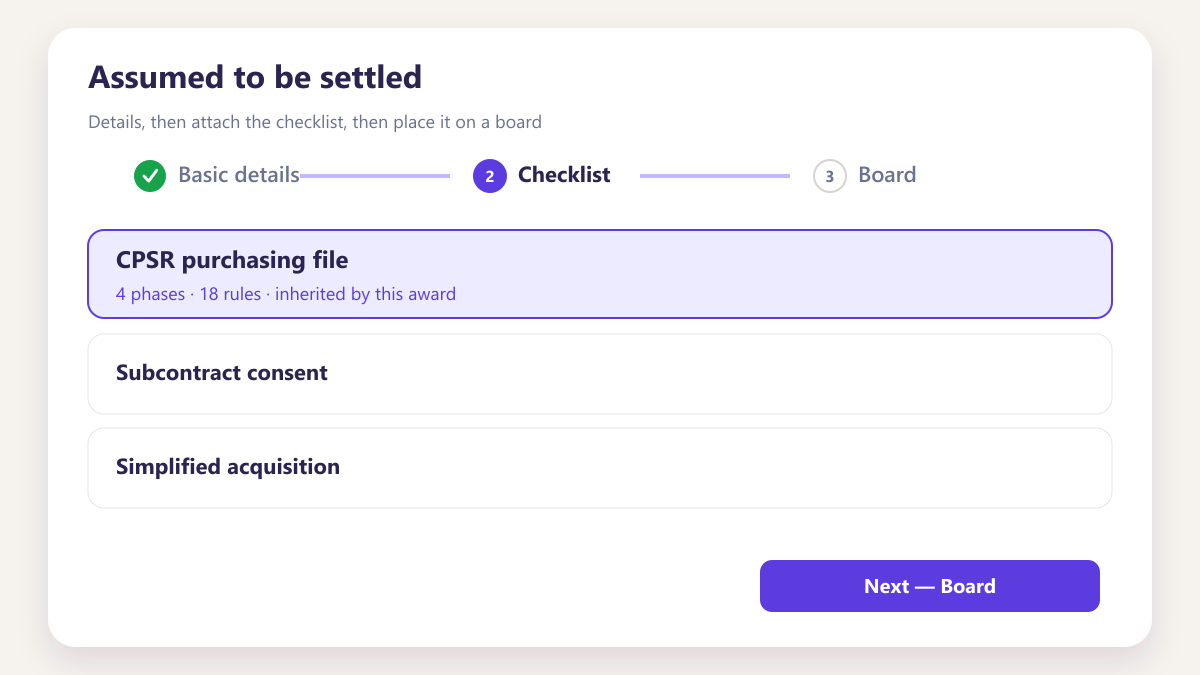
Assumed to be settled
Because an agreement or schedule is in place, orders are issued on the basis that competition was handled when it was established.
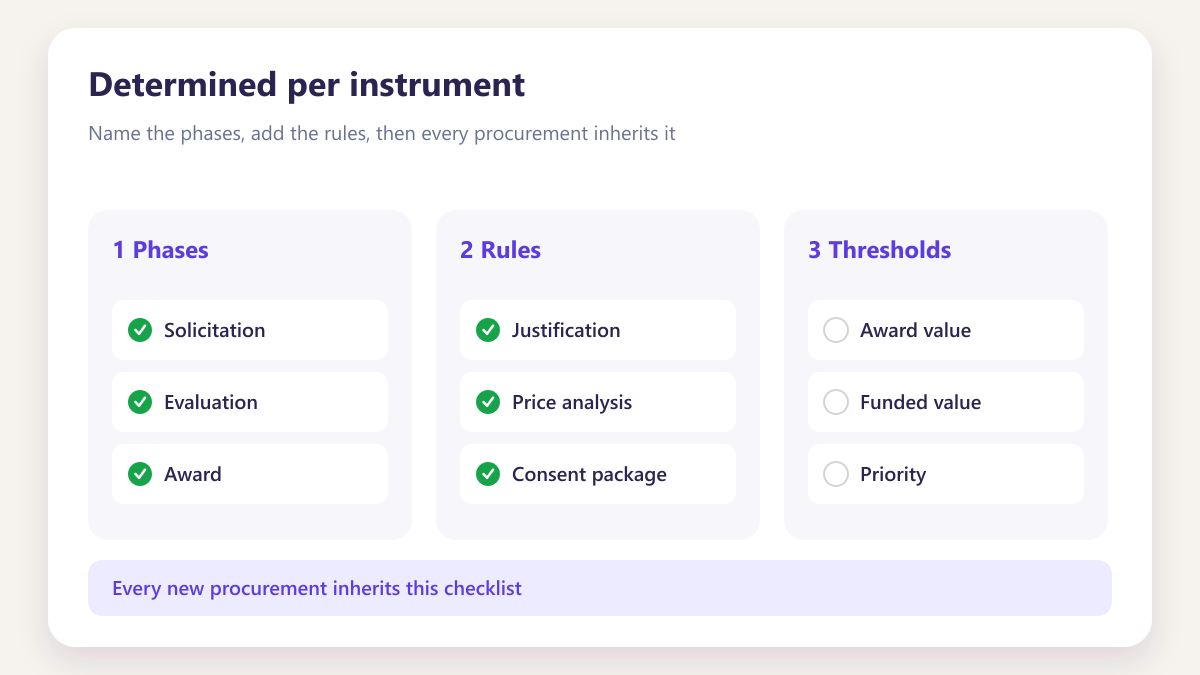
Determined per instrument
Whether competition happens at the instrument or at the order is established for each one, and the order file reflects it.
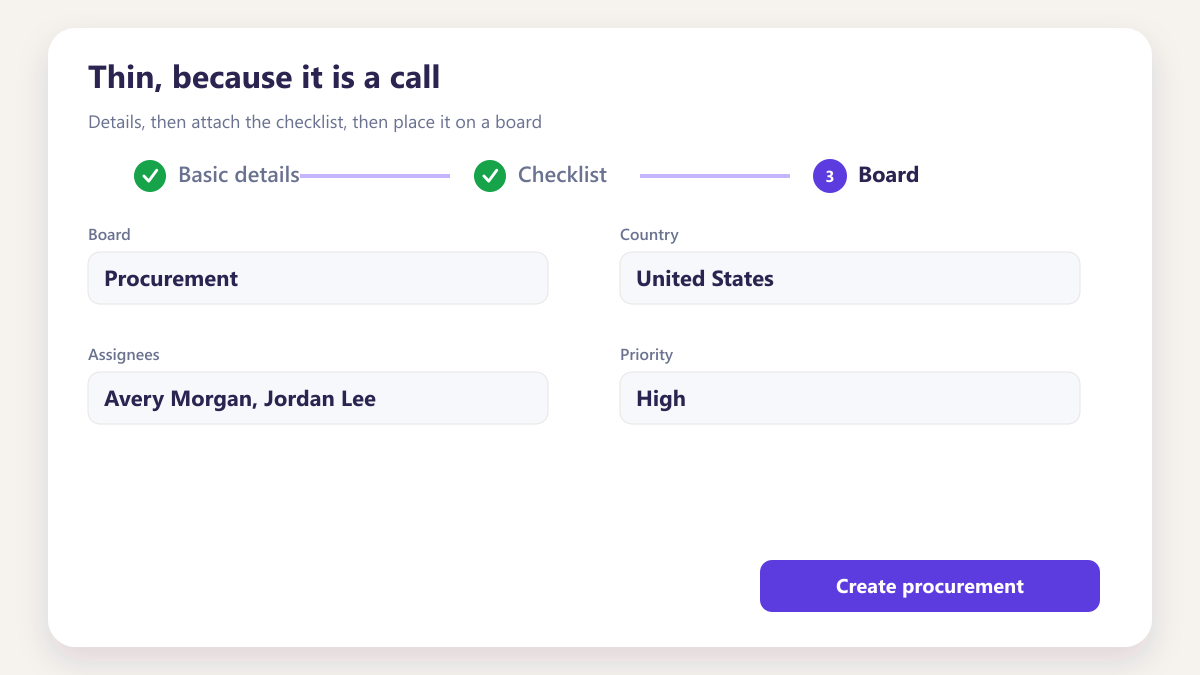
Thin, because it is a call
Orders under an existing arrangement are treated as administrative, so the file holds a quantity and a price and nothing about the decision.
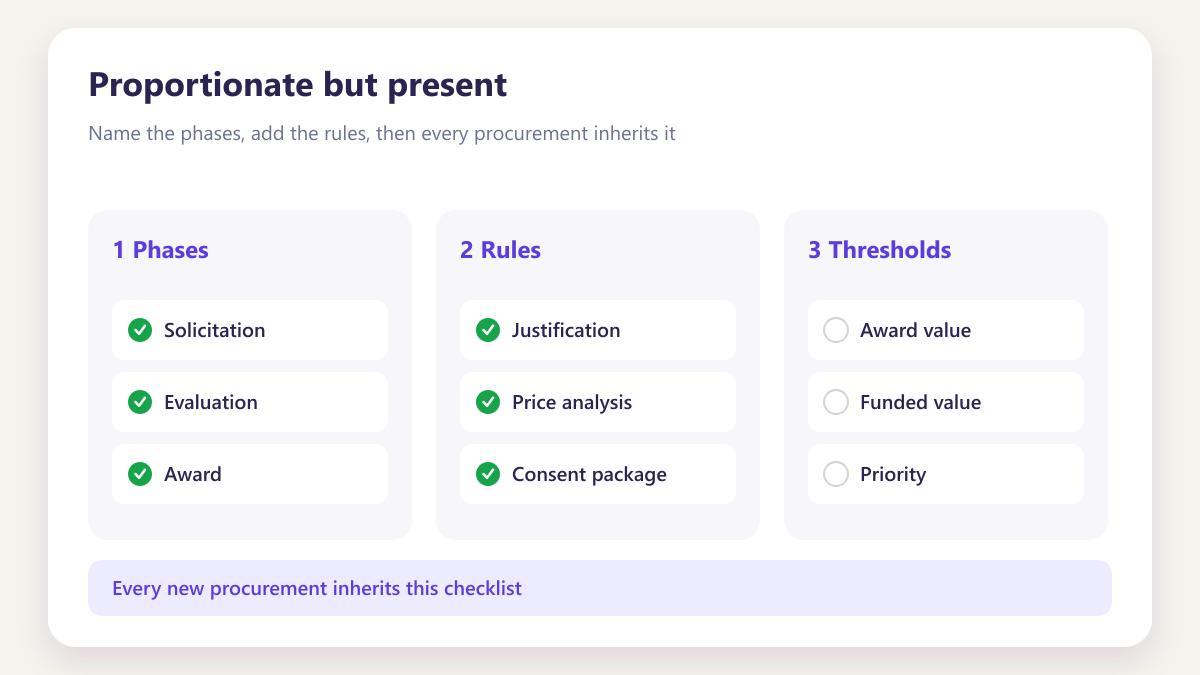
Proportionate but present
Each order records what was needed, on what basis the source was selected at order level, and who authorised it.
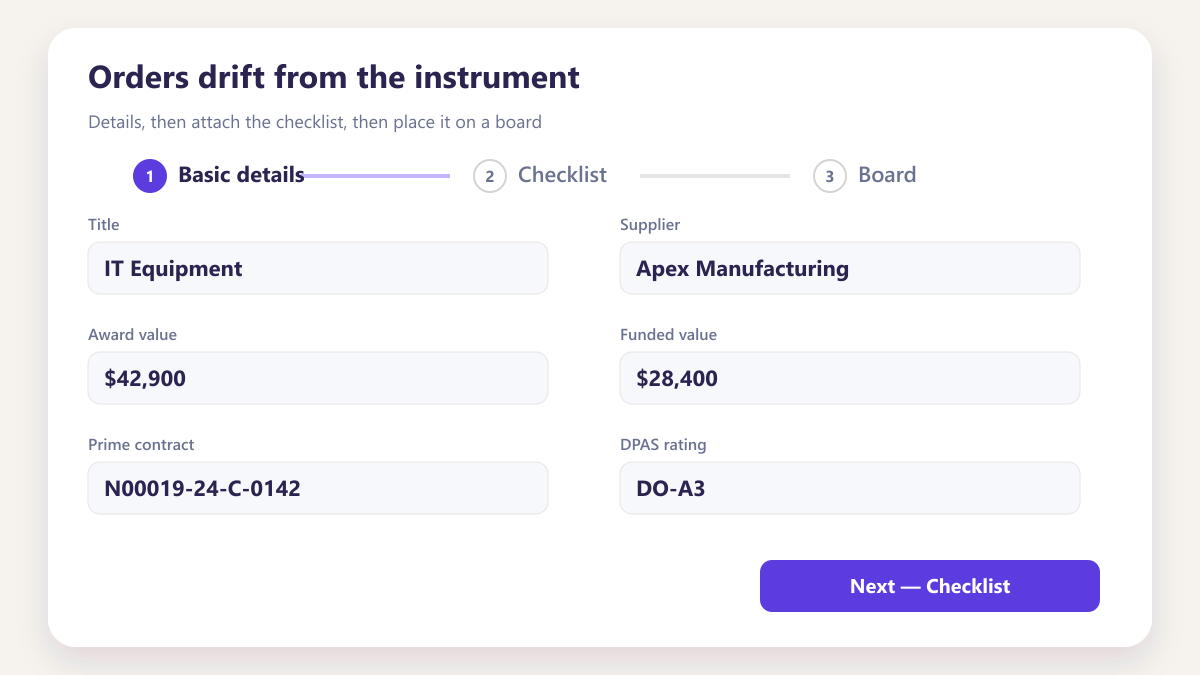
Orders drift from the instrument
Orders are placed for work that sits outside what the underlying instrument actually covers, because nobody checks the scope each time.
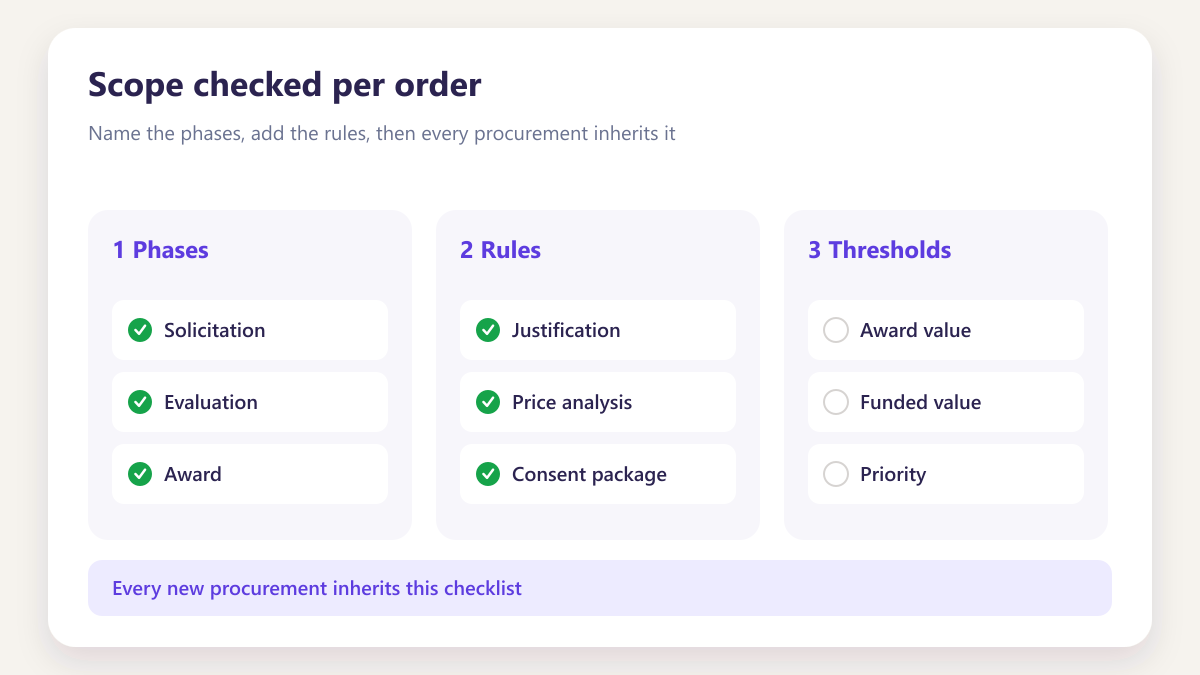
Scope checked per order
Each order is confirmed as within the scope of the instrument it is placed under, which prevents gradual drift.
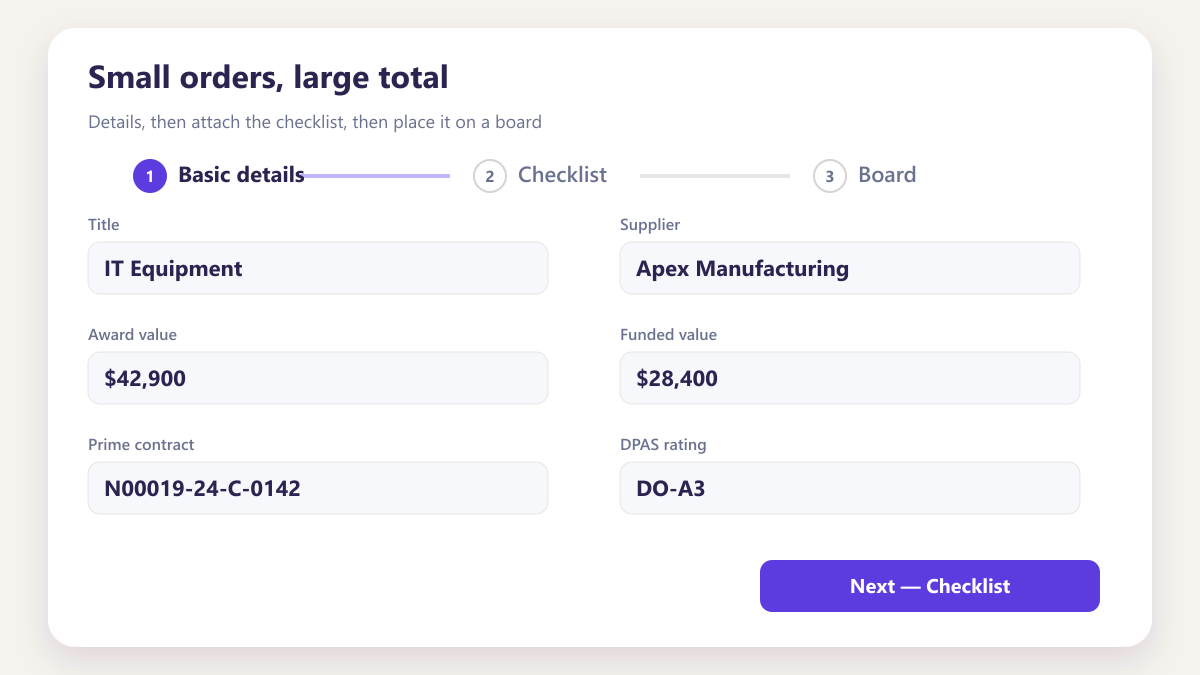
Small orders, large total
Individual calls are minor and attract little documentation attention, while the aggregate over a year is substantial and gets sampled.
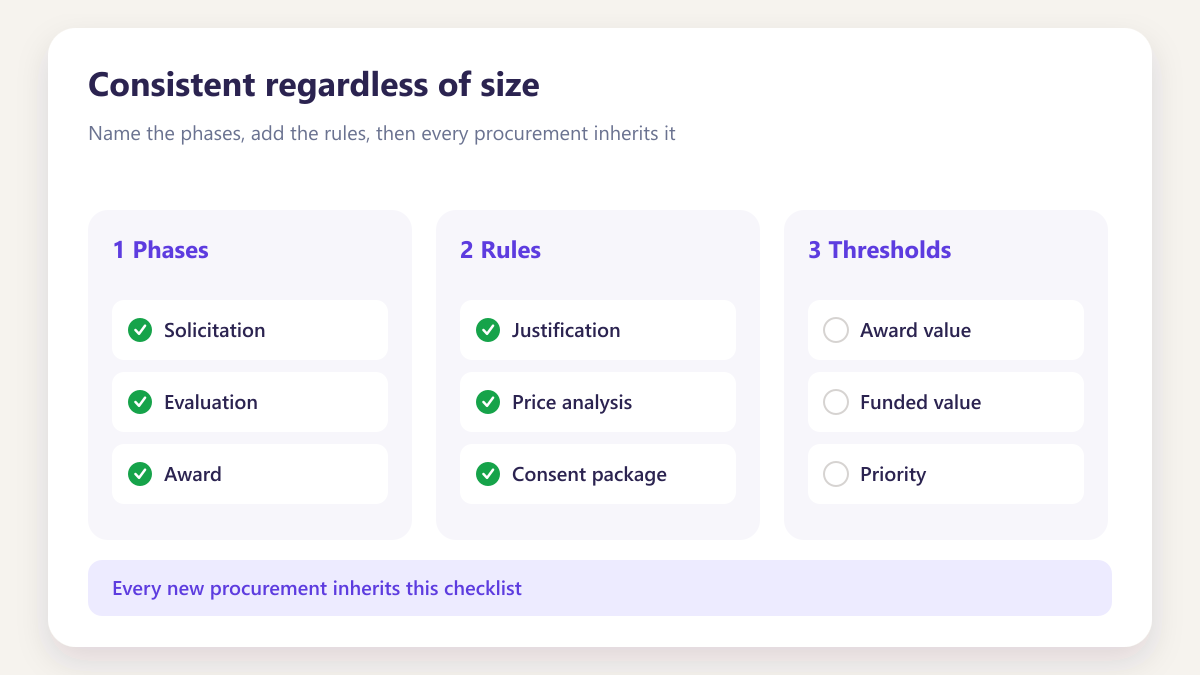
Consistent regardless of size
The same structure applies to every order of a type, so documentation quality does not fall away as the value falls.
Four questions per order
| Question | Why it matters |
|---|---|
| Which instrument is this order under | Determines what was settled at establishment and what remains to be done at order level |
| Was source selection required at this level | The most common assumption failure, and the one that leaves an order file with no visible basis |
| Is the order within the instrument's scope | Orders drift outside the underlying agreement gradually, and the drift is only visible across a sample |
| Who authorised it, at what value | Recurring calls attract the least approval attention while accumulating the most value |
Ordering procedures differ by instrument and by agency. Confirm the requirements for the specific instrument rather than applying a general rule.
Four habits
Establish where competition happens
The most common failure is assuming it was settled at the instrument when it is required at the order.
Learn moreDocument the order, not just the agreement
A call with a quantity and a price and no basis is a gap, however routine the order felt.
Learn moreCheck scope each time
Orders drift outside the underlying instrument gradually, which is only visible once somebody looks across a year.
Learn moreKeep documentation uniform at volume
Recurring low value calls attract the least attention and accumulate the most value.
Learn moreCommon questions about ordering instruments
What is an IDIQ?
How is a BPA different?
What is a multiple award schedule?
Does an existing agreement mean competition is already handled?
How much documentation does a routine call need?
Why does scope matter on each order?
Does this apply to our own subcontracting?
Other explainers and the pages they connect to
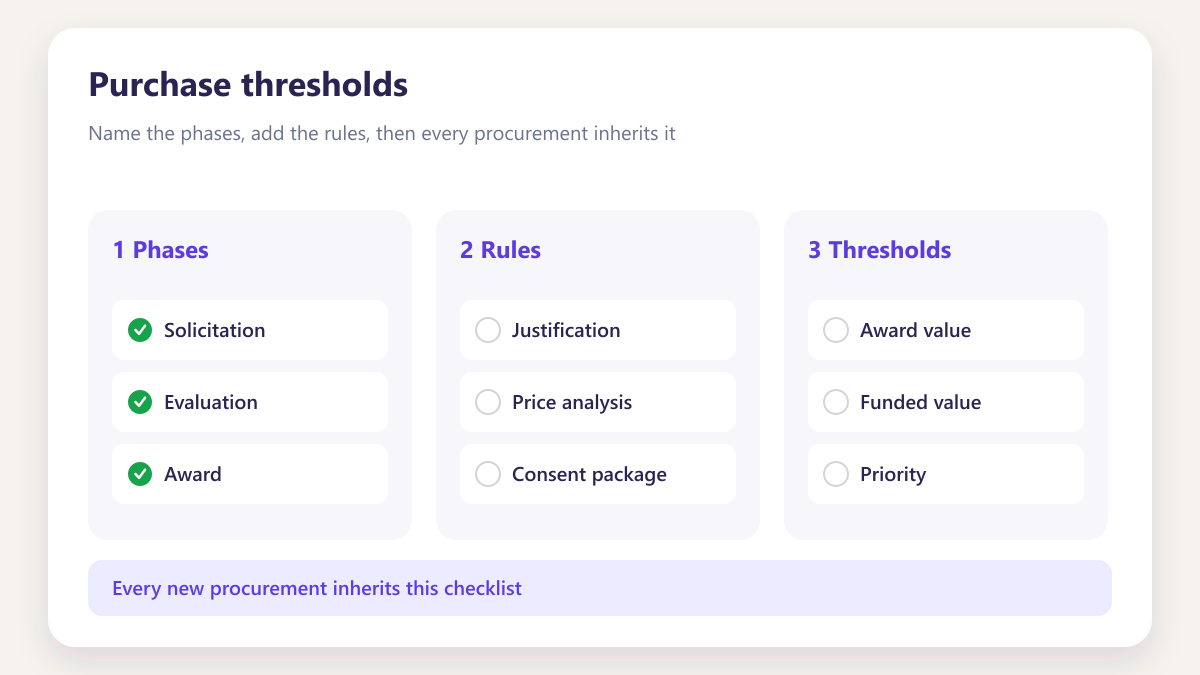
Purchase thresholds
The figures that decide how much documentation a purchase needs.
Learn more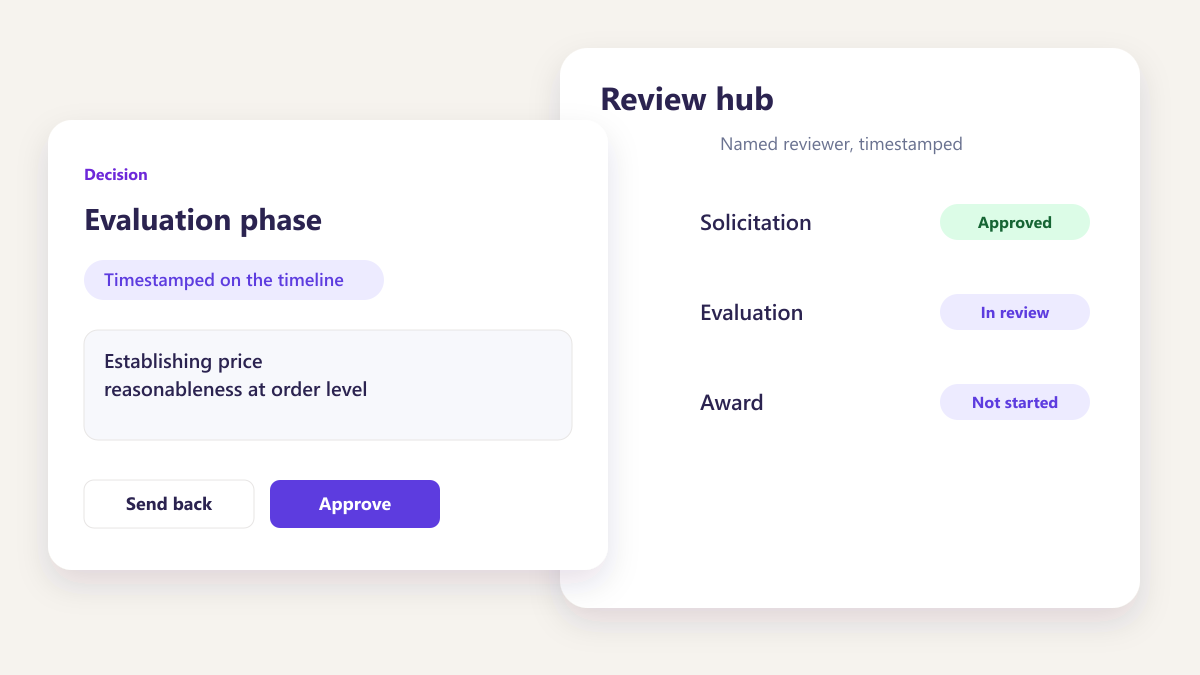
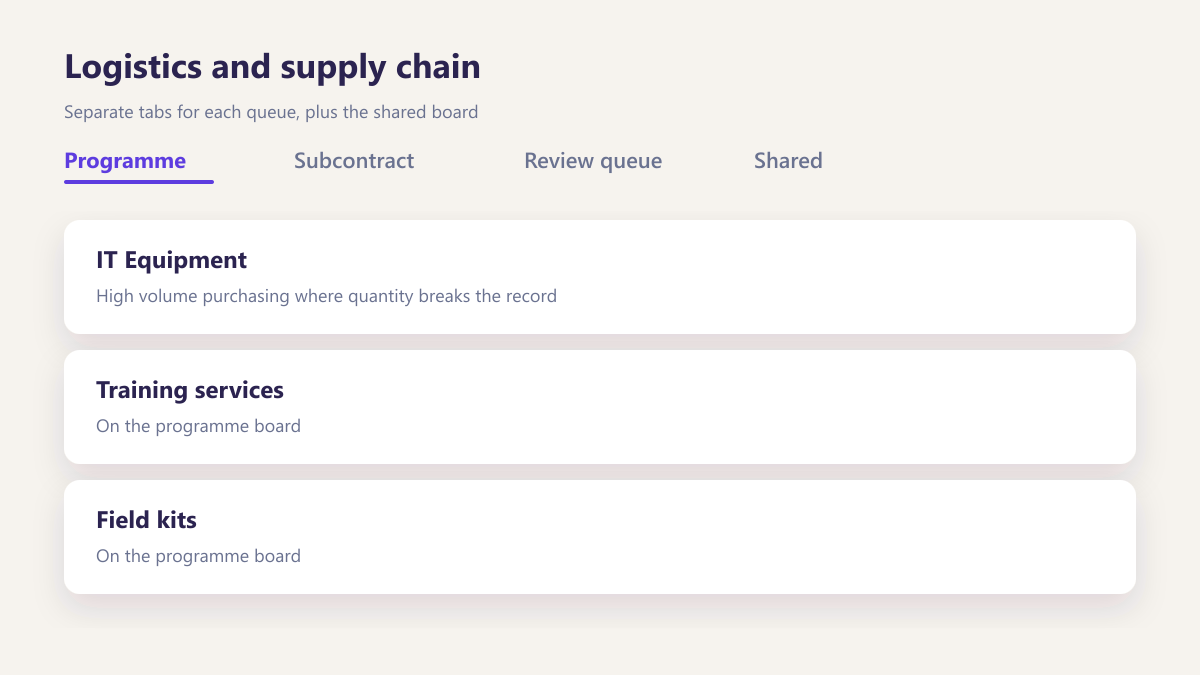
Logistics and supply chain
High volume purchasing where quantity breaks the record.
Learn moreBring a year of orders under one agreement
We will look at what the order files show and whether the documentation holds up across the volume.
Book a demo